











1 / 10 Questions
0 Points
Points won
0
Correct score
0%

More Questions

More Articles

Did You Know These Discoveries Happened By Mistake?

Did You Know These Discoveries Happened By Mistake?

⏱️ 5 min read

Throughout the history of science, some of the most revolutionary discoveries have emerged not from meticulous planning, but from unexpected accidents, fortunate mishaps, and serendipitous moments. These unintended breakthroughs have transformed medicine, technology, and our understanding of the world. The phenomenon of accidental discovery reminds us that scientific progress often requires not just careful methodology, but also the wisdom to recognize significance in the unexpected.

Penicillin: The Contaminated Petri Dish That Saved Millions

Perhaps the most famous accidental discovery in medical history occurred in 1928 when Scottish bacteriologist Alexander Fleming returned from vacation to his laboratory at St. Mary's Hospital in London. Fleming noticed that one of his bacterial culture plates had been contaminated with mold, and surprisingly, the bacteria surrounding the mold had died. Rather than simply discarding the spoiled experiment, Fleming investigated further and identified the mold as belonging to the Penicillium genus.

This contaminated petri dish led to the development of penicillin, the world's first widely used antibiotic. The discovery revolutionized medicine and has saved countless millions of lives since its mass production began during World War II. Fleming's observation skills and scientific curiosity transformed what could have been dismissed as laboratory sloppiness into one of humanity's greatest medical advances.

The Microwave Oven: From Radar Technology to Kitchen Appliance

In 1945, engineer Percy Spencer was working on magnetrons, the tubes that produce microwaves for radar systems at Raytheon Corporation. During his research, Spencer noticed that a chocolate bar in his pocket had melted. Intrigued by this observation, he began experimenting with other foods, placing popcorn kernels near the magnetron and watching them pop.

Spencer's accidental discovery led to the development of the microwave oven, which was initially called the "Radarange" and was the size of a refrigerator. Today, microwave ovens are found in kitchens worldwide, fundamentally changing how people prepare and reheat food. This wartime technology accidentally became an indispensable household appliance.

Post-it Notes: The Adhesive That Wouldn't Stick Properly

In 1968, scientist Spencer Silver at 3M Corporation was attempting to develop a super-strong adhesive for aerospace applications. Instead, he created a weak adhesive that could stick to surfaces but was easily removable without leaving residue. For years, this "failed" adhesive had no practical application and was considered a laboratory curiosity.

Six years later, Silver's colleague Art Fry was singing in his church choir and became frustrated with bookmarks that kept falling out of his hymnal. Remembering Silver's weak adhesive, Fry realized it could create bookmarks that would stay in place but wouldn't damage the pages. This insight led to the creation of Post-it Notes, which launched commercially in 1980 and became one of 3M's most successful products.

X-Rays: The Mysterious Glow That Changed Diagnostic Medicine

German physicist Wilhelm Conrad Röntgen was experimenting with cathode rays in 1895 when he noticed a mysterious glow emanating from a chemically coated screen across his laboratory, despite the cathode tube being covered. Röntgen realized he had discovered a new type of ray that could pass through solid objects, which he called "X-rays" because their nature was unknown.

Within weeks, Röntgen had taken the first X-ray photograph of his wife's hand, clearly showing her bones and wedding ring. This accidental discovery revolutionized medical diagnostics, allowing physicians to see inside the human body without surgery. Röntgen received the first Nobel Prize in Physics in 1901 for his discovery.

Saccharin: The Sweet Taste of an Unwashed Hand

In 1879, chemist Constantin Fahlberg was working with coal tar derivatives at Johns Hopkins University. After a long day in the laboratory, he went home for dinner without thoroughly washing his hands. When he noticed that his bread tasted unusually sweet, he realized that a substance from the laboratory must have remained on his fingers.

Fahlberg returned to his lab and systematically tasted various compounds he had been working with until he identified the sweet substance. This led to the discovery of saccharin, the first artificial sweetener. Despite controversies over its safety throughout the years, saccharin paved the way for the artificial sweetener industry and provided alternatives for people managing diabetes and obesity.

Vulcanized Rubber: The Hot Discovery That Transformed Industry

Charles Goodyear spent years trying to make rubber more durable and less susceptible to temperature changes. In 1839, after numerous failures and financial hardship, Goodyear accidentally dropped a mixture of rubber, sulfur, and lead onto a hot stove. Instead of melting as expected, the rubber charred like leather while remaining flexible and elastic.

This accident led to the process of vulcanization, which transforms natural rubber into a more durable material suitable for countless applications. Vulcanized rubber became essential for tires, hoses, belts, and numerous industrial products, helping to drive the industrial revolution and modern transportation.

The Lesson of Serendipity in Science

These accidental discoveries share common elements: prepared minds, careful observation, and the willingness to pursue unexpected results. Louis Pasteur famously stated that "chance favors the prepared mind," and these examples illustrate this principle perfectly. While accidents provided the initial spark, it was the scientists' ability to recognize significance in the unexpected that transformed mistakes into discoveries.

These stories remind us that scientific progress doesn't always follow a linear path. Sometimes the most important breakthroughs come from being observant, staying curious, and remaining open to possibilities that deviate from original hypotheses. The next revolutionary discovery might be waiting in a failed experiment, a contaminated sample, or an unexpected observation that someone has the wisdom to investigate further.
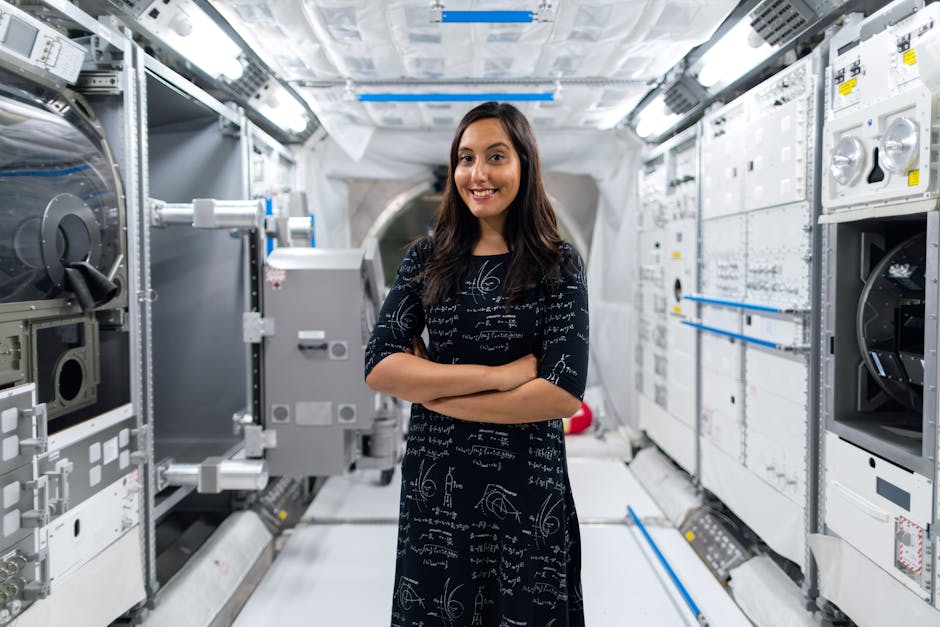
Top 10 Surprising Facts About Astronomy

Top 10 Surprising Facts About Astronomy

⏱️ 7 min read

The universe continues to astound scientists and stargazers alike with discoveries that challenge our understanding of reality. From the bizarre behavior of celestial objects to the mind-bending scales of cosmic phenomena, astronomy reveals truths that often seem stranger than fiction. These remarkable findings demonstrate that despite centuries of observation and study, the cosmos still holds countless mysteries waiting to be uncovered.

Remarkable Discoveries That Challenge Our Understanding of Space

1. A Day on Venus Lasts Longer Than Its Year

Venus presents one of the most peculiar rotational patterns in our solar system. While it takes approximately 225 Earth days for Venus to complete one orbit around the Sun, the planet requires about 243 Earth days to complete a single rotation on its axis. This unusual characteristic means that a Venusian day actually exceeds its year. Adding to this oddity, Venus rotates in the opposite direction to most other planets in our solar system, a phenomenon known as retrograde rotation. Scientists theorize this backward spin may have resulted from a massive collision with another celestial body billions of years ago, though the exact cause remains a subject of ongoing research.

2. Neutron Stars Are Denser Than Anything on Earth

Neutron stars represent some of the most extreme objects in the known universe. These collapsed cores of massive stars pack more mass than our Sun into a sphere merely 20 kilometers in diameter. The density is so extreme that a single teaspoon of neutron star material would weigh approximately 6 billion tons on Earth. To put this in perspective, this tiny amount would weigh more than all the cars on our planet combined. The gravitational forces on these stellar remnants are so powerful that they warp spacetime itself, and some neutron stars spin hundreds of times per second while emitting beams of radiation detectable from Earth.

3. The Largest Known Structure Defies Cosmological Principles

The Hercules-Corona Borealis Great Wall challenges fundamental assumptions about the universe's structure. This colossal formation of galaxies stretches across approximately 10 billion light-years, making it the largest known structure in the observable universe. What makes this discovery particularly surprising is that it appears to contradict the cosmological principle, which suggests that matter should be distributed relatively uniformly throughout the universe on the largest scales. The existence of such a massive structure raises important questions about our understanding of cosmic evolution and the distribution of matter following the Big Bang.

4. Diamond Rain Falls on Neptune and Uranus

The ice giants of our solar system harbor an extraordinary phenomenon that sounds like pure fantasy. Scientists believe that within the atmospheres of Neptune and Uranus, extreme pressure and temperature conditions cause methane to decompose, forming carbon atoms that crystallize into diamonds as they fall toward the planets' cores. These gemstones could range from tiny particles to chunks the size of hailstones. Laboratory experiments have successfully recreated the conditions necessary for this diamond formation, supporting the theory. Some researchers estimate that thousands of tons of diamonds may be precipitating through these planetary atmospheres at any given moment.

5. There Are More Stars Than Grains of Sand on All Earth's Beaches

The sheer number of stars in the observable universe defies human comprehension. Astronomers estimate that approximately 100 to 400 billion stars exist in our Milky Way galaxy alone, and current observations suggest there are at least 2 trillion galaxies in the observable universe. When calculating the total number of stars, estimates range from 10^22 to 10^24 stars. To contextualize this astronomical figure, scientists estimate there are roughly 10^18 to 10^19 grains of sand on all of Earth's beaches combined. This means the universe contains hundreds to thousands of times more stars than sand grains on our entire planet.

6. The Coldest Place in the Universe Is Man-Made

While space is famous for its frigid temperatures, the coldest known spot in the universe is actually aboard the International Space Station. The Cold Atom Laboratory, operated by NASA, has achieved temperatures as low as one ten-billionth of a degree above absolute zero. This is significantly colder than the natural cosmic background temperature of space, which hovers around 2.7 Kelvin. At these extreme temperatures, matter exhibits quantum behaviors observable at macroscopic scales, allowing scientists to study fundamental physics in ways impossible on Earth. The natural universe's coldest location, the Boomerang Nebula, reaches a comparatively balmy 1 Kelvin.

7. Ancient Light Reveals the Universe's Baby Pictures

The cosmic microwave background radiation represents light that has traveled through space for over 13.8 billion years, originating just 380,000 years after the Big Bang. This ancient light provides astronomers with a snapshot of the universe when it was merely an infant, long before the first stars and galaxies formed. The patterns detected in this radiation reveal tiny temperature fluctuations that eventually gave rise to all cosmic structures we observe today. Studying this primordial light has allowed scientists to determine the universe's age, composition, and geometry with remarkable precision, fundamentally transforming our understanding of cosmology.

8. A Supermassive Black Hole Lurks at Our Galaxy's Heart

At the center of the Milky Way lies Sagittarius A*, a supermassive black hole containing approximately 4 million times the mass of our Sun. Despite its enormous mass, this cosmic giant occupies a relatively small region of space, with an event horizon diameter of about 44 million kilometers. Scientists have observed stars orbiting this black hole at speeds exceeding 5,000 kilometers per second, providing compelling evidence for its existence. In 2022, astronomers captured the first direct image of this black hole's shadow, confirming predictions made by Einstein's general theory of relativity and offering unprecedented insights into the behavior of matter under extreme gravitational conditions.

9. The Universe Is Expanding Faster Than Expected

Recent measurements have revealed a puzzling discrepancy in the rate of cosmic expansion, a mystery dubbed the "Hubble tension." Different measurement methods yield conflicting values for the Hubble constant, which describes how quickly the universe is expanding. Observations of the early universe suggest one expansion rate, while measurements of relatively nearby celestial objects indicate the universe is expanding faster than this early-universe data predicts. This inconsistency suggests either measurement errors or, more intriguingly, the possibility of new physics beyond our current understanding. Some scientists propose this could indicate the presence of unknown forms of energy or modifications to our cosmological models.

10. Rogue Planets Outnumber Stars in the Galaxy

Not all planets orbit stars. Billions of rogue planets drift through interstellar space, ejected from their original solar systems through gravitational interactions or formed independently in isolation. Recent research suggests these nomadic worlds may actually outnumber stars in the Milky Way, with estimates indicating there could be trillions of these orphaned planets wandering the galactic void. Some rogue planets might retain enough internal heat to maintain liquid water beneath icy surfaces, raising intriguing questions about the potential for life in these unlikely environments. The discovery of these wandering worlds has fundamentally altered our understanding of planetary formation and distribution throughout the galaxy.

The Endless Mysteries of the Cosmos

These ten remarkable facts merely scratch the surface of astronomy's countless wonders. From the bizarre physical properties of neutron stars to the unexpected prevalence of rogue planets, each discovery reveals how much remains unknown about the universe. The surprising nature of Venus's rotation, the diamond rain on ice giants, and the record-breaking cosmic structures all demonstrate that reality often exceeds imagination. As telescope technology advances and our observational capabilities expand, astronomers continue uncovering phenomena that challenge established theories and inspire new questions. The universe remains an inexhaustible source of wonder, reminding us that exploration and discovery are far from complete, and the cosmos still guards mysteries that future generations will work to unravel.