








1 / 10 Questions
0 Points

Which TV personality's interview behavior and controversial statements led to her being fired from The Talk in 2021?

Julie Chen

Sharon Osbourne

Sara Gilbert

Sheryl Underwood

Points won
0
Correct score
0%

More Questions

More Articles

Top 10 Mind Puzzles That Test Your Logic

Top 10 Mind Puzzles That Test Your Logic

⏱️ 6 min read

Logic puzzles have captivated minds for centuries, challenging our ability to think critically, recognize patterns, and solve complex problems through deductive reasoning. These mental exercises not only provide entertainment but also sharpen cognitive skills essential for everyday decision-making. The following collection represents some of the most intriguing and challenging logic puzzles that have stood the test of time, each designed to push your reasoning abilities to their limits.

Classic Logic Puzzles That Challenge Your Reasoning

1. The Monty Hall Problem

Named after the host of the game show "Let's Make a Deal," this probability puzzle continues to baffle even mathematicians. The scenario presents three doors: behind one is a car, behind the others are goats. After selecting a door, the host opens another door revealing a goat, then offers the option to switch choices. Counterintuitively, switching doors actually doubles the chances of winning the car from 33% to 67%. This puzzle demonstrates how our intuitive understanding of probability can mislead us, making it an excellent test of logical thinking over gut instinct.

2. The Bridge and Torch Problem

This classic puzzle involves four people who must cross a bridge at night with only one torch. Each person walks at different speeds: one takes 1 minute, another 2 minutes, the third 5 minutes, and the fourth 10 minutes. When two people cross together, they must move at the slower person's pace. The challenge is to get everyone across in 17 minutes or less. The solution requires strategic planning and understanding that sometimes the fastest person must make multiple trips to optimize the overall time. This puzzle tests the ability to think beyond obvious solutions and consider resource optimization.

3. Einstein's Riddle

Allegedly created by Albert Einstein, this puzzle involves five houses in different colors, inhabited by people of different nationalities who keep different pets, drink different beverages, and smoke different brands of cigarettes. Given 15 clues, the solver must determine who owns the fish. This grid logic puzzle requires systematic elimination and careful tracking of constraints. It tests patience, organizational thinking, and the ability to work through complex interrelated conditions without making assumptions.

4. The Liar and Truth-Teller Paradox

In this scenario, two guards stand before two doors—one leading to freedom, the other to certain doom. One guard always tells the truth, while the other always lies, but you don't know which is which. You can ask only one question to one guard to determine which door leads to freedom. The solution involves asking either guard what the other would say, then choosing the opposite door. This puzzle brilliantly tests metalogical thinking and the ability to use deception against itself through careful question construction.

5. The River Crossing Dilemma

This puzzle presents a farmer who must transport a fox, a chicken, and a bag of grain across a river in a boat that can only carry him and one item at a time. The fox cannot be left alone with the chicken, and the chicken cannot be left alone with the grain. Solving this requires planning multiple moves ahead and understanding that sometimes progress requires temporary backward steps. It tests sequential thinking and the ability to manage competing constraints simultaneously.

6. The Missing Dollar Paradox

Three people check into a hotel room costing $30, each paying $10. Later, the clerk realizes the room costs only $25 and sends a bellhop with $5 to return. The bellhop keeps $2 and gives each person $1 back. Now each person has paid $9 (totaling $27) and the bellhop has $2, making $29—where did the missing dollar go? This puzzle tests whether you can identify flawed logic in mathematical reasoning. The trick lies in the false addition of the bellhop's $2 to the $27 when it should be subtracted, revealing how easily our minds can be misdirected by improper framing.

7. The Poisoned Wine Cask Problem

A king has 1,000 casks of wine, one of which is poisoned. The poison takes exactly 24 hours to show effects. With only 24 hours before a celebration and access to prisoners for testing, what is the minimum number of prisoners needed to identify the poisoned cask? The answer is 10 prisoners, using binary logic. Each prisoner represents a binary digit, and each cask is assigned a 10-digit binary number. Prisoners drink from casks corresponding to their digit position. This puzzle demonstrates the power of binary systems and information theory in solving practical problems.

8. The Blue Eyes Island Puzzle

On an island, 100 people have blue eyes and 100 have brown eyes, but there are no mirrors and discussing eye color is taboo. Everyone can see others' eye colors but not their own. A visitor announces that at least one person has blue eyes. What happens? Surprisingly, after 100 days, all blue-eyed people leave the island simultaneously. This puzzle tests understanding of common knowledge, logical induction, and how information cascades through a population. It's particularly challenging because it requires thinking from multiple perspectives simultaneously.

9. The Cheryl's Birthday Problem

This puzzle went viral when it appeared on a Singapore math test. Cheryl tells Albert the month of her birthday and Bernard the day. She provides 10 possible dates. Through a series of logical statements from Albert and Bernard about what they know and don't know, the solver must deduce the exact date. The solution requires careful parsing of statements about knowledge and meta-knowledge—understanding not just facts but what can be inferred from what others know or don't know. This tests multiple levels of logical reasoning and the ability to extract information from seemingly vague statements.

10. The Hat Color Prediction Game

In this puzzle, three prisoners are lined up single file, each wearing either a black or white hat. The back person can see the two in front, the middle person sees only one ahead, and the front person sees no one. They must simultaneously guess their own hat color to be freed, with at least one correct guess required. With a predetermined strategy allowing communication beforehand but not during the game, they can guarantee at least one person guesses correctly. The optimal strategy involves parity checking, where the back person announces a color based on what they see, encoding information for the others. This puzzle demonstrates game theory, information encoding, and cooperative strategy.

The Lasting Value of Logic Puzzles

These ten puzzles represent different dimensions of logical thinking—from probability and binary logic to meta-reasoning and strategic planning. Each challenges our assumptions and reveals how easily our intuition can lead us astray. Working through these puzzles strengthens analytical skills applicable far beyond recreational mathematics, including programming, strategic planning, and critical evaluation of arguments. The true value lies not just in finding solutions but in understanding the reasoning processes that lead to them, making these timeless tools for developing sharper, more flexible minds.
Did You Know These Brain Shortcuts Influence Decisions?

Did You Know These Brain Shortcuts Influence Decisions?

⏱️ 5 min read

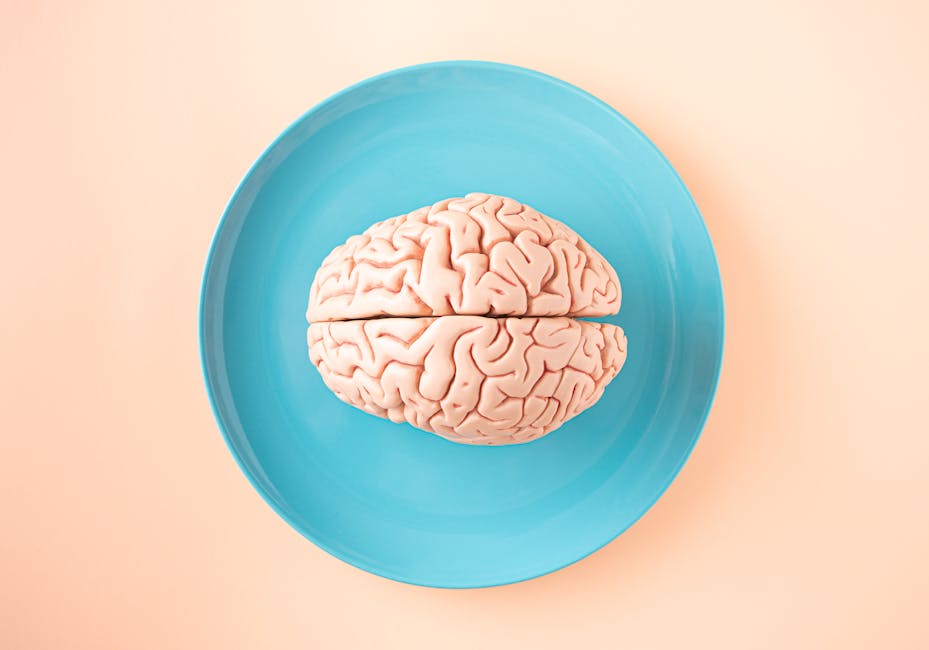
Every day, the human brain processes thousands of pieces of information and makes countless decisions, from trivial choices about what to eat for breakfast to life-altering career moves. To manage this overwhelming cognitive load, the brain has evolved sophisticated shortcuts known as heuristics and cognitive biases. These mental mechanisms allow for quick decision-making but can also lead to systematic errors in judgment. Understanding these brain shortcuts reveals fascinating insights into human behavior and can help improve decision-making processes across various aspects of life.

The Availability Heuristic: When Recent Memory Drives Decisions

One of the most powerful mental shortcuts is the availability heuristic, which causes people to overestimate the likelihood of events that readily come to mind. This cognitive mechanism relies on immediate examples that surface in memory when evaluating a specific topic or decision. For instance, after hearing news reports about airplane accidents, many individuals become fearful of flying, despite statistical evidence showing air travel is safer than driving. The vivid, emotionally charged nature of plane crash coverage makes these events more mentally "available," skewing risk perception.

This shortcut influences everyday decisions in subtle ways. Consumers might avoid purchasing a particular brand after hearing about a single negative experience from a friend, even though thousands of satisfied customers exist. Investors often make poor financial decisions by overweighting recent market performance while ignoring long-term trends. The availability heuristic explains why people tend to buy insurance for unlikely events while neglecting more probable risks that don't capture media attention.

Anchoring Bias: The Power of First Impressions

The anchoring bias demonstrates how initial information disproportionately influences subsequent judgments and decisions. When the brain receives a number or piece of information first, it serves as a reference point—an anchor—for all following evaluations. Retailers exploit this bias masterfully by displaying original prices next to sale prices, making discounts appear more substantial than they might actually be. A jacket marked down from $200 to $100 seems like an excellent deal, even if the jacket was never truly worth $200 or if competitors sell similar items for $80.

Research experiments have demonstrated the remarkable power of anchoring. In one study, participants were asked whether Gandhi died before or after age 140. Even though everyone knew this was an absurdly high number, when subsequently asked to estimate Gandhi's actual age at death, their guesses were significantly higher than those of participants who were first asked if he died before or after age 9. This shows that even obviously irrelevant anchors can influence judgment.

Confirmation Bias: Seeking Information That Agrees

Perhaps one of the most pervasive cognitive shortcuts is confirmation bias—the tendency to search for, interpret, and recall information in ways that confirm pre-existing beliefs. This mental mechanism helps the brain avoid the discomfort of cognitive dissonance but creates echo chambers that reinforce existing viewpoints regardless of their accuracy. People unconsciously filter information, giving more weight to evidence supporting their positions while dismissing contradictory data as flawed or irrelevant.

Confirmation bias affects decision-making in numerous domains:

  • Medical professionals might focus on symptoms that support their initial diagnosis while overlooking signs pointing to alternative conditions
  • Hiring managers often interpret candidate responses in ways that confirm first impressions formed within seconds of meeting
  • Investors hold onto losing stocks longer than rational analysis would suggest, seeking out information that justifies their original purchase decision
  • Consumers read product reviews selectively, paying more attention to feedback that aligns with their preliminary purchasing inclinations

The Representativeness Heuristic: Judging by Similarity

The representativeness heuristic causes individuals to make decisions based on how closely something matches their mental prototype or stereotype. This shortcut assesses probability by examining how similar an object or event is to a particular category rather than considering actual statistical likelihood. While this can sometimes lead to accurate quick judgments, it frequently results in logical errors.

A classic example involves describing someone as quiet, organized, and detail-oriented, then asking whether this person is more likely to be a librarian or a salesperson. Most people immediately say librarian because the description matches their stereotype. However, since salespeople vastly outnumber librarians in the general population, statistically, the person is more likely to be a salesperson who happens to be quiet and organized. The representativeness heuristic causes the brain to ignore base rate information in favor of matching patterns.

Loss Aversion: Fearing Losses More Than Valuing Gains

Research in behavioral economics has revealed that the human brain experiences losses approximately twice as intensely as equivalent gains—a phenomenon called loss aversion. This asymmetry powerfully shapes decision-making, often in ways that contradict rational choice theory. People will take extraordinary measures to avoid losses, sometimes engaging in riskier behavior than they would to achieve gains of equal magnitude.

Loss aversion manifests in various contexts. Homeowners often refuse to sell property for less than their purchase price, even when market conditions make this the most rational decision. Employees stay in unfulfilling jobs to avoid losing familiar routines and benefits. Gamblers continue betting to recoup losses rather than accepting smaller defeats. Marketing professionals leverage this bias through framing techniques, presenting products as preventing losses rather than enabling gains.

The Recency Effect: When Latest Information Dominates

The recency effect causes the most recently encountered information to have disproportionate influence on decisions and memory. Combined with the primacy effect—better recall of information presented first—this creates a pattern where middle information receives less attention and weight in decision-making processes. Performance reviews often reflect this bias, with managers disproportionately influenced by recent employee behavior rather than performance across the entire review period.

Practical Applications and Mitigation Strategies

Understanding these brain shortcuts provides valuable tools for improving decision quality. Awareness alone helps counteract their influence. Implementing structured decision-making processes, seeking diverse perspectives, deliberately considering contrary evidence, and using checklists can reduce bias impact. Organizations benefit from creating systems that account for these cognitive tendencies, such as blind review processes, standardized evaluation criteria, and devil's advocate protocols. While these mental shortcuts serve valuable evolutionary purposes by enabling quick decisions with limited information, recognizing their limitations allows for more balanced, rational choices when stakes are high and time permits careful analysis.