

⏱️ 6 min read
Movie directors and production teams love to hide clever references, inside jokes, and subtle nods throughout their films. These hidden details, known as Easter eggs, reward attentive viewers who catch them and add layers of enjoyment to repeat viewings. From background props to cryptic character appearances, these carefully planted secrets connect films across franchises, honor cinematic history, and showcase the creativity of filmmakers. Here are ten remarkable hidden Easter eggs that have delighted audiences in some of the most beloved movies.
Discovering Cinema's Best-Kept Secrets
1. The Pixar Universe Pizza Planet Truck
Since its first appearance in "Toy Story," the iconic Pizza Planet truck has become Pixar's most persistent Easter egg. This yellow Toyota pickup with its distinctive rocket-shaped topper appears in nearly every Pixar film, often hidden in plain sight. Sharp-eyed viewers have spotted it driving past in "Finding Nemo," parked in the background of "Brave" as a wooden carving, and even making an appearance in "The Incredibles" during a street chase scene. This recurring element supports the popular fan theory that all Pixar movies exist within the same universe, creating an interconnected narrative that spans decades and genres.
2. Star Wars Characters in Indiana Jones
George Lucas and Steven Spielberg's friendship resulted in one of cinema's cleverest cross-franchise references. In "Raiders of the Lost Ark," hieroglyphics on a pillar in the Well of Souls scene include depictions of R2-D2 and C-3PO from "Star Wars." This subtle nod appears for only seconds but represents the playful relationship between two of Hollywood's most influential directors. The Easter egg has become so legendary that fans have spent countless hours freeze-framing the scene to capture the exact moment these droids appear in ancient Egyptian artwork.
3. The Shining's Impossible Architectural Layout
Stanley Kubrick intentionally designed the Overlook Hotel in "The Shining" with an architecturally impossible layout, creating subtle disorientation for viewers. Windows appear in rooms that should be interior spaces, hallways lead to locations that couldn't physically connect, and the Colorado Lounge features a window that would have to open into the hotel's main corridor. This deliberate inconsistency wasn't a production error but rather Kubrick's method of creating subconscious unease, making viewers feel something is fundamentally wrong with the hotel even if they can't immediately identify what. This Easter egg rewards architectural analysis and enhances the film's psychological horror.
4. Fight Club's Starbucks Cup Conspiracy
Director David Fincher included a Starbucks cup in every single scene of "Fight Club" as a commentary on corporate saturation and consumer culture. While some are prominently displayed, others require careful observation to spot. This meticulous placement reflects the film's anti-consumerism themes and Tyler Durden's philosophy about material possessions. Fincher confirmed this deliberate choice in interviews, explaining that he wanted to highlight how corporate branding infiltrates every aspect of modern life, even in a movie criticizing that very phenomenon.
5. Rapunzel and Flynn's Frozen Cameo
During the musical number "For the First Time in Forever" in Disney's "Frozen," attentive viewers can spot Rapunzel and Flynn Rider from "Tangled" arriving at Elsa's coronation. The pair appears briefly as guests entering the castle gates, with Rapunzel's distinctive short brown hair and Flynn's characteristic smirk visible for just a few frames. This cameo sparked fan theories about the relationship between the two films, with some suggesting that the King and Queen of Arendelle might have been traveling to Rapunzel's wedding when their ship sank, connecting the Disney princess universe in unexpected ways.
6. The Silence of the Lambs Death's-Head Moth Skull
The death's-head hawkmoth featured prominently in "The Silence of the Lambs" poster and film contains a hidden image when examined closely. The skull-like pattern on the moth's back is actually a reproduction of Salvador Dalí's photograph "In Voluptas Mors," which shows seven nude women arranged to form a human skull. This artistic reference adds another layer of macabre sophistication to the film's imagery and connects the thriller to surrealist art history, reflecting the film's exploration of twisted psychology and disturbing aesthetics.
7. Tron's Pac-Man Prophetic Appearance
In Disney's original "Tron" from 1982, the character Sark briefly resembles Pac-Man during a scene where his digital head is shown in profile consuming something. This Easter egg is particularly fascinating because "Pac-Man" was only two years old when "Tron" was released, yet the filmmakers recognized the game's cultural significance enough to reference it. The homage represents the intersection of cinema and video game culture during the early 1980s and demonstrates how filmmakers were acknowledging the rising influence of arcade gaming on popular entertainment.
8. The Avengers Shawarma Restaurant Foreshadowing
In "The Avengers," Tony Stark's seemingly random comment about wanting to try the shawarma restaurant down the street leads to the famous post-credits scene where all the heroes silently eat together. However, the real Easter egg is that the restaurant they're shown eating at didn't actually exist during filming. The scene was shot months after principal photography wrapped, and the production team had to create the establishment specifically for the scene. Additionally, Chris Evans had grown a beard for another role and had to wear a prosthetic covering his lower face, which is why Captain America appears to be holding his jaw throughout the scene.
9. Back to the Future's Twin Pines Mall Transformation
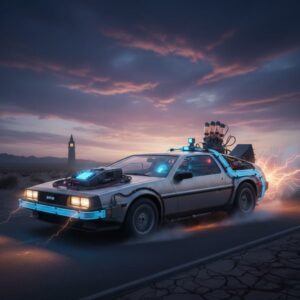
When Marty McFly first travels through time in "Back to the Future," he departs from Twin Pines Mall. During his adventure in 1955, he accidentally runs over one of Old Man Peabody's pine trees with the DeLorean. When Marty returns to 1985 at the film's climax, the mall has been renamed Lone Pine Mall, reflecting the change he made to the timeline thirty years earlier. This subtle detail demonstrates the butterfly effect and the consequences of time travel, rewarding viewers who pay attention to background signage across the film's different time periods.
10. Pulp Fiction's Mysterious Glowing Briefcase
The glowing briefcase in "Pulp Fiction" has spawned countless theories, but the Easter egg lies in what Quentin Tarantino intentionally didn't reveal. The briefcase's combination is 666, and its contents emit an otherworldly golden glow, leading to speculation about everything from Marcellus Wallace's soul to diamonds to something from "Kiss Me Deadly." However, Tarantino has stated the briefcase was always meant to be a MacGuffin—a plot device whose specific contents are irrelevant. The real Easter egg is recognizing this nod to Alfred Hitchcock's filmmaking philosophy, where the object driving the plot matters less than the character interactions surrounding it.
The Art of Hidden Details
These ten Easter eggs demonstrate how filmmakers use hidden details to enrich storytelling, reward dedicated viewers, and create connections across their body of work. Whether serving as franchise connectors, artistic references, or subtle jokes, these carefully planted secrets add depth to cinematic experiences. As streaming technology makes frame-by-frame analysis easier than ever, audiences continue discovering new Easter eggs in both classic and contemporary films, proving that great movies reveal new layers with each viewing and that the relationship between filmmakers and audiences thrives on these moments of shared discovery.