










1 / 10 Questions
0 Points

What hard Italian cheese gets paired with balsamic vinegar and fresh strawberries for an unexpectedly sophisticated flavor bomb?

Parmesan

Ricotta

Mozzarella

Gorgonzola

Points won
0
Correct score
0%

More Questions

More Articles

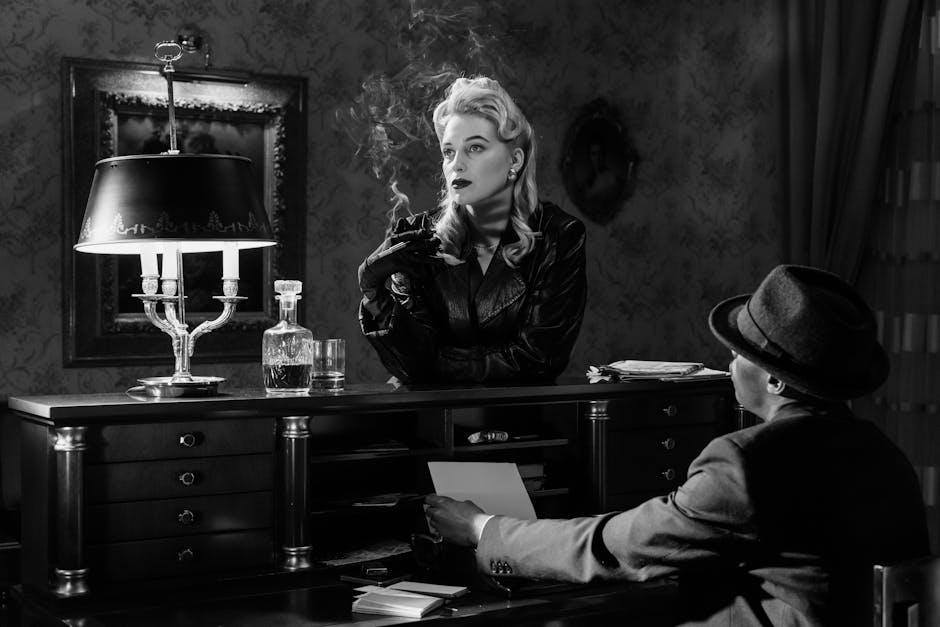
Top 10 Most Shocking Movie Plot Twists

Top 10 Most Shocking Movie Plot Twists

⏱️ 6 min read

Cinema has the remarkable power to surprise, challenge, and completely overturn audience expectations. The greatest films in history have mastered the art of the plot twist—those jaw-dropping revelations that recontextualize everything that came before. These narrative surprises stay with viewers long after the credits roll, sparking conversations and inspiring rewatches to catch the cleverly hidden clues. From psychological thrillers to science fiction epics, certain movies have delivered twists so extraordinary that they've become cultural touchstones, forever changing how audiences approach storytelling.

Legendary Plot Twists That Redefined Cinema

1. The Sixth Sense: Bruce Willis Was Dead All Along

M. Night Shyamalan's 1999 supernatural thriller delivered one of the most celebrated twists in modern cinema. Throughout the film, child psychologist Malcolm Crowe helps a young boy who claims to see dead people, only for the final moments to reveal that Malcolm himself has been deceased since the opening scene. The revelation forces viewers to reconsider every interaction, realizing that Malcolm never directly communicated with anyone except the boy who could see spirits. The twist works brilliantly because Shyamalan planted subtle visual and dialogue clues throughout, rewarding attentive viewers upon repeat viewings.

2. The Usual Suspects: Verbal Kint Is Keyser Söze

Bryan Singer's 1995 neo-noir crime thriller culminates in one of cinema's most satisfying reveals. Throughout the film, the seemingly disabled and harmless con artist Verbal Kint recounts the tale of the mysterious crime lord Keyser Söze to investigators. As Verbal walks away from the police station, his limp disappears and his hand straightens, revealing he fabricated his entire story from details around the detective's office. The audience realizes they've been masterfully deceived, and the criminal mastermind they sought has been narrating his own legend the entire time.

3. Fight Club: Tyler Durden Doesn't Exist

David Fincher's 1999 adaptation of Chuck Palahniuk's novel shocked audiences with the revelation that the charismatic Tyler Durden is actually a dissociative personality of the unnamed narrator. The film's protagonist, suffering from severe insomnia and dissatisfaction with modern life, creates an anarchistic alter ego who embodies everything he wishes to be. The twist reframes the entire narrative as an exploration of mental illness and the dangers of unchecked masculinity, with carefully planted visual hints that Tyler and the narrator never appear in the same frame with other characters.

4. The Empire Strikes Back: Darth Vader Is Luke's Father

Perhaps the most famous plot twist in film history, the 1980 Star Wars sequel delivered a revelation that transcended cinema to become part of popular culture. When Darth Vader reveals himself as Luke Skywalker's father during their climactic lightsaber duel, it fundamentally altered the trajectory of the franchise. The line "No, I am your father" transformed the story from a simple good-versus-evil tale into a complex family drama about redemption, legacy, and the struggle between light and darkness within one's own bloodline.

5. Psycho: Norman Bates Is His Mother

Alfred Hitchcock's 1960 masterpiece shocked audiences with not one but two major twists. First, the apparent protagonist is murdered halfway through the film—an unprecedented narrative choice at the time. Second, the reveal that Norman Bates has been impersonating his deceased mother and committing murders in her name redefined the psychological thriller genre. The twist introduced mainstream audiences to dissociative identity disorder and established templates that countless horror films would follow for decades.

6. Planet of the Apes: Earth All Along

The 1968 science fiction classic delivered an ending that remains iconic more than five decades later. Astronaut George Taylor believes he's crashed on an alien planet ruled by intelligent apes, only to discover the remains of the Statue of Liberty on the beach in the final scene. The devastating realization that he's been on a post-apocalyptic Earth the entire time transforms the film from an adventure story into a cautionary tale about humanity's capacity for self-destruction, particularly relevant during the Cold War era.

7. Shutter Island: Teddy Daniels Is Actually a Patient

Martin Scorsese's 2010 psychological thriller builds an elaborate mystery about U.S. Marshal Teddy Daniels investigating a psychiatric facility, only to reveal he's actually Andrew Laeddis, a patient who murdered his wife after she drowned their children. The entire investigation was an elaborate role-play therapy designed to help him accept reality. The film's ambiguous ending leaves audiences debating whether the protagonist truly relapses or chooses to be lobotomized rather than live with his traumatic memories.

8. The Prestige: Multiple Twists Involving Clones and Twins

Christopher Nolan's 2006 film about dueling magicians delivers layers of interconnected twists. The revelation that one magician has been using a cloning machine to perform his trick—drowning a duplicate of himself at every show—combines with the twist that his rival has been using his secret twin brother all along. The film explores the obsessive cost of ambition and deception, with each magician sacrificing everything, including their own identities, for the perfect illusion.

9. Oldboy: The Protagonist's Love Interest Is His Daughter

Park Chan-wook's 2003 South Korean thriller delivers one of cinema's most disturbing revelations. After being imprisoned for fifteen years without explanation, the protagonist seeks revenge while falling in love with a young woman, only to discover she's actually his daughter. His captor orchestrated their meeting as the ultimate revenge for past sins. The twist explores themes of vengeance, manipulation, and the horrifying consequences of actions, cementing the film's place as one of the most shocking in international cinema.

10. Se7en: The Killer Completes His Masterpiece

David Fincher's 1995 neo-noir thriller concludes with serial killer John Doe revealing that he's murdered Detective Mills' wife, her head delivered in a box. Doe's plan reaches completion when Mills, embodying the sin of wrath, shoots him dead—becoming the final piece in Doe's series of murders based on the seven deadly sins. The bleak ending, where evil triumphs by corrupting the protagonist, defied Hollywood conventions and delivered a genuinely shocking conclusion that audiences didn't see coming.

The Lasting Impact of Narrative Surprises

These ten plot twists represent the pinnacle of screenwriting craft, demonstrating how effective misdirection and careful plotting can create unforgettable cinematic moments. Each twist succeeds not through cheap gimmicks but through logical construction that makes sense in retrospect while remaining unpredictable during initial viewing. They've influenced countless filmmakers and elevated audience expectations for intelligent, sophisticated storytelling. The best plot twists don't just shock—they illuminate deeper themes and encourage viewers to reconsider everything they've witnessed. These films prove that when executed masterfully, a single revelation can transform a good movie into an enduring classic that audiences revisit and discuss for generations.
Top 10 Visual Illusions That Break Your Mind

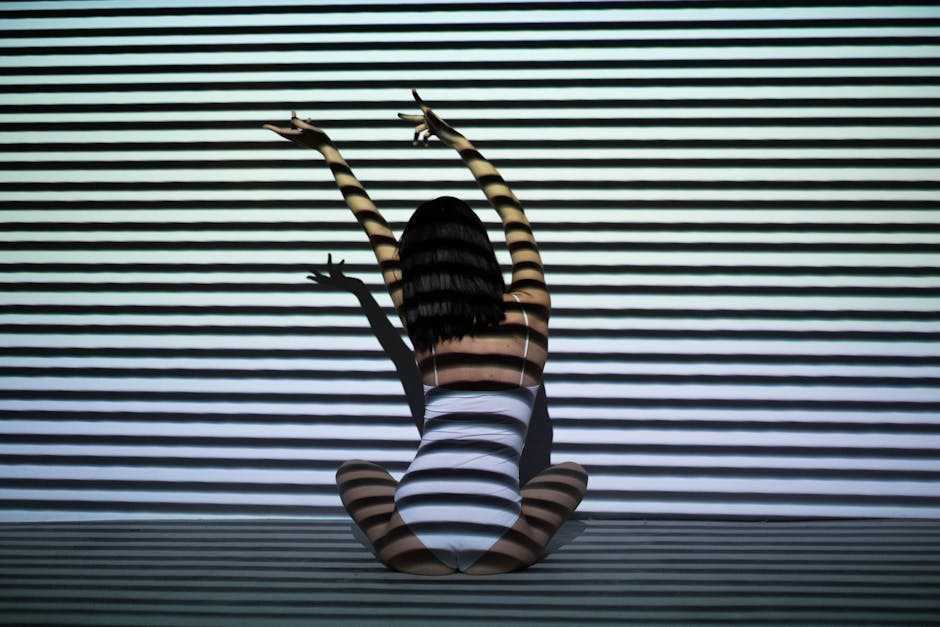
Top 10 Visual Illusions That Break Your Mind

⏱️ 7 min read

The human brain is a remarkable organ that interprets visual information in milliseconds, but it's far from perfect. Visual illusions exploit the quirks and shortcuts in our perception system, revealing fascinating insights about how we process the world around us. These mind-bending phenomena demonstrate that what we see isn't always what's really there, challenging our understanding of reality and consciousness. From impossible geometries to color distortions, these optical tricks continue to puzzle neuroscientists and delight observers worldwide.

The Most Mind-Bending Visual Illusions

1. The Impossible Penrose Triangle

Also known as the Penrose Tribar, this geometric figure appears to be a solid three-dimensional object constructed from three square beams. However, the structure is physically impossible to create in reality. Each corner seems perfectly reasonable when viewed individually, but the complete figure violates the laws of Euclidean geometry. Created by Swedish artist Oscar Reutersvärd in 1934 and later popularized by mathematician Roger Penrose, this illusion exploits the brain's tendency to interpret two-dimensional drawings as three-dimensional objects. The mind attempts to construct a coherent 3D model from the visual information, but the contradictory depth cues create an impossible object that exists only on paper.

2. Hermann Grid Ghostly Gray Spots

When viewing a grid of black squares on a white background, ghostly gray blobs appear at the intersections of the white lines between the squares. These phantom spots disappear when you look directly at them, only to reappear in your peripheral vision. This phenomenon occurs because of lateral inhibition in the retina, where neurons suppress the activity of neighboring cells. At the intersections, the photoreceptors receive more light from multiple directions, causing increased inhibition and the perception of darker spots. This illusion demonstrates how our visual system enhances contrast and edges rather than processing every detail equally across our entire field of vision.

3. The Rotating Snakes Phenomenon

Created by Japanese psychologist Akiyoshi Kitaoka, this static image appears to show continuous rotating motion despite being completely still. The illusion features circular patterns with carefully arranged sequences of colored shapes that trick the motion-detection mechanisms in the peripheral visual system. The effect is strongest when the eyes make small movements or when viewing the image in peripheral vision. Scientists believe this occurs because different colored elements are processed at slightly different speeds by the brain, creating the false impression of movement. The illusion intensity varies between individuals and can be influenced by factors like fatigue, viewing angle, and eye movements.

4. The Ponzo Perspective Illusion

This classic illusion shows two identical horizontal lines placed between converging lines that resemble railroad tracks extending into the distance. Despite being exactly the same length, the upper line appears significantly longer than the lower one. The brain interprets the converging lines as parallel lines receding into the distance, triggering size constancy scaling. Since the upper line appears farther away in the implied three-dimensional space, the brain incorrectly assumes it must be larger to create the same retinal image. This demonstrates how the visual system uses contextual cues and learned experiences about perspective to interpret size and distance in the environment.

5. The Café Wall Tilting Lines

Named after a café in Bristol, England, where it was first observed on a tiled wall, this illusion consists of straight, parallel horizontal lines that appear to slope and diverge. The effect is created by offsetting rows of alternating black and white squares with gray mortar lines between them. The mortar lines appear wedge-shaped due to brightness contrast effects, making the perfectly parallel lines seem tilted. This occurs because the visual system's edge-detection mechanisms respond differently to the light-dark boundaries at different positions along the mortar lines. The illusion reveals how local contrast interactions can override our perception of global geometric properties.

6. The Checker Shadow Same-Color Paradox

In this remarkable illusion created by Edward Adelson, two squares on a checkerboard appear to be dramatically different shades—one light and one dark. However, they are actually identical in color. A shadow cast across the board creates the illusion because the visual system automatically compensates for lighting conditions. The brain knows that objects in shadow should appear darker, so it adjusts its perception to maintain color constancy. The surrounding context of lighter and darker squares further reinforces the false perception. This illusion powerfully demonstrates that color perception is not absolute but depends heavily on context and the brain's assumptions about illumination.

7. The Müller-Lyer Arrow Illusion

One of the oldest and most studied optical illusions, this phenomenon shows two lines of equal length that appear different due to the arrow-like fins at their ends. The line with outward-pointing arrows appears longer than the one with inward-pointing arrows. Multiple theories attempt to explain this effect, with the most prominent suggesting that the brain interprets the configurations as three-dimensional corners—the outward fins resembling the far corner of a room and the inward fins resembling a near corner. This misapplication of depth perception causes the size distortion. Cultural studies have shown that people raised in environments without rectangular architecture show reduced susceptibility to this illusion.

8. The Motion Aftereffect Waterfall Illusion

After staring at moving stimuli for an extended period—such as a waterfall, rotating spiral, or scrolling pattern—stationary objects appear to move in the opposite direction. This phenomenon, documented for over 2,000 years, occurs because neurons that detect motion in specific directions become fatigued from prolonged stimulation. When viewing a static scene afterward, these tired neurons are less active than neurons detecting opposite motion, creating an imbalance that the brain interprets as movement. The effect typically lasts several seconds and provides insight into how the visual system uses opponent processes to detect motion through relative neural activity rather than absolute measurements.

9. The Kanizsa Triangle Missing Boundaries

This illusion shows a bright white triangle that appears to float above the image, yet no triangle is actually drawn. Instead, three Pac-Man-like circles with missing wedges and three angle brackets create the vivid perception of a complete triangle with defined edges. The brain fills in the missing information based on the implied contours, demonstrating how perception is an active constructive process rather than passive recording. This phenomenon, called modal completion or illusory contours, shows that the visual system constantly makes inferences about objects that might be partially hidden. The perceived triangle even appears brighter than the background, though they are identical in luminance.

10. The Ames Room Distorted Perspective

This physical installation creates one of the most dramatic size illusions when viewed from a specific vantage point. The room appears cubic and normal, but it's actually trapezoidal with a slanted floor and ceiling. When two people stand in opposite corners, one appears giant while the other looks tiny, despite being normal-sized adults. The illusion works because the room is constructed so that the viewing angle creates the same retinal image as a normal rectangular room would. The brain assumes the room is rectangular—a reasonable assumption based on experience—and therefore misinterprets the size of people within it. This demonstrates how deeply ingrained assumptions about architecture and space influence visual perception, and how the brain prioritizes contextual interpretation over raw sensory data.

Understanding Our Visual Perception

These ten visual illusions reveal fundamental truths about how the brain processes visual information. Rather than functioning like a camera that records exact representations, the visual system actively interprets sensory data using shortcuts, assumptions, and contextual clues developed through evolution and experience. These mental strategies usually serve us well, allowing rapid interpretation of complex environments, but they can be exploited to create perceptions that diverge dramatically from physical reality. Studying these illusions helps neuroscientists understand the mechanisms of vision and consciousness, while reminding us that our perception of reality is a constructed interpretation rather than an objective recording of the world around us.