










1 / 10 Questions
0 Points

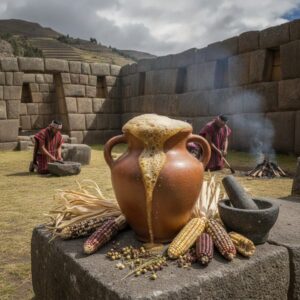
Which ancient brewing ingredient was found in pottery residue?

Corn

Hops

Job's tears

Rice

Points won
0
Correct score
0%

More Questions

More Articles

Top 10 Unexpected Facts About Celebrity Careers

Top 10 Unexpected Facts About Celebrity Careers

⏱️ 6 min read

The entertainment industry is filled with glittering success stories, but behind the red carpets and award ceremonies lie fascinating tales of unexpected beginnings, surprising detours, and remarkable transformations. Many celebrities traveled unconventional paths before finding stardom, while others possessed hidden talents that shaped their careers in ways few fans realize. These surprising facts reveal that the journey to fame is rarely straightforward and often filled with remarkable twists that shaped the entertainers we know today.

Surprising Career Origins and Hidden Talents

1. Harrison Ford Was a Professional Carpenter Before Stardom

Before becoming one of Hollywood's most iconic action stars, Harrison Ford worked as a self-taught carpenter to support his family. He built recording studios, cabinets, and furniture for celebrities, including a custom cabinet for Francis Ford Coppola. George Lucas hired him to build cabinets at his home, which eventually led to Ford being cast in "Star Wars." Ford continued carpentry work even after small acting roles, only abandoning his tools after the massive success of the franchise. This practical trade taught him patience and precision—qualities that would serve him well in his meticulous approach to acting.

2. Steve Buscemi Served as a New York City Firefighter

Long before his celebrated acting career, Steve Buscemi worked as a firefighter for the New York City Fire Department from 1980 to 1984. Even more remarkably, after the September 11 attacks in 2001, Buscemi returned to his old firehouse for twelve-hour shifts, digging through rubble at Ground Zero alongside his former colleagues. He refused publicity for his volunteer work, demonstrating genuine commitment to service. This experience gave him unique insight into heroic characters and working-class roles that became his specialty throughout his acting career.

3. Madonna's First Professional Paycheck Came From Dunkin' Donuts

The Queen of Pop's first job after arriving in New York City with just $35 in 1978 was at a Times Square Dunkin' Donuts location. However, her employment lasted only one day—she was fired for squirting jelly filling all over customers. Before achieving musical success, Madonna worked various odd jobs including nude art modeling and performing with several bands. These struggling years in New York's downtown scene shaped her fierce work ethic and boundary-pushing artistic vision that would later revolutionize pop music.

4. Ken Jeong Is a Licensed Medical Doctor

Actor and comedian Ken Jeong, known for "The Hangover" franchise and "Community," earned his medical degree from the University of North Carolina and completed his internal medicine residency in New Orleans. He practiced medicine while performing stand-up comedy at night, maintaining both careers simultaneously for several years. Even after achieving acting success, Jeong kept his medical license active. His medical background has informed his comedy and allowed him to bring authenticity to healthcare-related roles, while his experiences with patients enhanced his understanding of human nature and comedy.

5. Before Becoming a Director, James Cameron Drove Trucks

James Cameron, the visionary director behind "Titanic" and "Avatar," worked as a truck driver after dropping out of college. During breaks, he would write scripts in his truck cab. The turning point came when he watched "Star Wars" in 1977, which inspired him to enter filmmaking. Cameron taught himself special effects techniques by reading technical papers at the University of Southern California library and built camera equipment in his garage. His self-taught technical expertise and relentless determination became hallmarks of his filmmaking approach, leading to some of cinema's most groundbreaking visual achievements.

6. Hugh Jackman Nearly Became a Journalist Instead of an Actor

Hugh Jackman initially studied communications at the University of Technology Sydney with plans to become a journalist. He took a drama class during his final year of college purely as an elective credit requirement. That single class changed everything—Jackman discovered his passion for performance and subsequently enrolled at the Western Australian Academy of Performing Arts. His journalism training in research and storytelling actually enhanced his acting preparation methods, as he approaches each character with investigative thoroughness, studying accents, physicality, and backstory with reporter-like dedication.

7. Geena Davis Nearly Made the U.S. Olympic Archery Team

Academy Award-winning actress Geena Davis took up archery in her late thirties and displayed such extraordinary talent that she nearly qualified for the 2000 Sydney Olympics. She trained intensively for two and a half years and placed 24th out of 300 competitors at the U.S. Olympic Trials, just missing qualification for the Olympic team. Davis continued competitive archery and has spoken about how the mental discipline, focus, and handling of pressure in competitive sports mirrors the challenges of acting. This athletic achievement demonstrates that her talents extend far beyond the screen.

8. Danny DeVito and Michael Douglas Were College Roommates

Before their successful Hollywood careers, Danny DeVito and Michael Douglas lived together while studying at the National Playwrights Conference at the Eugene O'Neill Theater Center in Waterford, Connecticut. Their friendship formed in the late 1960s has lasted over five decades and resulted in their collaboration on several projects, including "Romancing the Stone" and "The War of the Roses." This early connection demonstrates how industry relationships formed during struggling artist years often prove more valuable than later networking opportunities. Their enduring friendship has influenced both men's career choices and provided mutual support through Hollywood's ups and downs.

9. Dwayne "The Rock" Johnson Played College Football Before Wrestling

While most fans know Dwayne Johnson transitioned from wrestling to acting, fewer realize he was a promising college football player at the University of Miami, where he won a national championship in 1991. Johnson had dreams of playing professional football, but injuries and being cut from the Canadian Football League led him to wrestling. He has stated that being cut from football and having just seven dollars in his pocket was a pivotal low point that fueled his determination. This athletic background gave him the discipline, physicality, and understanding of performance that made him exceptionally successful in both wrestling and action films.

10. Ashton Kutcher Studied Biochemical Engineering at University

Before becoming a model and actor, Ashton Kutcher enrolled at the University of Iowa to study biochemical engineering, hoping to find a cure for his brother's heart condition. To pay for tuition, he worked odd jobs including sweeping cereal dust at a General Mills factory. A model scout discovered him during his college years, leading him to drop out and pursue entertainment. However, Kutcher's scientific background influenced his later career as a successful tech investor, with his venture capital firm making early investments in companies like Uber, Airbnb, and Spotify. His analytical thinking from engineering studies proved invaluable in identifying promising technology startups.

The Unexpected Paths to Fame

These remarkable stories reveal that celebrity success rarely follows a predictable trajectory. Many entertainment industry icons worked demanding jobs, pursued completely different careers, or developed unexpected skills before finding their calling in film, television, or music. Their diverse backgrounds enriched their artistry, providing life experiences and perspectives that inform their creative work. From firefighting to medicine, from engineering to carpentry, these pre-fame experiences shaped the resilient, multifaceted entertainers who captivate audiences today. These facts remind us that success often comes to those who remain open to unexpected opportunities and who carry forward the lessons learned from every chapter of their lives.

Top 10 Forgotten Facts From History

Top 10 Forgotten Facts From History

⏱️ 7 min read

History is filled with remarkable events, discoveries, and stories that shaped our world, yet many of these fascinating facts have faded from collective memory. While textbooks focus on major wars, revolutions, and well-known figures, countless intriguing details have been overlooked or forgotten over time. These lesser-known historical facts reveal surprising truths about our past and offer fresh perspectives on how civilizations evolved, cultures interacted, and humanity progressed through the ages.

Remarkable Historical Facts Lost to Time

1. The Roman Empire's Concrete Superiority

Ancient Roman concrete has proven to be superior to modern concrete in many ways, particularly in durability and environmental resistance. The Romans used a mixture of volcanic ash, lime, and seawater to create structures that have lasted over two millennia. The Pantheon's massive dome, constructed in 126 AD, remains the world's largest unreinforced concrete dome. Scientists discovered that the Roman concrete actually becomes stronger over time as seawater triggers a chemical reaction that reinforces the material. Modern concrete, by contrast, typically begins deteriorating within 50 years, especially in marine environments. This ancient technique was lost for centuries, and researchers are only now rediscovering the secrets of this remarkable building material.

2. Napoleon's Rabbit Attack

In 1807, Napoleon Bonaparte organized a rabbit hunt to celebrate the Treaty of Tilsit. His chief of staff arranged for approximately 3,000 rabbits to be released for the hunt. However, instead of fleeing from the great military commander and his hunting party, the rabbits charged directly at Napoleon in a massive furry assault. The rabbits had been raised domestically rather than caught wild, so they associated humans with food rather than danger. The emperor was forced to retreat to his carriage as thousands of rabbits swarmed him, climbing up his legs and refusing to disperse. This embarrassing incident demonstrated that even history's greatest military tactician could be defeated by an army of domesticated bunnies.

3. The Great Emu War of Australia

In 1932, Australia literally declared war on emus and lost. Following World War I, many veterans took up farming in Western Australia, but their wheat crops attracted approximately 20,000 emus migrating inland. The Australian military deployed soldiers armed with machine guns to cull the emu population. Despite their firepower, the emus proved to be remarkably elusive and resilient, scattering into small groups when attacked and outmaneuvering the soldiers. After several weeks and thousands of rounds of ammunition, the military withdrew, having killed only a fraction of the emu population. The emus were declared the victors, and the "war" became an enduring symbol of nature's unpredictability.

4. Cleopatra's Time Period Proximity

Cleopatra lived closer in time to the Moon landing than to the construction of the Great Pyramid of Giza. The Great Pyramid was completed around 2560 BC, while Cleopatra's reign began in 51 BC, making a difference of approximately 2,500 years. The Apollo 11 Moon landing occurred in 1969 AD, only about 2,000 years after Cleopatra's death. This fact highlights just how ancient the pyramids truly are and challenges our perception of ancient Egyptian history as a single unified period. The Egyptian civilization spanned such an enormous timeframe that ancient Egyptians themselves considered the pyramids to be ancient monuments.

5. Oxford University Predates the Aztec Empire

Teaching existed at Oxford as early as 1096, and the university rapidly developed from 1167. The Aztec capital of Tenochtitlan, however, wasn't founded until 1325, and the Aztec Empire flourished from the 14th to 16th centuries. This means scholars were studying at Oxford for over 200 years before the Aztec civilization even established its capital city. This surprising chronological relationship demonstrates how differently various civilizations developed across the globe and challenges assumptions about which societies were "ancient" versus "modern."

6. The Forgotten Female Pharaohs

While Cleopatra is widely known, ancient Egypt had several other female pharaohs whose accomplishments have been largely forgotten. Hatshepsut, who ruled around 1479-1458 BC, was one of Egypt's most successful pharaohs, overseeing ambitious building projects and establishing profitable trade networks. After her death, her successor attempted to erase her from historical records by defacing her monuments and removing her name from official lists. Similarly, Sobekneferu became Egypt's first confirmed female pharaoh around 1806 BC. These powerful women ruled as pharaohs in their own right, not merely as regents, yet their stories remain largely unknown outside academic circles.

7. The Medieval Misconception About Flat Earth

Contrary to popular belief, educated people in medieval Europe did not believe the Earth was flat. Ancient Greek philosophers, including Aristotle and Pythagoras, established that Earth was spherical, and this knowledge persisted throughout the Middle Ages. Medieval scholars, clergy, and navigators all understood Earth's spherical nature. The myth that Columbus had to convince people the Earth wasn't flat was largely created in the 19th century by writers who wanted to portray the medieval period as ignorant and superstitious. In reality, the debate surrounding Columbus's voyage concerned the size of the Earth and the distance to Asia, not its shape.

8. The Deadliest Single Event in History

The 1931 China floods remain the deadliest natural disaster in recorded history, yet they receive minimal attention compared to other catastrophic events. Between July and November 1931, a combination of extreme weather conditions caused the Yellow River, Yangtze River, and Huai River to flood simultaneously. Estimates suggest that between 1 million and 4 million people perished from drowning, subsequent diseases, and starvation. The disaster affected approximately 50 million people and left vast regions of China devastated. Despite its unprecedented death toll, this catastrophe remains largely forgotten in Western historical consciousness.

9. Ancient Dentistry and Surgical Procedures

Evidence of sophisticated dental work has been found in remains dating back 9,000 years in Pakistan, where teeth showed precise drill holes to treat tooth decay. Ancient Egyptians practiced various surgical procedures, including brain surgery, as early as 2750 BC. The Edwin Smith Papyrus, an ancient Egyptian medical text, describes 48 surgical cases including skull fractures and spinal injuries, complete with diagnoses, treatments, and prognoses. Romans developed numerous surgical instruments remarkably similar to modern tools, including scalpels, forceps, and even speculums. These ancient medical practitioners achieved impressive results without modern anesthesia or antiseptics, demonstrating sophisticated understanding of human anatomy.

10. The Victorian Internet

The telegraph system of the 19th century created a communication revolution remarkably similar to the internet age. By the 1850s, telegraph networks connected distant continents, allowing messages to travel across the globe in minutes rather than months. This technology transformed business, journalism, warfare, and personal communication. People experienced information overload, spread misinformation rapidly, conducted online romances through telegraph wires, and even developed a form of abbreviated language similar to modern text-speak to reduce transmission costs. Telegraph operators formed the first networked community, sharing jokes, news, and gossip across the wires. The social changes brought by the telegraph closely parallel those created by the internet, demonstrating that technological revolutions follow similar patterns throughout history.

Preserving Historical Memory

These forgotten facts remind us that history is far richer and more complex than conventional narratives suggest. From ancient technological achievements to bizarre military campaigns, from misconceptions about medieval knowledge to catastrophic natural disasters, these overlooked details provide valuable context for understanding our past. They challenge assumptions, reveal unexpected connections between different time periods and cultures, and demonstrate that human ingenuity, folly, and resilience have remained constant throughout the ages. By rediscovering and sharing these forgotten facts, we gain a more complete and nuanced understanding of the fascinating journey that brought humanity to the present day.