
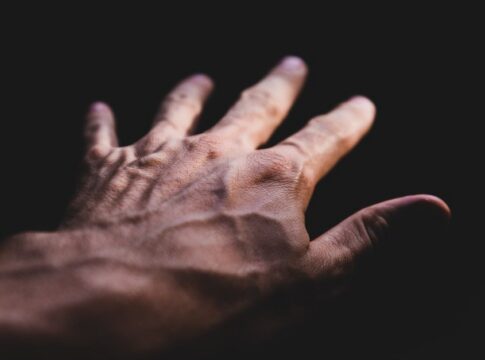
Why Your Fingers Wrinkle in Water After a Long Bath
By Trivia Daily, Science Desk — Published July 20, 2026
Table of Contents
- Key Takeaways
- The Science Behind Why Fingers Wrinkle in Water
- Why Only Fingers and Toes?
- Common Myths About Pruney Fingers
- Comparing Wet Grip Performance
- Frequently Asked Questions
Step out of a long bath or emerge from the pool, and you’ll notice your fingertips have transformed into miniature mountain ranges. This wrinkling phenomenon has puzzled humans for centuries, and for most of that time, scientists believed it was simply the result of waterlogged skin swelling up. The real answer, discovered through modern research, is far more interesting: your fingers wrinkle in water because your nervous system deliberately causes it to happen. This biology-driven process isn’t a side effect at all—it’s a feature your body activates on purpose.
The wrinkles that form on your fingers and toes after water exposure aren’t random creases. They follow a specific pattern, creating channels that run away from your fingertips like tiny drainage systems. This remarkable design offers a clue about why evolution might have preserved this response across countless generations of primates, including humans.
Key Takeaways
- Finger wrinkling in water is an active process controlled by the nervous system, not passive water absorption into the skin.
- The wrinkles form a specific pattern that channels water away from fingertips, potentially improving grip on wet objects.
- People with nerve damage in their fingers don’t experience wrinkling, proving the phenomenon requires active nervous system involvement.
- Scientific experiments have demonstrated that wrinkled fingers provide better grip on wet objects compared to smooth, dry fingers.
- The response typically begins after about five minutes of water immersion and affects fingers and toes but not other body parts.
- Researchers believe this trait evolved to help our ancestors maintain dexterity in wet environments, similar to tire treads on rain-slicked roads.
The Science Behind Why Fingers Wrinkle in Water
For decades, the prevailing explanation was osmosis—the idea that water entered the outer layer of skin, causing it to expand and buckle. This seemed logical enough. After all, the stratum corneum (the outermost layer of dead skin cells) does absorb water. But this theory had a fatal flaw that scientists eventually couldn’t ignore.
The breakthrough came from observations of patients with nerve damage. When someone has severed or damaged the nerves in their fingers, those fingers don’t wrinkle in water. Period. This single fact demolished the osmosis theory. If wrinkling were purely mechanical—just skin soaking up water like a sponge—then nerve function wouldn’t matter at all. The discovery revealed that finger wrinkling is an active biological response orchestrated by the autonomic nervous system, the same system that controls unconscious functions like heart rate and digestion.
Here’s what actually happens: when your fingers detect prolonged water exposure, the nervous system triggers vasoconstriction in the blood vessels beneath the skin. The blood vessels narrow and pull inward, causing the skin above to pucker and fold. Think of it like letting air out of a balloon—the outer surface wrinkles as the volume underneath decreases. This process creates the distinctive pruney appearance within minutes of submersion.
The Evolutionary Advantage
Why would the human body evolve such a specific response? Research conducted through careful experiments suggests that wrinkled fingers function like tire treads on wet pavement. The channels formed by the wrinkles allow water to drain away from the skin’s surface, potentially increasing friction and improving grip on wet objects.
Studies have tested this hypothesis by asking participants to manipulate wet objects with both wrinkled and non-wrinkled fingers. The results showed measurable improvement in handling wet items when fingers were wrinkled. Participants could transfer wet marbles from one container to another more quickly and with fewer drops when their fingers had been pre-soaked. For dry objects, however, the wrinkles provided no advantage—and might even slightly impair grip.
This discovery suggests our ancestors who spent time foraging in streams, gathering food in rain, or navigating wet environments gained a survival edge from this adaptation. Better grip in wet conditions meant fewer dropped tools, more successful fishing, and reduced accidents on slippery surfaces.
Why Only Fingers and Toes?
One curious aspect of this phenomenon is its selectivity. Your fingers and toes wrinkle readily in water, but your arms, legs, and torso remain smooth no matter how long you soak. The reason lies in the unique structure of palmar and plantar skin—the specialized skin on your palms and soles.
This skin is much thicker than skin elsewhere on your body and contains a denser network of sweat glands. The stratum corneum on your fingertips can be up to five times thicker than on your forearm. This thickness, combined with the absence of hair follicles and sebaceous glands (which produce protective oils), makes these areas particularly responsive to water exposure. The lack of natural oils means there’s no waterproof barrier, allowing the wrinkling mechanism to activate more easily.
The high concentration of nerve endings in your fingertips also plays a role. These areas need exceptional sensitivity for fine motor control and tactile discrimination. The same neural density that lets you feel textures and temperatures also enables the rapid vasoconstriction response that causes wrinkling.
Common Myths About Pruney Fingers
Despite scientific understanding, several misconceptions persist about water-induced wrinkling. One common myth suggests that wrinkling indicates dehydration or that your body is “absorbing” bathwater to compensate for fluid loss. This is false. The wrinkling response occurs regardless of your hydration status, and your body doesn’t absorb significant water through intact skin.
Another misunderstanding is that the wrinkles are permanent or damaging. The changes are entirely temporary. Once you’re out of the water, blood flow returns to normal within minutes, and the skin smooths out completely. There’s no harm to the skin tissue, though the temporary constriction of blood vessels is why your fingertips might look pale or feel slightly cold when wrinkled.
Some people worry that frequent wrinkling might “wear out” the response or damage the skin. No evidence supports this concern. The mechanism remains functional throughout life, though it may become slightly less pronounced with age as skin loses elasticity and nerve function gradually declines.
Comparing Wet Grip Performance
| Condition | Object Type | Grip Performance | Explanation |
|---|---|---|---|
| Wrinkled fingers | Wet objects | Enhanced | Channels drain water, increasing friction |
| Wrinkled fingers | Dry objects | Slightly reduced | Less surface contact area |
| Smooth fingers | Wet objects | Reduced | Water layer creates slippage |
| Smooth fingers | Dry objects | Optimal | Maximum surface contact |
Frequently Asked Questions
How long does it take for fingers to wrinkle in water?
Most people begin to notice wrinkling after about five minutes of continuous water immersion. The effect becomes more pronounced over the next ten to fifteen minutes, reaching maximum wrinkling after roughly thirty minutes of soaking.
Do fingers wrinkle faster in hot or cold water?
Temperature does affect the speed of wrinkling, with warm water typically producing the response more quickly than cold water. This is because warm water increases blood flow and nerve activity, accelerating the vasoconstriction response that causes wrinkling.
Why don’t my fingers wrinkle in the shower but they do in the bath?
The key difference is duration of continuous water contact. In a shower, water runs off your hands quickly, rarely maintaining the prolonged contact needed to trigger wrinkling. In a bath, your hands remain submerged continuously, activating the response.
Can anything prevent fingers from wrinkling in water?
Applying waterproof barriers like petroleum jelly or thick oils can delay or reduce wrinkling by preventing direct water contact with the skin. However, with sufficient time, wrinkling will eventually occur as these barriers break down or water penetrates through gaps.
The next time you notice your pruney fingertips after a swim, remember you’re witnessing millions of years of evolution at work. What seems like a minor inconvenience is actually your nervous system demonstrating remarkable precision, executing a response that once helped your ancestors thrive in a world where wet hands and survival went hand in hand. That’s something worth appreciating, even if it does make your fingers look a bit odd for a few minutes.