











1 / 10 Questions
0 Points

What tiny country fits inside New York's Central Park?

Monaco

Vatican City

San Marino

Liechtenstein

Points won
0
Correct score
0%

More Questions

More Articles

Did You Know These Countries Have Strange Traditions?

Did You Know These Countries Have Strange Traditions?

⏱️ 5 min read

Every culture around the world has developed unique customs and traditions that reflect their history, beliefs, and values. While some practices may seem unusual to outsiders, they hold deep significance for the communities that maintain them. From festivals involving unusual foods to ceremonies that defy modern logic, these traditions offer fascinating insights into human diversity and cultural richness.

Spain's La Tomatina: The World's Largest Food Fight

Every August in the small Spanish town of Buñol, thousands of people gather for what might be the messiest festival on Earth. La Tomatina transforms the streets into rivers of red as participants hurl overripe tomatoes at each other for approximately one hour. This tradition began in 1945, reportedly after a street brawl near a vegetable stand, and has since evolved into an internationally recognized event that attracts visitors from across the globe.

The festival follows specific rules to ensure safety, including the requirement that tomatoes must be squashed before throwing to reduce impact. Approximately 150,000 tomatoes are used during the event, and the natural acidity of the fruit actually helps clean the streets afterward. Fire trucks spray water to wash away the tomato pulp, leaving the town remarkably clean by day's end.

Finland's Wife Carrying Championship

In Finland, the town of Sonkajärvi hosts an annual competition that tests both physical strength and marital teamwork. The Wife Carrying World Championships require male participants to navigate an obstacle course while carrying a female teammate, who may or may not be their actual wife. The course includes water obstacles, sand traps, and hurdles, all while maintaining hold of their partner.

This peculiar tradition allegedly originates from 19th-century folklore about a brigand named Ronkainen who required his gang members to carry heavy sacks through obstacle courses as training. The winner receives the wife's weight in beer as a prize, making the competition both challenging and rewarding. The event has inspired similar competitions worldwide and showcases Finnish humor and athletic prowess.

Japan's Kanamara Matsuri: The Festival of the Steel Phallus

Japan celebrates numerous festivals throughout the year, but few are as unconventional as the Kanamara Matsuri in Kawasaki. This spring festival centers around phallic imagery and celebrates fertility, marriage, and sexual health. Participants carry large phallus-shaped portable shrines through the streets, and vendors sell related foods, decorations, and souvenirs.

The festival's origins trace back to a legend about a demon who hid inside a woman's body, and a blacksmith who forged a steel phallus to defeat it. Today, the event serves multiple purposes, including raising awareness about sexually transmitted infections and supporting HIV research. Despite its unusual nature, the festival attracts families, tourists, and locals who participate in the celebrations with good humor and cultural appreciation.

Scotland's Hogmanay and First Footing Traditions

Scotland's New Year celebration, known as Hogmanay, includes a custom called "first footing" that determines the household's fortune for the coming year. According to tradition, the first person to cross a threshold after midnight should be a tall, dark-haired male bearing gifts such as coal, salt, shortbread, or whisky. Each gift holds symbolic meaning: coal represents warmth, salt represents flavor and preservation, and whisky represents good cheer.

The tradition reflects ancient beliefs about luck and prosperity, with specific characteristics considered more auspicious than others. Fair-haired visitors were historically viewed with suspicion, possibly dating back to Viking invasions. Many Scottish families still observe this custom, carefully arranging who will be their first visitor of the new year.

Denmark's Plate Smashing and Cinnamon Showering

Denmark maintains several unusual traditions that perplex outsiders. One custom involves saving old dishes throughout the year to smash against friends' and family members' doors on New Year's Eve. The larger the pile of broken crockery outside someone's home, the more popular and well-liked they are considered to be.

Another Danish tradition involves showering unmarried individuals with cinnamon on their 25th birthday. This custom originated from spice salesmen who traveled extensively and often remained unmarried. Today, friends and family ambush birthday celebrants with cinnamon powder, sometimes creating elaborate setups. Those who remain single until 30 receive pepper instead, escalating the spice-based tradition.

South Korea's Boryeong Mud Festival

What began as a marketing campaign for cosmetic products has transformed into one of South Korea's most popular summer events. The Boryeong Mud Festival attracts millions of visitors who cover themselves in mineral-rich mud believed to have therapeutic properties. The festival features mud wrestling, mud slides, mud baths, and even a mud prison where participants can playfully incarcerate their friends.

The mud comes from the Boryeong flats and contains minerals that supposedly benefit skin health. Beyond the muddy activities, the festival includes concerts, fireworks, and various entertainment options. What started as an unusual promotional event has become a celebration of fun, community, and the willingness to get thoroughly dirty.

The Cultural Significance of Unusual Traditions

These strange traditions serve important functions within their respective societies. They strengthen community bonds, preserve historical memory, and provide opportunities for joy and celebration. What appears bizarre to outsiders often carries profound meaning for participants, representing centuries of cultural evolution and adaptation. These customs remind us that diversity in human expression is vast, and that understanding different traditions enriches our global perspective. Rather than dismissing unfamiliar practices, recognizing their context and significance fosters cross-cultural appreciation and respect.
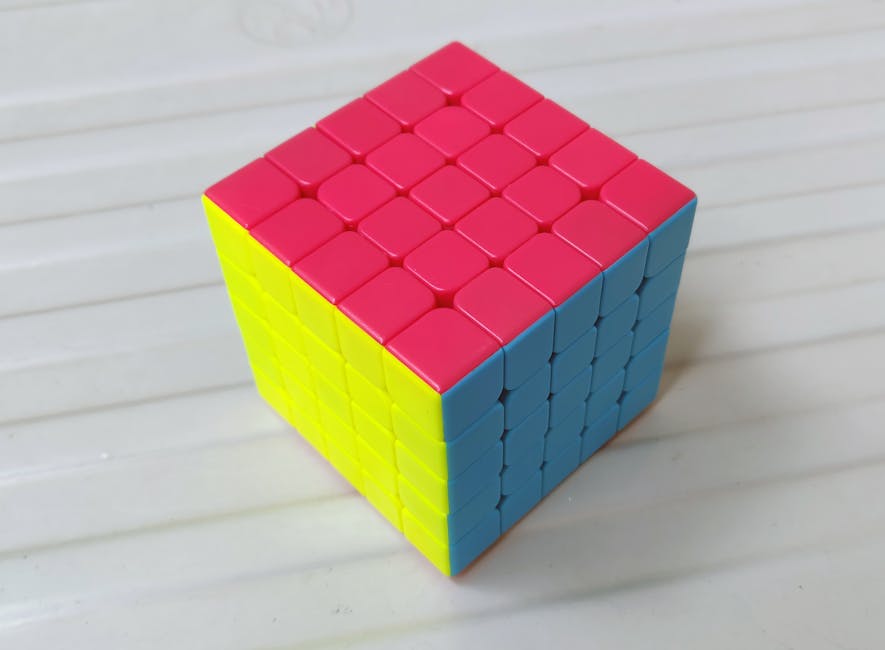
Top 10 Mind Puzzles That Test Your Logic

Top 10 Mind Puzzles That Test Your Logic

⏱️ 6 min read

Logic puzzles have captivated minds for centuries, challenging our ability to think critically, recognize patterns, and solve complex problems through deductive reasoning. These mental exercises not only provide entertainment but also sharpen cognitive skills essential for everyday decision-making. The following collection represents some of the most intriguing and challenging logic puzzles that have stood the test of time, each designed to push your reasoning abilities to their limits.

Classic Logic Puzzles That Challenge Your Reasoning

1. The Monty Hall Problem

Named after the host of the game show "Let's Make a Deal," this probability puzzle continues to baffle even mathematicians. The scenario presents three doors: behind one is a car, behind the others are goats. After selecting a door, the host opens another door revealing a goat, then offers the option to switch choices. Counterintuitively, switching doors actually doubles the chances of winning the car from 33% to 67%. This puzzle demonstrates how our intuitive understanding of probability can mislead us, making it an excellent test of logical thinking over gut instinct.

2. The Bridge and Torch Problem

This classic puzzle involves four people who must cross a bridge at night with only one torch. Each person walks at different speeds: one takes 1 minute, another 2 minutes, the third 5 minutes, and the fourth 10 minutes. When two people cross together, they must move at the slower person's pace. The challenge is to get everyone across in 17 minutes or less. The solution requires strategic planning and understanding that sometimes the fastest person must make multiple trips to optimize the overall time. This puzzle tests the ability to think beyond obvious solutions and consider resource optimization.

3. Einstein's Riddle

Allegedly created by Albert Einstein, this puzzle involves five houses in different colors, inhabited by people of different nationalities who keep different pets, drink different beverages, and smoke different brands of cigarettes. Given 15 clues, the solver must determine who owns the fish. This grid logic puzzle requires systematic elimination and careful tracking of constraints. It tests patience, organizational thinking, and the ability to work through complex interrelated conditions without making assumptions.

4. The Liar and Truth-Teller Paradox

In this scenario, two guards stand before two doors—one leading to freedom, the other to certain doom. One guard always tells the truth, while the other always lies, but you don't know which is which. You can ask only one question to one guard to determine which door leads to freedom. The solution involves asking either guard what the other would say, then choosing the opposite door. This puzzle brilliantly tests metalogical thinking and the ability to use deception against itself through careful question construction.

5. The River Crossing Dilemma

This puzzle presents a farmer who must transport a fox, a chicken, and a bag of grain across a river in a boat that can only carry him and one item at a time. The fox cannot be left alone with the chicken, and the chicken cannot be left alone with the grain. Solving this requires planning multiple moves ahead and understanding that sometimes progress requires temporary backward steps. It tests sequential thinking and the ability to manage competing constraints simultaneously.

6. The Missing Dollar Paradox

Three people check into a hotel room costing $30, each paying $10. Later, the clerk realizes the room costs only $25 and sends a bellhop with $5 to return. The bellhop keeps $2 and gives each person $1 back. Now each person has paid $9 (totaling $27) and the bellhop has $2, making $29—where did the missing dollar go? This puzzle tests whether you can identify flawed logic in mathematical reasoning. The trick lies in the false addition of the bellhop's $2 to the $27 when it should be subtracted, revealing how easily our minds can be misdirected by improper framing.

7. The Poisoned Wine Cask Problem

A king has 1,000 casks of wine, one of which is poisoned. The poison takes exactly 24 hours to show effects. With only 24 hours before a celebration and access to prisoners for testing, what is the minimum number of prisoners needed to identify the poisoned cask? The answer is 10 prisoners, using binary logic. Each prisoner represents a binary digit, and each cask is assigned a 10-digit binary number. Prisoners drink from casks corresponding to their digit position. This puzzle demonstrates the power of binary systems and information theory in solving practical problems.

8. The Blue Eyes Island Puzzle

On an island, 100 people have blue eyes and 100 have brown eyes, but there are no mirrors and discussing eye color is taboo. Everyone can see others' eye colors but not their own. A visitor announces that at least one person has blue eyes. What happens? Surprisingly, after 100 days, all blue-eyed people leave the island simultaneously. This puzzle tests understanding of common knowledge, logical induction, and how information cascades through a population. It's particularly challenging because it requires thinking from multiple perspectives simultaneously.

9. The Cheryl's Birthday Problem

This puzzle went viral when it appeared on a Singapore math test. Cheryl tells Albert the month of her birthday and Bernard the day. She provides 10 possible dates. Through a series of logical statements from Albert and Bernard about what they know and don't know, the solver must deduce the exact date. The solution requires careful parsing of statements about knowledge and meta-knowledge—understanding not just facts but what can be inferred from what others know or don't know. This tests multiple levels of logical reasoning and the ability to extract information from seemingly vague statements.

10. The Hat Color Prediction Game

In this puzzle, three prisoners are lined up single file, each wearing either a black or white hat. The back person can see the two in front, the middle person sees only one ahead, and the front person sees no one. They must simultaneously guess their own hat color to be freed, with at least one correct guess required. With a predetermined strategy allowing communication beforehand but not during the game, they can guarantee at least one person guesses correctly. The optimal strategy involves parity checking, where the back person announces a color based on what they see, encoding information for the others. This puzzle demonstrates game theory, information encoding, and cooperative strategy.

The Lasting Value of Logic Puzzles

These ten puzzles represent different dimensions of logical thinking—from probability and binary logic to meta-reasoning and strategic planning. Each challenges our assumptions and reveals how easily our intuition can lead us astray. Working through these puzzles strengthens analytical skills applicable far beyond recreational mathematics, including programming, strategic planning, and critical evaluation of arguments. The true value lies not just in finding solutions but in understanding the reasoning processes that lead to them, making these timeless tools for developing sharper, more flexible minds.