








1 / 10 Questions
0 Points

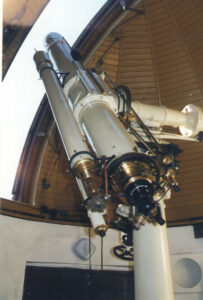
Which instrument do most amateur astronomers use for stargazing?

Stethoscope

Telescope

Periscope

Microscope

Points won
0
Correct score
0%

More Questions

More Articles

Top 10 Facts About Gravity You Didn’t Expect

Top 10 Facts About Gravity You Didn’t Expect

⏱️ 6 min read

Gravity is one of the most fundamental forces in the universe, yet it continues to surprise scientists and challenge our understanding of physics. While most people know that gravity keeps us anchored to Earth and makes objects fall, there are numerous fascinating aspects of this force that remain largely unknown to the general public. From quantum mysteries to cosmic phenomena, these surprising facts reveal just how complex and intriguing gravity truly is.

Surprising Revelations About the Universe's Most Familiar Force

1. Gravity Is the Weakest Fundamental Force

Despite its cosmic significance, gravity is actually the weakest of the four fundamental forces in nature. It's approximately 10^36 times weaker than the electromagnetic force. This is why a small refrigerator magnet can overcome the gravitational pull of the entire Earth to pick up a paperclip. The electromagnetic force holding atoms together is vastly more powerful than gravity at small scales. Scientists still struggle to understand why gravity is so comparatively weak, a puzzle known as the "hierarchy problem" in physics.

2. Time Moves Faster on Your Head Than Your Feet

According to Einstein's general relativity, gravity affects the passage of time—a phenomenon called gravitational time dilation. Because your head is farther from Earth's center than your feet, it experiences slightly less gravity, meaning time passes fractionally faster for your head. While the difference is minuscule—about 90 billionths of a second over a lifetime—atomic clocks are sensitive enough to measure this effect. This same principle means that GPS satellites must account for time dilation to maintain accuracy, as time runs faster in orbit than on Earth's surface.

3. Zero Gravity Doesn't Actually Exist in Space

Astronauts in the International Space Station aren't experiencing zero gravity—they're in continuous freefall. The ISS orbits Earth at about 250 miles altitude, where gravity is still approximately 90% as strong as on the surface. The weightless sensation occurs because the station and everything inside it are falling toward Earth at the same rate while simultaneously moving forward fast enough to keep missing it. This state is more accurately called microgravity, and there are still minute gravitational effects from air resistance and tidal forces that create slight variations.

4. Gravity Waves Are Not Gravitational Waves

This common confusion trips up many people. Gravity waves are atmospheric or oceanic phenomena—oscillations in fluids caused by gravity trying to restore equilibrium, like waves on water. Gravitational waves, detected for the first time in 2015, are ripples in spacetime itself caused by violent cosmic events like colliding black holes. These ripples travel at the speed of light and were predicted by Einstein a century before their detection. The LIGO observatory's discovery of gravitational waves opened an entirely new way of observing the universe.

5. Mountains Can't Exceed a Certain Height Due to Gravity

On Earth, mountains can only grow so tall before gravity causes the rock at their base to flow like a viscous fluid under extreme pressure. This limit is roughly 15 kilometers (9 miles), which is why Mount Everest stands at 8.8 kilometers. However, on smaller bodies with less gravity, mountains can be much taller. Olympus Mons on Mars, for instance, towers at 21 kilometers—nearly two and a half times Everest's height—because Mars has only 38% of Earth's surface gravity. The relationship between planetary mass, gravity, and geological features provides crucial insights into planetary formation and evolution.

6. You Weigh Less When the Moon Is Overhead

The Moon's gravitational pull doesn't just create tides in the ocean—it also affects your body weight, though imperceptibly. When the Moon is directly overhead or directly beneath you (on the opposite side of Earth), its gravitational force slightly counteracts Earth's gravity, reducing your weight by about 0.0001%. While far too small to notice on a bathroom scale, this effect is measurable with precision instruments. This same principle causes Earth itself to bulge slightly toward and away from the Moon, creating land tides that can shift the ground by up to 30 centimeters.

7. Gravity Might Leak Into Other Dimensions

Some theoretical physicists propose that gravity's unusual weakness compared to other forces might be explained if it "leaks" into extra spatial dimensions beyond the three we experience. In these theories, while electromagnetic and nuclear forces are confined to our familiar dimensions, gravity could spread out into additional dimensions we cannot perceive, diluting its strength in our observable universe. This hypothesis, part of string theory and brane cosmology, remains speculative but offers a potential explanation for the hierarchy problem. Experiments at particle accelerators continue searching for evidence of these extra dimensions.

8. Gravitational Lensing Lets Us See Behind Massive Objects

Einstein's theory predicts that massive objects bend spacetime so severely that they act as cosmic magnifying glasses. This gravitational lensing effect allows astronomers to observe galaxies and other objects that would otherwise be hidden behind massive galaxy clusters or black holes. The light from distant objects curves around the massive foreground object, sometimes creating multiple distorted images or complete rings called "Einstein rings." This phenomenon has become an invaluable tool for studying dark matter distribution, detecting exoplanets, and observing some of the most distant galaxies in the universe.

9. Black Holes Can Spin at Nearly the Speed of Light

Black holes aren't just gravitational prisons—many rotate at extraordinary speeds. Some supermassive black holes spin with their event horizons moving at up to 99% of the speed of light. This rotation drags spacetime itself around the black hole in a phenomenon called "frame dragging" or the Lense-Thirring effect. The spin rate affects the black hole's shape, flattening it into an oblate spheroid, and determines how close matter can orbit before being pulled in. These spinning monsters generate enormous amounts of energy and can power relativistic jets that shoot matter thousands of light-years into space.

10. Quantum Mechanics and Gravity Remain Fundamentally Incompatible

Perhaps the most surprising fact about gravity is that physicists still cannot fully explain how it works at quantum scales. While quantum mechanics successfully describes three fundamental forces, all attempts to create a consistent quantum theory of gravity have failed. At extremely small scales—around the Planck length of 10^-35 meters—our understanding of gravity breaks down completely. Theories like string theory and loop quantum gravity attempt to reconcile this incompatibility, but a complete theory of quantum gravity remains one of physics' greatest unsolved problems. This gap in understanding suggests that revolutionary discoveries about gravity's true nature still await.

Concluding Thoughts on Gravity's Mysteries

These ten facts demonstrate that gravity, despite being the first force humans scientifically studied, remains full of surprises and mysteries. From its peculiar weakness to its refusal to fit into quantum mechanics, from its ability to bend both space and time to its role in shaping cosmic architecture, gravity continues to challenge and expand our understanding of the universe. As detection methods improve and theoretical physics advances, researchers will undoubtedly uncover even more unexpected aspects of this fundamental force. Each discovery not only deepens our comprehension of gravity but also reveals how much remains to be learned about the universe we inhabit.

Top 10 Surprising Facts About Human Behavior

Top 10 Surprising Facts About Human Behavior

⏱️ 7 min read

Human behavior is a fascinating subject that continues to surprise researchers and laypeople alike. Despite living with ourselves every day, there are countless quirks and patterns in how we think, act, and interact that defy our expectations. The following insights reveal just how wonderfully complex and sometimes counterintuitive human nature can be, shedding light on the hidden forces that shape our daily decisions and social interactions.

Unexpected Truths About How We Think and Act

1. Decision Fatigue Depletes Mental Resources

Every decision made throughout the day, from what to wear to what to eat, gradually depletes mental energy in a phenomenon known as decision fatigue. Research has shown that judges are more likely to grant parole early in the day when their mental reserves are fresh, with approval rates dropping significantly as the day progresses. This depletion affects everyone, explaining why successful individuals like Steve Jobs and Barack Obama wore virtually the same outfit daily—they were preserving their decision-making capacity for more important choices. The brain treats all decisions as taxing, regardless of their significance, which is why even choosing between similar products at a supermarket can feel exhausting after a long day.

2. The Spotlight Effect Makes Us Overestimate Attention

People consistently overestimate how much others notice about their appearance, behavior, and mistakes—a cognitive bias called the spotlight effect. In studies, participants wearing embarrassing t-shirts believed that twice as many people noticed compared to those who actually did. This phenomenon occurs because individuals are naturally the center of their own universe, making it difficult to recognize that others are equally preoccupied with themselves. Understanding this bias can be liberating, as it reveals that most social anxieties are based on an inflated sense of how much scrutiny we actually face in daily life.

3. Mirroring Behavior Creates Instant Rapport

Humans unconsciously mimic the postures, gestures, and speech patterns of those around them in a behavior known as the chameleon effect. This automatic mirroring serves an important social function—studies demonstrate that people who subtly copy others' body language are perceived as more likeable and trustworthy. The phenomenon extends beyond physical movements to include emotional states, speech patterns, and even breathing rhythms. Waiters who repeat orders back to customers word-for-word receive higher tips, and negotiators who mirror their counterparts achieve better outcomes, all because this mimicry creates subconscious feelings of connection and understanding.

4. The Bystander Effect Inhibits Helping Behavior

Contrary to the assumption that safety lies in numbers, research shows that individuals are less likely to help someone in distress when other people are present. This counterintuitive finding, known as the bystander effect, occurs because responsibility becomes diffused across the group, with each person assuming someone else will take action. The famous case of Kitty Genovese sparked initial research into this phenomenon, and subsequent studies have confirmed that the presence of even one other person significantly reduces the likelihood of intervention. Understanding this effect can help individuals overcome it by consciously choosing to act rather than waiting for others to respond first.

5. Paradox of Choice Leads to Dissatisfaction

While conventional wisdom suggests that more options lead to better outcomes and greater satisfaction, psychological research reveals the opposite. When presented with too many choices, people experience anxiety, regret, and reduced satisfaction with their ultimate selection. Studies in supermarkets showed that customers presented with 24 jam varieties were less likely to purchase than those shown only six options. This occurs because extensive options raise expectations, increase the opportunity cost of unchosen alternatives, and create fear of making the wrong decision. The modern consumer environment, with its virtually unlimited choices, may actually be undermining rather than enhancing well-being.

6. Emotional Contagion Spreads Through Social Networks

Emotions are remarkably contagious, spreading through social networks much like infectious diseases. Research tracking thousands of people over decades has shown that happiness, sadness, loneliness, and even obesity can spread through social ties up to three degrees of separation. When a friend becomes happy, it increases your likelihood of happiness by 15 percent, and this effect extends to your friend's friends and their friends in turn. This phenomenon occurs through both in-person interactions and digital communications, meaning that the emotional states of acquaintances you rarely see can still influence your own mood and behaviors in measurable ways.

7. Anchoring Effect Skews Numerical Judgments

The first number encountered in any context serves as a powerful anchor that influences all subsequent numerical estimates, even when that initial number is completely arbitrary. In experiments, people asked whether Gandhi died before or after age 140 subsequently estimated his age at death as significantly higher than those first asked about age nine, despite both groups knowing the anchor was unrealistic. This bias affects salary negotiations, real estate pricing, charitable donations, and countless other decisions. Real estate agents exploit this by showing overpriced properties first, making subsequent options seem more reasonable by comparison, regardless of their actual value.

8. The Power of Priming Shapes Unconscious Behavior

Subtle environmental cues can dramatically alter behavior without conscious awareness through a process called priming. Studies have shown that people walk more slowly after reading words associated with elderly individuals, act more competitively after seeing briefcases, and perform better on tests when primed with concepts related to intelligence. Even the weight of a clipboard or the temperature of a held beverage can influence judgments about unrelated matters, with heavier objects making issues seem more important and warm drinks making people perceive others as having warmer personalities. These findings suggest that the environment continuously shapes behavior in ways that completely bypass conscious deliberation.

9. Peak-End Rule Dominates Memory of Experiences

When recalling experiences, people disproportionately remember the most intense moment (the peak) and the final moment (the end), while largely forgetting everything else, including duration. In medical studies, patients who experienced a longer colonoscopy with a less painful ending rated the experience more positively than those with a shorter but consistently uncomfortable procedure. This means that memories of vacations, relationships, and life events are dominated by snapshots rather than comprehensive assessments. Understanding this bias explains why people often make seemingly irrational decisions, choosing to repeat experiences they actually found mostly unpleasant simply because they ended well.

10. Fundamental Attribution Error Distorts Social Perception

People consistently overestimate the role of personality and underestimate the influence of situational factors when explaining others' behavior, while doing the opposite for their own actions. If someone cuts you off in traffic, you assume they're a reckless person, but when you do the same, you recognize you were rushing to an emergency. This asymmetry, called the fundamental attribution error, contributes to conflicts, prejudices, and misunderstandings across all domains of life. It explains why individuals can simultaneously demand understanding for their own mistakes while harshly judging others for identical behaviors, creating a persistent bias that distorts social perception and undermines empathy.

Understanding Our Hidden Nature

These ten insights into human behavior reveal that people are far less rational and far more influenced by unconscious processes than commonly believed. From the depletion of mental resources through decisions to the contagious nature of emotions across social networks, human behavior emerges from a complex interplay of cognitive biases, social dynamics, and environmental influences. Recognizing these patterns doesn't eliminate them—many are deeply embedded in how the brain processes information—but awareness can help individuals make more informed choices, develop greater empathy for others, and understand why people, including themselves, act in ways that sometimes seem contradictory or surprising. The study of human behavior continues to uncover new insights, reminding us that understanding ourselves remains one of the most challenging and rewarding pursuits.