









1 / 10 Questions
0 Points

Which TV personality's interview behavior and controversial statements led to her being fired from The Talk in 2021?

Julie Chen

Sharon Osbourne

Sara Gilbert

Sheryl Underwood

Points won
0
Correct score
0%

More Questions

More Articles

Did You Know These Inventions Were Inspired by Nature?

Did You Know These Inventions Were Inspired by Nature?

⏱️ 5 min read

Nature has served as humanity's greatest teacher for millennia, providing ingenious solutions to complex engineering and design challenges. The practice of drawing inspiration from natural systems and organisms, known as biomimicry, has led to some of the most revolutionary inventions in modern history. From the way birds fly to how lotus leaves repel water, scientists and engineers continue to unlock nature's secrets to create innovative technologies that shape our daily lives.

The Revolutionary Impact of Velcro

One of the most ubiquitous inventions inspired by nature emerged from a simple walk in the woods. In 1941, Swiss engineer George de Mestral noticed burrs clinging stubbornly to his dog's fur after a hiking trip. Upon examining these seed pods under a microscope, he discovered tiny hooks that caught onto loops in fabric and fur. This observation led to the development of Velcro, a hook-and-loop fastening system that revolutionized the fastener industry. Today, Velcro is used in everything from children's shoes to NASA spacesuits, demonstrating how a casual observation of nature can lead to a multi-million dollar innovation.

Bullet Trains Modeled After Kingfishers

Japan's famous Shinkansen bullet train faced a significant engineering challenge in the 1990s: creating a loud sonic boom when exiting tunnels at high speeds. The solution came from an unlikely source—the kingfisher bird. Engineer Eiji Nakatsu, an avid birdwatcher, noticed how kingfishers dive into water with minimal splash despite their high speed. Their long, streamlined beaks allow them to move seamlessly between air and water, two mediums of different resistance.

By redesigning the train's nose to mimic the kingfisher's beak shape, engineers reduced the sonic boom, decreased air pressure, and increased the train's speed by ten percent while using fifteen percent less electricity. This biomimetic design showcases how studying nature's solutions to similar problems can yield remarkable technological advances.

Self-Cleaning Surfaces from Lotus Leaves

The lotus flower has long held symbolic significance in various cultures, but its leaves possess a remarkable property that has inspired modern materials science. Lotus leaves remain pristine despite growing in muddy water, thanks to their unique microstructure. The leaf surface is covered with tiny bumps coated in hydrophobic wax crystals, causing water droplets to bead up and roll off, collecting dirt particles along the way.

This "lotus effect" has been replicated in numerous commercial applications, including self-cleaning glass, stain-resistant fabrics, and low-maintenance paints. Buildings with lotus-effect coatings require less water for cleaning and fewer harsh chemicals, making them more environmentally sustainable. This technology demonstrates how nature's water-repellent strategies can be applied to solve human maintenance challenges.

Sharkskin-Inspired Swimsuits and Antibacterial Surfaces

The speed and efficiency of sharks in water have long fascinated marine biologists and engineers. Research revealed that shark skin isn't smooth but covered with millions of tiny, tooth-like scales called dermal denticles. These structures reduce drag and turbulence in water, allowing sharks to swim faster while expending less energy.

This discovery led to the development of high-performance swimsuits that helped athletes break numerous world records before being banned in competitive swimming. Beyond athletics, sharkskin-inspired textures are now used in ship hull coatings to reduce fuel consumption and in hospital surfaces to prevent bacterial growth. The same pattern that helps sharks glide through water also disrupts bacterial colonization, offering a chemical-free method of maintaining hygienic surfaces in healthcare settings.

Termite Mounds and Climate-Controlled Buildings

Despite living in hot African climates, termites maintain their mounds at a constant temperature, crucial for cultivating the fungus they eat. They achieve this through an intricate system of tunnels and vents that create natural air circulation, passively cooling and ventilating their structures.

Architect Mick Pearce applied these principles when designing the Eastgate Centre in Harare, Zimbabwe. The building uses a ventilation system modeled after termite mounds, requiring no conventional air conditioning despite the region's extreme temperatures. This biomimetic approach reduced energy consumption by ninety percent compared to similar-sized buildings, resulting in substantial cost savings and environmental benefits. The success of this project has inspired similar designs worldwide, proving that ancient insects can teach modern architects about sustainable climate control.

Gecko Feet and Advanced Adhesives

Geckos possess the remarkable ability to climb smooth vertical surfaces and even walk upside down on ceilings. This capability comes from millions of microscopic hairs called setae on their toe pads. Each seta splits into hundreds of even smaller structures that create weak intermolecular forces with surfaces, collectively generating powerful adhesion.

Scientists have developed synthetic gecko-inspired adhesives that stick and release on command without leaving residue. These materials have applications in robotics, allowing robots to climb walls for inspection and rescue operations. Medical researchers are also exploring gecko-inspired adhesives for surgical applications, potentially replacing traditional sutures and staples with residue-free, reusable adhesive patches.

The Future of Biomimicry

As technology advances and our understanding of natural systems deepens, biomimicry continues to offer solutions to contemporary challenges. From developing more efficient solar cells inspired by photosynthesis to creating stronger materials modeled after spider silk, nature's 3.8 billion years of research and development provide an inexhaustible resource for innovation. The inventions highlighted here represent just a fraction of biomimetic technologies, reminding us that the natural world holds answers to questions we haven't even thought to ask yet.
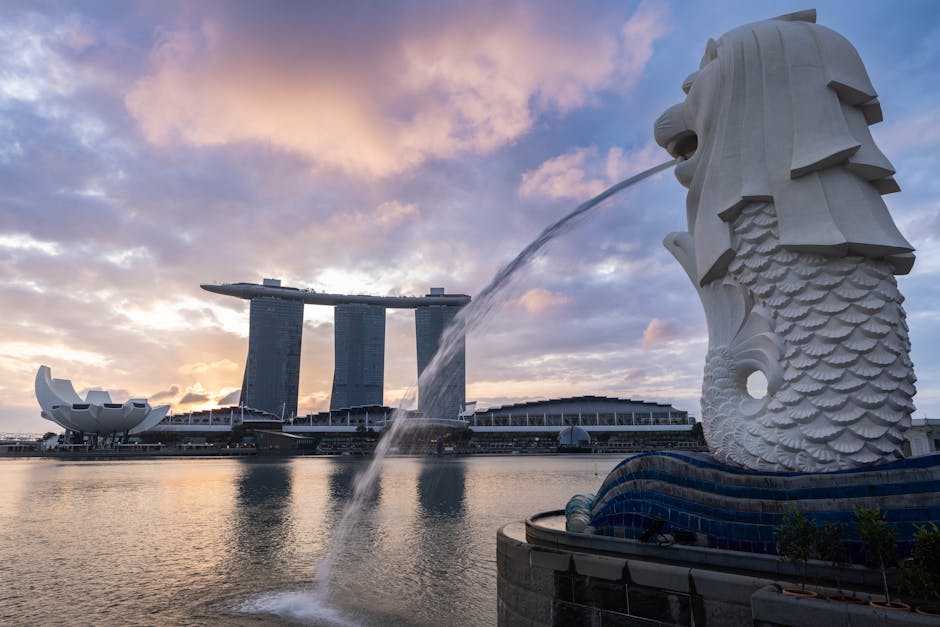
Top 10 Unexpected Facts About Global Cultures

Top 10 Unexpected Facts About Global Cultures

⏱️ 6 min read

Every culture around the world holds fascinating traditions, beliefs, and practices that challenge our assumptions and broaden our understanding of human diversity. While many people are familiar with common cultural differences like cuisine and holidays, there exist countless surprising customs and historical facts that remain largely unknown outside their regions of origin. These unexpected aspects of global cultures reveal the incredible creativity, resilience, and uniqueness of human societies across continents.

Discovering the World's Most Surprising Cultural Phenomena

The following collection highlights remarkable cultural practices and historical truths that demonstrate how wonderfully diverse our world truly is. From unusual communication methods to unexpected social norms, these facts showcase the ingenuity and adaptability of human cultures throughout history.

1. The Finger-Counting Systems That Vary Worldwide

While Western cultures typically count on fingers starting with the index finger and progressing to the thumb, many Asian cultures begin counting with the thumb and work toward the pinky. Even more fascinating, some cultures in Papua New Guinea use a base-27 counting system that incorporates not just fingers but also various body parts including wrists, elbows, shoulders, and parts of the face. This demonstrates that even something as seemingly universal as counting has profound cultural variations that reflect different ways of conceptualizing numbers and quantities.

2. The Color Blue's Relatively Recent Linguistic History

Ancient languages, including Greek, Chinese, Japanese, and Hebrew, originally had no word for the color blue. Researchers have discovered that across cultures worldwide, colors appear in language in a consistent order: black and white first, then red, followed by yellow and green, with blue appearing much later. The ancient Greeks described the sea as "wine-dark" rather than blue. This linguistic phenomenon suggests that color perception and categorization are partially culturally constructed rather than purely biological, fundamentally changing how we understand human cognition.

3. Russia's Expansive Time Zone Diversity

Russia spans an extraordinary eleven time zones, making it the country with the most time zones in the world. This means that when residents of Kaliningrad are just starting their day at 9 AM, people in Kamchatka are preparing for sleep at 8 PM. This vast temporal spread affects everything from business communications to television broadcasting schedules. The complexity of coordinating across such distances has shaped Russian culture and administration in unique ways, creating challenges unknown to most other nations.

4. The Whistling Language of La Gomera

On the Canary Island of La Gomera, residents communicate using Silbo Gomero, a whistling language that can transmit messages across distances of up to five kilometers across the island's mountainous terrain. This practice dates back over 500 years and was developed as a practical solution to the challenge of communicating across deep ravines and valleys. Remarkably, this whistling language is now taught in schools and recognized by UNESCO as part of humanity's intangible cultural heritage, ensuring its preservation for future generations.

5. Saudi Arabia's Sand Importation Paradox

Despite being home to some of the world's largest deserts, Saudi Arabia actually imports sand from other countries. The reason lies in the quality of desert sand—it has been eroded by wind into such fine, round particles that it cannot be used effectively in construction and glass manufacturing. These industries require rougher, angular sand typically found in riverbeds and seashores. This counterintuitive fact highlights how natural abundance does not always translate to practical utility.

6. The Bhutanese Measurement of Gross National Happiness

Bhutan officially measures its country's success not through Gross Domestic Product but through Gross National Happiness (GNH), which considers psychological wellbeing, health, education, culture, living standards, governance, community vitality, ecological diversity, and time use. This philosophy, introduced in 1972 by Bhutan's fourth Dragon King, has influenced the nation's policy decisions, from refusing high-impact tourism to maintaining forest coverage. This approach represents a fundamentally different value system from the economic-focused measurements used by most nations.

7. The Underground City Homes of Coober Pedy

In the Australian outback town of Coober Pedy, more than half the population lives underground in homes carved directly into the rock. These "dugout" homes were initially created by opal miners but became popular residential choices due to the extreme desert temperatures above ground. Underground residences maintain a constant comfortable temperature year-round without requiring air conditioning. This unique adaptation demonstrates how environmental challenges can lead to innovative architectural solutions that become defining cultural characteristics.

8. Finland's Competitive Wife-Carrying Championships

Finland hosts an annual World Wife-Carrying Championship where male competitors race through an obstacle course while carrying a female teammate. The prize is the wife's weight in beer, and the sport has spread internationally with participants from dozens of countries. While it began as a humorous local tradition based on 19th-century legend, it has become a serious athletic competition with specific techniques and training regimens. This transformation from folklore to sport illustrates how cultural practices can evolve and gain new meanings over time.

9. Japan's Designated Napping Workplace Culture

In Japan, the practice of "inemuri"—literally "sleeping while present"—is socially acceptable and even respected in workplaces and public spaces. Rather than indicating laziness, brief public napping is interpreted as evidence that someone has been working extremely hard. This cultural attitude toward sleep contrasts sharply with Western workplace norms where visible sleep is often considered unprofessional. The practice reflects broader cultural values about dedication, exhaustion as status, and the social meaning assigned to rest.

10. The Matrilineal Society of Meghalaya's Khasi People

In the Indian state of Meghalaya, the Khasi people maintain one of the world's few remaining matrilineal societies. Property, family names, and wealth pass through the female line, with the youngest daughter inheriting the family home. After marriage, men traditionally move into their wives' households. Children take their mother's surname, and women are considered the custodians of family traditions and property. This social structure challenges assumptions about universal gender roles and demonstrates alternative ways of organizing kinship and inheritance.

Understanding Our Interconnected World

These ten unexpected facts about global cultures reveal the extraordinary diversity of human experience and innovation. From linguistic peculiarities to architectural adaptations, from unique measurement systems to distinctive social structures, cultures worldwide have developed remarkable solutions to universal human challenges. Understanding these differences not only enriches our appreciation of global diversity but also challenges our assumptions about what is "normal" or "natural" in human behavior. As our world becomes increasingly interconnected, recognizing and celebrating these cultural distinctions becomes ever more important for fostering mutual respect and understanding across borders. Each unusual practice or surprising fact represents centuries of human creativity, adaptation, and wisdom worth preserving and appreciating.