









⏱️ 5 min read
The human brain thrives on challenges, and puzzles offer one of the most engaging ways to keep mental faculties sharp. Recent neuroscience research has consistently demonstrated that specific types of puzzles can significantly enhance various cognitive abilities, from memory and processing speed to problem-solving and spatial reasoning. Understanding which puzzles target particular cognitive skills can help individuals make informed choices about their mental exercise routines.
Crossword Puzzles and Verbal Memory Enhancement
Crossword puzzles have long been associated with cognitive health, and scientific evidence supports their reputation. These word-based challenges primarily strengthen verbal memory, vocabulary retention, and language processing skills. When solving crosswords, the brain activates multiple neural pathways simultaneously, retrieving stored information while making connections between clues and potential answers.
Research published in neuropsychology journals indicates that regular crossword puzzle engagement correlates with delayed onset of memory decline in older adults. The puzzles work by forcing the brain to access its semantic memory networks, strengthening the connections between words, meanings, and concepts. Additionally, crosswords improve executive function by requiring solvers to evaluate multiple possibilities, reject incorrect options, and persist through challenging clues.
Sudoku and Logical Reasoning Development
Sudoku puzzles excel at developing logical thinking and pattern recognition abilities. These number-placement challenges require no mathematical calculation but demand systematic reasoning and strategic planning. The brain must maintain multiple constraints simultaneously while testing hypotheses about number placement.
Cognitive studies have shown that regular Sudoku practice enhances working memory capacity—the ability to hold and manipulate information in the mind temporarily. This skill transfers to everyday activities such as following multi-step instructions, mental arithmetic, and complex decision-making. Furthermore, Sudoku strengthens concentration abilities, as solvers must maintain focus on the entire grid while working on individual sections.
Jigsaw Puzzles and Spatial Intelligence
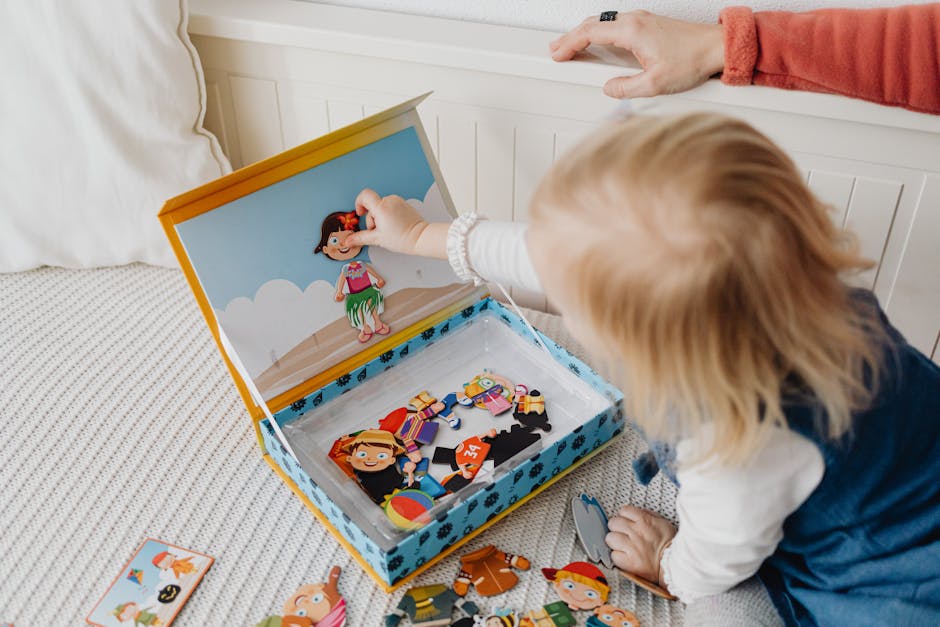
Physical and digital jigsaw puzzles provide exceptional training for visual-spatial reasoning, an often-overlooked cognitive domain. Assembling jigsaw puzzles requires the brain to recognize shapes, colors, and patterns while mentally rotating pieces and visualizing how they fit into the larger picture.
Neuroscientific research using brain imaging technology has revealed that jigsaw puzzle solving activates both the left and right cerebral hemispheres simultaneously. The left hemisphere handles logical approaches to sorting and organizing pieces, while the right hemisphere processes the overall visual image and spatial relationships. This whole-brain engagement makes jigsaw puzzles particularly effective for comprehensive cognitive exercise.
Regular jigsaw puzzle practice has been linked to improvements in:
- Short-term memory retention and recall
- Attention to detail and visual scanning abilities
- Problem-solving flexibility and adaptability
- Hand-eye coordination and fine motor skills
Logic Grid Puzzles and Deductive Reasoning
Logic grid puzzles, which require solvers to use provided clues to fill in information tables, are powerful tools for developing deductive reasoning skills. These puzzles train the brain to process information systematically, eliminate impossibilities, and draw valid conclusions from given premises.
The cognitive benefits extend beyond pure logic. These puzzles enhance organizational thinking, teaching the brain to structure information efficiently. They also improve attention control, as solvers must track multiple interconnected facts without losing focus. Studies suggest that individuals who regularly engage with logic puzzles demonstrate improved analytical skills in professional and academic settings.
The Role of Pattern Recognition
Logic puzzles particularly strengthen pattern recognition abilities, helping the brain identify relationships between disparate pieces of information. This skill proves invaluable in real-world scenarios, from data analysis to troubleshooting technical problems.
Chess and Strategic Planning Abilities
While technically a game rather than a traditional puzzle, chess functions as an ongoing series of positional puzzles that dramatically improve cognitive function. Chess players must evaluate numerous potential moves, anticipate opponent responses, and formulate long-term strategies—all while maintaining awareness of the entire board position.
Cognitive research on chess players has documented measurable improvements in several areas including planning abilities, calculation speed, and memory for patterns. Chess particularly enhances prospective memory—the ability to remember to execute planned actions in the future. Regular chess practice has also been associated with increased processing speed and improved ability to handle complex, multi-faceted problems.
Riddles and Lateral Thinking Development
Riddles and lateral thinking puzzles challenge the brain to break free from conventional thought patterns and approach problems from novel angles. Unlike puzzles with straightforward logical solutions, these challenges require creative thinking and the ability to reframe questions.
The cognitive value of riddles lies in their ability to strengthen cognitive flexibility—the mental agility to switch between different concepts and perspectives. This adaptability proves crucial for innovation, creative problem-solving, and adjusting to new situations. Regular exposure to riddles trains the brain to question assumptions and consider alternative interpretations of information.
Maximizing Cognitive Benefits Through Puzzle Variety
While individual puzzle types offer specific cognitive benefits, research suggests that variety provides optimal brain training. Engaging with diverse puzzle types ensures comprehensive cognitive development across multiple domains. Rotating between verbal, numerical, spatial, and logical puzzles creates a well-rounded mental exercise program.
Consistency matters as much as variety. Regular puzzle-solving sessions—even just fifteen to twenty minutes daily—produce more significant cognitive benefits than sporadic, intensive puzzle marathons. The brain responds best to steady, ongoing challenges that progressively increase in difficulty as skills improve.
The evidence is clear: puzzles represent more than mere entertainment. They serve as accessible, engaging tools for maintaining and enhancing cognitive function across the lifespan. By understanding which puzzles target specific mental skills, individuals can design personalized brain-training programs that address their unique cognitive development goals.