1 / 10 Questions
0 Points

Which two superpowers competed during the Cold War arms race?

USA and China

Britain and France

Germany and Japan

USA and Soviet Union

Points won
0
Correct score
0%

More Questions

More Articles

Why Magnets Lose Their Power When Heated: Physics Revealed

Why Magnets Lose Their Power When Heated: Physics Revealed

Why Magnets Lose Their Power When Heated: Physics Revealed

By Triv Central, Science Desk — Published July 25, 2026

Table of Contents

Drop a magnet into a campfire and fish it out later, and you'll find it's lost its magical ability to attract metal. This isn't some mystical force at work—it's pure physics. When magnets lose power from heating, they're experiencing a fundamental transformation at the atomic level, where the orderly arrangement of microscopic magnetic domains collapses into chaos. Scientists have understood this phenomenon for more than a century, yet the precise mechanics remain one of the most elegant demonstrations of how temperature governs the behavior of matter. Every magnet has a critical temperature threshold called the Curie point, named after physicist Pierre Curie who discovered this relationship in the 1890s. Heat a magnet beyond this point, and its atomic structure loses the alignment that creates magnetism. The experiment is simple but the underlying science reveals profound truths about quantum mechanics, thermal energy, and the invisible forces that shape our world.

Key Takeaways

  • Magnets lose their magnetic properties when heated above their Curie temperature, a specific threshold unique to each magnetic material.
  • Iron's Curie point is approximately 770 degrees Celsius (1,418 degrees Fahrenheit), while nickel loses magnetism around 358 degrees Celsius.
  • Thermal energy disrupts the alignment of magnetic domains—microscopic regions where atomic magnetic moments point in the same direction.
  • The process is reversible: cooling a demagnetized ferromagnetic material and exposing it to a magnetic field can restore some magnetic properties.
  • Pierre Curie's research in the late 19th century established the fundamental relationship between temperature and magnetism.
  • This scientific discovery has practical applications in data storage, electrical engineering, and materials science research.

Why Magnets Lose Power: The Atomic Dance of Heat and Alignment

Inside every magnet, billions of atoms act like tiny magnets themselves. In ferromagnetic materials like iron, cobalt, and nickel, these atomic magnets naturally want to align with their neighbors. When they do, they form regions called magnetic domains—zones where all the atomic magnetic moments point the same direction. A powerful magnet has most of its domains aligned in concert, creating a unified magnetic field strong enough to pick up paper clips or stick to your refrigerator. Heat changes everything. Temperature is really just the measurement of how much atoms are jiggling around. As you heat a magnet, you're pumping thermal energy into the material, causing atoms to vibrate more violently. These vibrations fight against the forces trying to keep magnetic domains aligned. Think of it like trying to march in formation during an earthquake—the more the ground shakes, the harder it becomes to stay in step. At room temperature, the alignment forces win. But keep heating, and eventually the thermal chaos overwhelms the magnetic order. When you cross the Curie temperature, the domains lose their alignment entirely. The atomic magnets still exist, but they now point in random directions, canceling each other out. The material transforms from ferromagnetic to paramagnetic—it can still be influenced by external magnetic fields, but it no longer maintains its own permanent magnetism.

The Curie Point: Where Order Becomes Chaos

Different magnetic materials surrender to heat at different temperatures. This critical threshold isn't arbitrary—it's determined by the strength of the quantum mechanical forces that align neighboring atoms. Here's how common magnetic materials compare:
Material Curie Temperature Common Uses
Iron 770°C (1,418°F) Electromagnets, transformers, motors
Cobalt 1,115°C (2,039°F) High-temperature magnets, hard drives
Nickel 358°C (676°F) Magnetic shielding, alloys
Neodymium (NdFeB) 310-400°C (590-752°F) Powerful rare-earth magnets, electronics
Cobalt's high Curie temperature makes it valuable for applications where magnets must maintain their properties in hot environments. Conversely, nickel's relatively low Curie point means nickel-containing magnets are more vulnerable to heat-induced demagnetization. Engineers must consider these thresholds when designing everything from electric motors to magnetic data storage devices.

The Physics Behind Magnetic Domains

Magnetic domains exist because of a delicate balance between competing forces. The exchange interaction—a quantum mechanical effect—wants neighboring atomic spins to align parallel to each other. This force operates at extremely short ranges, typically affecting only nearest-neighbor atoms. When atoms align, they lower their collective energy state, which nature favors. But other forces complicate the picture. Magnetostatic energy creates a cost for maintaining large, uniform magnetic domains because they generate external magnetic fields that store energy. The material can reduce this energy by breaking into smaller domains pointing in different directions, minimizing the field outside the magnet. Crystal structure imperfections and internal stresses also influence domain formation. The result is a complex landscape of domains separated by domain walls—transition regions where the magnetic orientation gradually rotates from one direction to another. A strong magnet has had its domains forced into alignment, typically through exposure to a powerful external magnetic field during manufacturing. Heat disrupts this carefully arranged structure, and the domains revert to a lower-energy configuration with random orientations.

Can You Restore a Heat-Damaged Magnet?

The chemistry of the material hasn't changed—you've just scrambled its magnetic organization. If you cool the material back down below its Curie temperature and then expose it to a strong external magnetic field, you can realign the domains and restore magnetism. This process, called remagnetization, is exactly how magnets are manufactured in the first place. The catch: remagnetization rarely returns the magnet to its original strength. Some domains may remain misaligned, and the process can be inefficient depending on the material's composition and history. Repeated heating and cooling cycles can also create structural defects that further degrade magnetic performance. For this reason, critical applications use magnets with Curie points well above their operating temperatures, building in a safety margin.

Everyday Science: Where This Discovery Matters

Understanding why magnets lose power when heated isn't just academic trivia—it shapes technology you use daily. Hard drives store data by creating tiny magnetized regions on spinning disks. Too much heat can cause data loss by weakening these magnetic patterns. That's why computers have cooling systems and why data centers spend enormous resources on temperature control. Electric motors generate significant heat during operation. Motor designers must select magnetic materials that maintain their properties at elevated temperatures, or the motor's efficiency will degrade over time. Hybrid and electric vehicles face this challenge acutely, as their powerful motors operate in confined spaces where heat builds up quickly. Even your credit cards rely on this science. The magnetic stripe on the back contains tiny ferromagnetic particles suspended in a plastic film. Leave your card on a hot dashboard or near a heat source, and you might demagnetize the stripe enough to make it unreadable. The same principle explains why you shouldn't store magnetic media near radiators or other heat sources.

Frequently Asked Questions

At what temperature do refrigerator magnets stop working?

Most refrigerator magnets use ferrite or flexible rubber magnets with Curie temperatures between 450-460°C (840-860°F). You'd need to heat them far beyond normal household temperatures—like placing them in an oven or fire—before they'd lose magnetism. Normal refrigerator operation won't affect them.

Can cold temperatures make magnets stronger?

Yes, cooling magnets generally increases their strength slightly because lower temperatures reduce thermal vibrations that disrupt domain alignment. However, the effect is modest at typical temperatures. Superconducting magnets, which operate near absolute zero, exploit different physics entirely and can generate enormously powerful magnetic fields.

Do all magnets have the same Curie temperature?

No, the Curie temperature depends entirely on the material's composition and crystal structure. Pure elements like iron, nickel, and cobalt each have different Curie points, and alloys or compounds containing these elements have their own unique thresholds. Rare-earth magnets typically have lower Curie temperatures than pure iron despite being much stronger at room temperature.

Is heating the only way to demagnetize a magnet?

No, you can also demagnetize a magnet by striking it repeatedly with a hammer or exposing it to a strong alternating magnetic field. Both methods disrupt domain alignment—physical shock through vibration and mechanical stress, alternating fields by forcing domains to flip back and forth until they settle into random orientations. Heating is simply the most common method in research and industrial applications. The next time you see a magnet clinging to a refrigerator door, remember that its seemingly simple attraction conceals a precisely orchestrated atomic ballet. Those billions of aligned magnetic moments are constantly resisting the chaos of thermal energy, maintaining their formation against the universe's tendency toward disorder. It's a reminder that even the most ordinary objects around us are stages for profound physics, quietly demonstrating principles that scientists are still exploring today.
The Hidden Story Behind Why Typewriter Keys Are QWERTY

The Hidden Story Behind Why Typewriter Keys Are QWERTY

The Hidden Story Behind Why Typewriter Keys Are QWERTY

By Triv Central, Staff Writer — Published October 1, 2026

Table of Contents

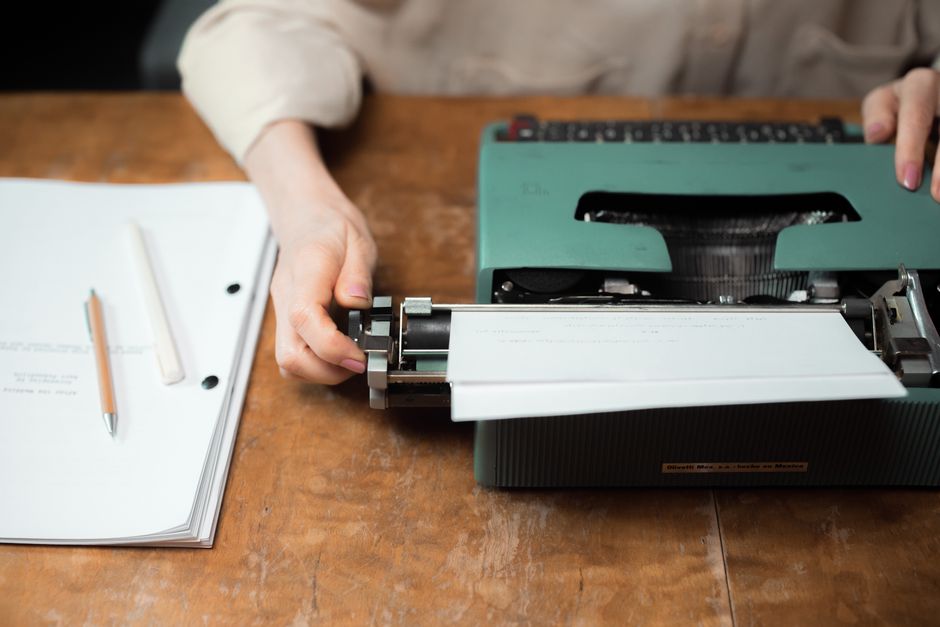
Every day, millions of fingers dance across keyboards arranged in a pattern that seems utterly random. QWERTY—named for the first six letters on the top row—has become so universal that most people never question why the alphabet was scattered this way. The hidden story behind this layout isn't about efficiency or ergonomics, as you might expect. It's a tale of mechanical problem-solving from the 1870s that accidentally became the standard we still use today, even though the original problem disappeared more than a century ago.

The surprising truth is that QWERTY was designed to solve a very specific issue with early typewriters: jamming. But the facts surrounding its creation and persistence reveal fascinating insights about technology, human habit, and why sometimes an "inferior" design wins simply because it got there first.

Key Takeaways

  • QWERTY was developed in the 1870s primarily to reduce mechanical jamming in early typewriters by separating commonly paired letters.
  • The layout was not designed for typing speed or finger comfort—it was an engineering workaround for a mechanical problem.
  • Alternative layouts like Dvorak exist and may offer faster typing speeds, but QWERTY's early adoption created a lock-in effect that persists today.
  • The myth that QWERTY deliberately slows typists down is largely false; it was designed to prevent jams, not to hinder speed.
  • QWERTY survived the transition from mechanical typewriters to electric models and eventually to digital keyboards, despite the original jamming problem becoming obsolete.
  • Millions of keyboards worldwide use QWERTY, making it one of the most enduring examples of a first-mover advantage in technology.

The Hidden Story Behind the Mechanical Problem

Christopher Latham Sholes and his collaborators developed the QWERTY layout while perfecting their typewriter design in Milwaukee during the early 1870s. Early typewriters used a basket of metal typebars that swung up to strike an ink ribbon against paper. When a typist pressed keys in rapid succession—especially keys for letters that frequently appear together in English—the typebars would collide mid-swing and jam together in a tangled mess.

The solution wasn't to slow typists down, as popular myth suggests. Instead, Sholes rearranged the keys to physically separate the typebars of letter pairs that commonly appear together. For example, "T" and "H" are on opposite sides of the keyboard. The letters "S" and "T," another frequent pairing, are positioned so their typebars approach the striking point from different angles. This spatial separation gave each typebar time to fall back before the next one swung up.

The design also considered the mechanics of telegraph operators, who were among the first professional typists. Some evidence suggests that certain letter placements made it easier to transcribe Morse code, though this remains a point of historical debate among researchers.

Why QWERTY Beat the Competition

Several keyboard layouts competed in the late 1800s. QWERTY gained dominance when the Remington company mass-produced Sholes' typewriter design starting in 1874. Remington's business success—driven by aggressive marketing and manufacturing scale—meant QWERTY typewriters flooded offices, schools, and businesses.

Touch typing emerged as a skill in the 1880s and 1890s. As thousands of typists learned QWERTY through formal training programs, the layout became embedded in professional education. Switching to a different arrangement would mean retraining entire workforces—an expensive and disruptive proposition. This created what economists call a "network effect." The more people who used QWERTY, the more valuable QWERTY became, simply because everyone else was using it.

By the early 20th century, QWERTY had achieved such market penetration that competing layouts couldn't gain traction. Even superior designs faced an insurmountable barrier: nobody wanted to learn a new system when QWERTY was everywhere.

The Dvorak Alternative and the Great Debate

In 1936, Dr. August Dvorak and his brother-in-law developed an alternative keyboard layout designed specifically for speed and efficiency. The Dvorak Simplified Keyboard places the most common letters on the home row (where fingers naturally rest) and alternates keystrokes between hands to create a smooth rhythm.

Studies have shown that Dvorak can reduce finger movement and potentially increase typing speed for those who master it. The home row in Dvorak contains about 70% of English letters, compared to roughly 32% in QWERTY. Your fingers travel less distance, which theoretically reduces fatigue and increases speed.

Yet Dvorak never achieved widespread adoption. The installed base of QWERTY was simply too large. Typewriter manufacturers had no incentive to produce Dvorak machines when replacement parts, training materials, and user expectations all centered on QWERTY. The U.S. Navy experimented with Dvorak during World War II, but even government backing couldn't overcome the inertia of established practice.

Comparing Keyboard Layouts

Feature QWERTY Dvorak
Year Introduced 1870s 1936
Design Goal Prevent typebar jamming Maximize typing efficiency
Home Row Letter Coverage ~32% ~70%
Global Adoption Dominant worldwide Niche, enthusiast use
Learning Curve (for QWERTY users) N/A (already standard) Weeks to months of retraining

Interesting Myths About QWERTY Debunked

One persistent myth claims QWERTY was deliberately designed to slow typists down to prevent jamming. This isn't quite accurate. The layout separated common letter pairs to prevent mechanical collisions, not to limit human speed. Skilled typists on QWERTY machines could—and did—type very quickly once they mastered the layout.

Another common belief suggests the top row spells QWERTY so salespeople could easily type "typewriter" using only those keys. While all the letters in "typewriter" do appear on the top row, this was likely coincidental rather than intentional. The arrangement primarily served the mechanical anti-jamming purpose.

Some claim that switching to Dvorak or other alternative layouts would dramatically boost everyone's typing speed. Reality is more nuanced. While Dvorak offers theoretical advantages, the speed difference for proficient typists is often modest—perhaps 5-10% for most users. The retraining investment rarely justifies the marginal gain for people already comfortable with QWERTY.

Why QWERTY Outlived Its Purpose

Electric typewriters eliminated the jamming problem by the mid-20th century. Computer keyboards have no mechanical typebars at all. Yet QWERTY persists on billions of devices worldwide—from smartphones to laptops to industrial terminals. Why?

The answer lies in path dependence. Once a technology becomes entrenched, switching costs become prohibitive even when better alternatives exist. Every keyboard manufactured, every typing course taught, every muscle memory trained reinforces QWERTY's position. Manufacturers produce QWERTY keyboards because that's what consumers expect. Consumers expect QWERTY because that's what they learned. The cycle perpetuates itself.

Digital technology actually strengthened QWERTY's grip. Software keyboards on touchscreens could have offered an opportunity to redesign layouts for thumb typing, but most simply replicate the familiar QWERTY pattern. Users want consistency across devices, and QWERTY provides it.

Frequently Asked Questions

Is QWERTY really the slowest keyboard layout?

No, QWERTY is not deliberately slow. While alternative layouts like Dvorak may offer efficiency advantages, QWERTY allows for very fast typing once mastered. Professional typists routinely exceed 100 words per minute on QWERTY keyboards.

Who invented the QWERTY keyboard layout?

Christopher Latham Sholes, along with collaborators including Carlos Glidden and Samuel Soule, developed the QWERTY layout in the early 1870s while creating one of the first practical typewriters in Milwaukee, Wisconsin.

Why don't we switch to a better keyboard layout?

The massive installed base of QWERTY keyboards, trained typists, and educational materials creates enormous switching costs. Retraining billions of users and replacing countless devices would require investment that outweighs the modest efficiency gains of alternative layouts.

Are there countries that don't use QWERTY?

Many countries use QWERTY variants adapted for their languages—such as AZERTY in France and QWERTZ in Germany—but the basic QWERTY structure remains dominant. Some specialized users employ alternative layouts like Dvorak or Colemak, but these represent a tiny fraction of keyboard users worldwide.

The next time your fingers fly across a keyboard, consider that you're using a solution to a problem that hasn't existed for decades. QWERTY stands as a testament to how the first workable answer to a challenge can outlast the challenge itself, shaping how billions of people interact with technology long after anyone remembers why it was designed that way. Sometimes history's accidents become its most permanent features.