
The Truth About Optical Illusions: How Your Brain Lies
By Trivia Daily, Staff Writer — Published August 3, 2026
Table of Contents
- Key Takeaways
- The Truth About Optical Illusions and Your Predictive Brain
- Why Identical Things Look Different
- Motion Where None Exists
- Cultural Differences in Visual Perception
- What Optical Illusions Reveal About Vision
- Frequently Asked Questions
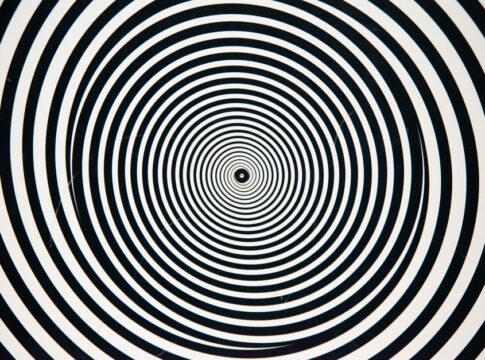
Your eyes are capturing reality perfectly right now. Your brain, however, is feeding you beautiful lies. The truth about optical illusions reveals something astonishing: what you see isn’t always what’s actually there. These fascinating visual tricks expose the gap between perception and reality, showing how your mind takes shortcuts that sometimes lead you astray. From lines that appear different lengths when they’re identical to static images that seem to move, optical illusions are windows into the surprising machinery of human vision.
The interesting part? These aren’t glitches. They’re features. Your visual system evolved to make split-second judgments about a complex world, and these amazing shortcuts usually serve you well. But when clever patterns exploit these mental rules, your brain gets caught in the act of lying to you.
Key Takeaways
- Optical illusions occur when your brain’s predictive processing makes incorrect assumptions about visual information, not because your eyes are malfunctioning.
- The famous Müller-Lyer illusion demonstrates how context clues about depth perception can make identical lines appear drastically different in length.
- Motion illusions like the rotating snakes pattern work because neurons in your visual cortex respond to contrast and edge detection in ways that create false movement signals.
- Color perception is relative rather than absolute—the same color can appear completely different depending on surrounding colors, as proven by the checker shadow illusion.
- Cultural background and visual experience actually influence which optical illusions work on you, showing that perception is partly learned.
- Scientists use optical illusions as research tools to discover how the brain processes visual information and makes predictions about the world.
The Truth About Optical Illusions and Your Predictive Brain
Your brain doesn’t passively receive visual information like a camera. It actively predicts what it expects to see based on past experience, then checks those predictions against incoming data. This process happens incredibly fast—within milliseconds. When you look at a scene, your visual cortex is already guessing what objects are present, how far away they are, and whether they’re moving. Most of the time, these predictions are accurate enough to keep you alive and functioning.
Optical illusions exploit this predictive system. They present visual information that triggers incorrect predictions your brain refuses to abandon even when you know better. The Ames room, for instance, creates the illusion that people change size as they walk across it. The room is actually trapezoidal, but it’s designed to look rectangular from one specific viewpoint. Your brain assumes rooms are rectangular—a reasonable assumption—and therefore concludes that the people must be changing size. Knowledge of the trick doesn’t make it disappear.
The visual cortex contains specialized neurons that respond to specific features: edges, corners, motion direction, and color contrasts. These neurons don’t work in isolation. They communicate in networks, and their collective activity creates your visual experience. When patterns in an illusion trigger these neurons in unusual combinations, your conscious perception reflects the brain’s best guess about what’s happening, not the physical reality of the image.
Why Identical Things Look Different
Context is everything in visual perception. The Müller-Lyer illusion presents two lines of identical length, one with arrow-like fins pointing outward, the other with fins pointing inward. The line with outward-pointing fins consistently appears longer to most observers. Why? Your brain interprets these configurations as depth cues. The outward fins resemble the far corner of a room (receding into the distance), while inward fins look like a near corner (projecting toward you). Your visual system automatically compensates for perceived distance, adjusting the apparent size.
The checker shadow illusion demonstrates this principle with color. In this famous example, two squares on a checkerboard appear to be completely different shades—one dark, one light. When you isolate them or connect them with a bar of the same color, the shocking truth emerges: they’re identical. The surrounding context of light and shadow patterns convinces your brain they must be different shades. Your visual system evolved to recognize objects under varying lighting conditions, so it automatically adjusts for perceived shadows. The adjustment is so powerful that conscious knowledge can’t override it.
Common Size and Contrast Illusions
The Ebbinghaus illusion shows how surrounding objects change perceived size. A circle surrounded by larger circles appears smaller than an identical circle surrounded by smaller circles. The Ponzo illusion uses converging lines (like railroad tracks receding into the distance) to make identical horizontal lines appear different sizes. The one positioned between narrower parts of the converging lines looks longer because your depth perception interprets it as farther away—and therefore actually larger to produce the same retinal image.
Motion Where None Exists
Some of the most mind-bending optical illusions involve apparent motion in completely static images. The rotating snakes illusion, created by Japanese psychologist Akiyoshi Kitaoka, features circular patterns that seem to rotate when you look at them, especially in peripheral vision. No animation is involved. The image is perfectly still.
This illusion works because of how motion-detecting neurons respond to contrast and luminance changes. The patterns use specific sequences of colors with different brightness levels. When your eyes make small, involuntary movements (which they constantly do), these neurons fire in sequences that mimic actual motion signals. Your brain interprets this neural activity as rotation. The effect is stronger in peripheral vision because motion detection is particularly sensitive there—an evolutionary advantage for noticing predators or threats approaching from the side.
Peripheral drift illusions use similar principles. They often feature repeated patterns with asymmetric luminance profiles. As your gaze shifts across the image, different parts stimulate your retina in ways that create directional motion signals. Your visual system didn’t evolve to handle these artificial patterns, so it gets fooled.
Cultural Differences in Visual Perception
Not everyone sees optical illusions the same way. Research has shown that cultural background influences susceptibility to certain illusions. People raised in environments with many right angles and rectangular buildings (typical of Western urban settings) are more susceptible to the Müller-Lyer illusion than people from cultures with more circular architecture or rural environments with fewer constructed right angles.
This discovery supports the idea that visual perception isn’t entirely hardwired. Experience shapes the assumptions your brain makes about the world. If your visual environment has trained you to interpret certain configurations as depth cues, illusions exploiting those cues will work more effectively. The horizontal-vertical illusion—where vertical lines appear longer than horizontal lines of equal length—also shows cultural variation, possibly related to the typical visual environments people experience.
What Optical Illusions Reveal About Vision
Scientists study optical illusions not just for entertainment but as research tools. Each illusion that successfully tricks the brain reveals something about the underlying mechanisms of vision. By understanding what patterns cause predictable errors, researchers can map how visual processing works.
The blind spot demonstration—where you can make an object disappear by positioning it in the spot where your optic nerve connects to your retina—reveals that your brain actively fills in missing information. You don’t perceive a black hole in your visual field because your brain seamlessly invents content for that area based on surrounding context. This filling-in process happens constantly, not just in your blind spot.
Change blindness experiments show that you miss obvious changes in scenes when they occur during a brief interruption. Your brain doesn’t record every detail like a video camera. It creates a mental model of the scene and updates it only when something draws attention. This explains why eyewitness testimony can be unreliable—people genuinely believe they saw details their brains actually invented to complete an incomplete mental picture.
Frequently Asked Questions
Do optical illusions work on everyone?
Most optical illusions work on the majority of people, but individual differences exist based on factors like age, cultural background, and visual experience. Some illusions show cultural variation, working more strongly on people from environments with specific visual characteristics. People with certain neurological conditions may experience some illusions differently or not at all.
Can you train your brain to resist optical illusions?
No, you cannot train yourself to stop seeing most optical illusions, even with extensive knowledge of how they work. The processing that creates illusions happens in early visual areas of the brain, before conscious awareness. Knowing an illusion is fake doesn’t prevent your visual system from making the same predictive errors.
Are optical illusions the same as hallucinations?
Optical illusions and hallucinations are different phenomena. Illusions are misinterpretations of real external stimuli that affect most people predictably. Hallucinations are perceptions without any external stimulus, typically resulting from neurological or psychological conditions. Everyone sees the same optical illusion; hallucinations are individual experiences.
Why do some patterns cause headaches or discomfort?
Certain high-contrast repeating patterns can trigger visual stress or discomfort, sometimes causing headaches in susceptible individuals. These patterns may overstimulate neurons in the visual cortex, creating excessive neural activity. Some people with migraine disorders or photosensitive epilepsy are particularly sensitive to specific visual patterns.
The next time an optical illusion fools you, remember you’re not witnessing a failure but a feature. Your brain evolved to navigate a complex, three-dimensional world at high speed, not to analyze carefully crafted two-dimensional patterns. These visual lies reveal the extraordinary truth about perception: reality isn’t something you passively observe—it’s something your brain actively constructs, one prediction at a time.