
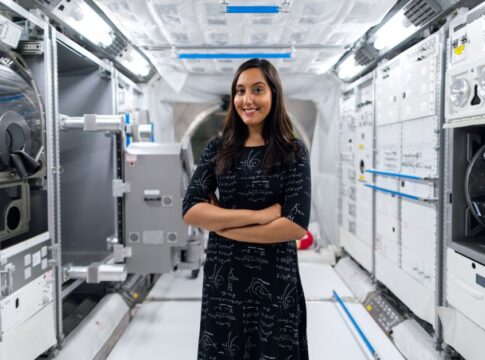
9 Surprising Facts About the International Space Station
By Trivia Daily, Staff Writer — Published August 5, 2026
Table of Contents
Orbiting roughly 250 miles above Earth, the International Space Station represents one of humanity’s most ambitious engineering achievements. This football-field-sized laboratory travels at 17,500 miles per hour, circling our planet every 90 minutes. Yet despite its fame, the space station harbors surprising facts that even space enthusiasts might not know—from its unexpected size to the curious ways astronauts live and work in microgravity.
The ISS isn’t just a scientific outpost; it’s a testament to international cooperation, a testing ground for future deep-space missions, and home to some of the most fascinating trivia in modern spaceflight. Discover the amazing stories behind this orbiting laboratory.
Key Takeaways
- The International Space Station has been continuously inhabited since November 2000, making it humanity’s longest-running permanent presence in space.
- Astronauts aboard the ISS witness 16 sunrises and sunsets every single day due to the station’s rapid orbit around Earth.
- The station’s solar arrays generate enough electricity to power more than 40 homes on Earth.
- Every drop of water aboard the ISS is recycled, including moisture from astronaut breath and sweat.
- The ISS travels fast enough to go from New York to Los Angeles in under 10 minutes.
- Construction of the space station required more than 40 assembly missions over 13 years.
Interesting Facts About the International Space Station
1. The ISS Is Larger Than a Six-Bedroom House
When people imagine the International Space Station, they often picture a cramped capsule. The reality is far more spacious. The ISS boasts a pressurized volume roughly equivalent to a Boeing 747 aircraft, with more livable room than a conventional six-bedroom house. The station stretches 357 feet end-to-end—longer than a football field including the end zones—and weighs approximately 925,000 pounds. Its eight miles of electrical wiring power dozens of computers and scientific experiments simultaneously. Despite this impressive size, astronauts still describe the sensation of floating through its modules as both liberating and occasionally disorienting.
2. Astronauts Experience 16 Sunrises and Sunsets Daily
Life aboard the space station operates on a schedule unlike anything on Earth. Because the ISS completes one full orbit every 90 minutes, crew members witness the sun rising and setting 16 times in a 24-hour period. This rapid day-night cycle would wreak havoc on human circadian rhythms, so NASA and international partners established a standardized schedule based on Coordinated Universal Time. Astronauts follow strict sleep schedules and use blackout shades to simulate night. Even so, many report that the spectacular views of Earth bathed in alternating light and darkness never grow old—it’s one of the perks that makes the challenging work worthwhile.
3. Every Drop of Water Gets Recycled—Including Urine and Sweat
Water is precious cargo in space, where every pound launched costs thousands of dollars. The ISS employs sophisticated recycling systems that recover approximately 90 percent of all water-based liquids aboard the station. This includes not just wastewater from hand-washing, but also urine, sweat, and even moisture from astronaut breath. The Environmental Control and Life Support System processes these fluids through filtration and purification until they’re cleaner than most tap water on Earth. Astronauts joke about “drinking yesterday’s coffee” as tomorrow’s coffee, but the recycled water meets strict safety standards. This technology proves essential for planning longer missions to Mars, where resupply missions won’t be possible.
4. The Station Travels Faster Than a Speeding Bullet
At 17,500 miles per hour, the International Space Station moves roughly 23 times faster than the speed of sound. That’s about five miles every second. To put this velocity in perspective, the ISS could travel from New York City to Los Angeles in less than 10 minutes, or circle the entire Earth in just 90 minutes. This incredible speed is necessary to maintain orbit—anything slower would cause the station to fall back to Earth. The station must also occasionally perform “reboost” maneuvers using attached spacecraft thrusters to counteract the minimal atmospheric drag that gradually slows it down. Without these adjustments, the ISS would eventually descend into the atmosphere.
5. Construction Required More Assembly Than Any Structure in History
Building the International Space Station ranks among the most complex construction projects ever attempted. Assembly began in 1998 and required more than 40 missions by American Space Shuttles and Russian rockets over 13 years. Astronauts and cosmonauts performed countless spacewalks—each lasting up to eight hours—to connect modules, install equipment, and route cables. The station was built piece by piece in orbit, with components manufactured in different countries and launched separately. This international collaboration involved space agencies from the United States, Russia, Europe, Japan, and Canada. The final major component was installed in 2011, though the station continues to receive upgrades and new experimental modules.
6. Bones and Muscles Weaken Rapidly in Microgravity
Living in space takes a toll on the human body. Without gravity’s constant pull, astronauts lose bone density at roughly 1 to 2 percent per month—similar to the bone loss experienced by elderly people with osteoporosis, but occurring much faster. Muscles also atrophy quickly when they don’t need to support body weight. To combat these effects, ISS crew members exercise for approximately two hours every day using specialized equipment including a treadmill, stationary bicycle, and resistance device. Even with this rigorous routine, astronauts returning from months-long missions require weeks or months of rehabilitation to regain their pre-flight strength and bone density. This research directly informs planning for future missions to Mars, where astronauts would spend years in reduced gravity.
7. The ISS Cost Over $150 Billion to Build and Maintain
The International Space Station represents one of the most expensive objects ever constructed, with estimates placing its total cost at more than $150 billion when accounting for development, assembly, and ongoing operations. The United States has contributed the largest share through NASA, but Russia, Europe, Japan, and Canada have all invested billions in their respective modules and systems. This staggering price tag covers not just the hardware launched into orbit, but also decades of research, design work, astronaut training, mission control operations, and regular resupply missions. Despite the cost, the station has produced valuable scientific research in fields ranging from medicine to materials science, with experiments that simply cannot be conducted on Earth.
8. Astronauts Grow Taller in Space
Microgravity produces some surprising physical changes, including temporary height increases. Without gravity compressing the spine, the cartilage between vertebrae expands, causing astronauts to grow up to two inches taller during their time aboard the ISS. This sounds fun until you consider the uncomfortable side effects—many crew members experience back pain as their spines stretch and adjust. The extra height disappears within days of returning to Earth as gravity recompresses the spine. This phenomenon affects everything from spacesuit sizing to sleeping bag dimensions, and astronauts sometimes joke about needing to adjust the seats in their spacecraft for the return journey.
9. The Station Will Eventually Crash Into the Ocean
The International Space Station won’t orbit forever. NASA and its international partners currently plan to operate the station through at least 2030, but eventually it will be deliberately deorbited in a controlled descent. When that time comes, thrusters will slow the station enough to fall from orbit, with most components burning up during atmospheric reentry. The remaining debris—potentially weighing dozens of tons—will splash down in a remote area of the Pacific Ocean known as the spacecraft cemetery, far from shipping lanes and populated areas. This region, officially called the South Pacific Ocean Uninhabited Area, already contains the remains of more than 260 spacecraft. Planning for the ISS’s eventual retirement is already underway, even as scientists continue making discoveries aboard this remarkable laboratory.
Frequently Asked Questions
How long does it take to get to the International Space Station?
Modern spacecraft can reach the ISS in as little as three hours using fast-track trajectories, though some missions take the traditional two-day approach with multiple orbits to carefully match speed and position with the station.
Can you see the International Space Station from Earth?
Yes, the ISS is the third-brightest object in the night sky after the Moon and Venus. It appears as a steady, fast-moving white light and is visible to the naked eye when passing overhead during dawn or dusk hours.
How many people can live on the space station at once?
The ISS typically houses six to seven crew members, though it has accommodated up to 13 people for brief periods during crew changeovers. The station has sleeping quarters, two bathrooms, a gym, and a 360-degree bay window called the Cupola.
What experiments happen on the International Space Station?
Researchers conduct thousands of experiments in microgravity studying everything from protein crystal growth for drug development to combustion physics, plant biology, and how the human immune system changes in space. Many findings have applications for medicine and technology on Earth.
The International Space Station continues to push the boundaries of human achievement, serving as both a laboratory and a symbol of what becomes possible when nations work together toward a common goal. As astronauts float 250 miles above our heads, they’re not just conducting experiments—they’re writing the next chapter of human exploration, one surprising discovery at a time.