1 / 10 Questions
0 Points

What shape has eight sides?

Heptagon

Pentagon

Hexagon

Octagon

Points won
0
Correct score
0%

More Questions

More Articles

Why Chess Has 64 Squares: The Ancient Design Explained

Why Chess Has 64 Squares: The Ancient Design Explained

Why Chess Has 64 Squares: The Ancient Design Explained

By Triv Central, Staff Writer — Published July 28, 2026

Table of Contents

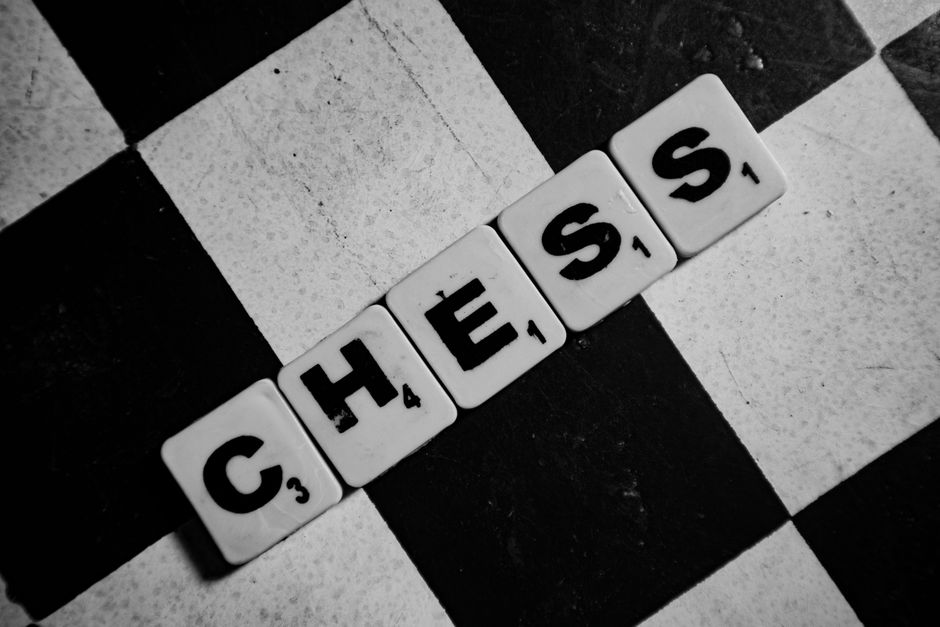
Every chessboard you've ever seen contains exactly 64 squares arranged in an 8×8 grid. This isn't a random choice or modern convention—it's a design decision that traces back more than a millennium. The chess squares ancient players used followed the same pattern we see today, and the reasoning behind this specific number reveals fascinating connections to mathematics, playability, and the game's evolution across continents. What makes 64 the magic number? The answer lies in a blend of practical game design and mathematical elegance. Too few squares would make chess too simple; too many would render it unmanageably complex. The 64-square board emerged as the sweet spot where strategic depth meets human comprehension.

Key Takeaways

  • Chess originated in 6th-century India as "chaturanga" and already used an 8×8 board with 64 squares.
  • The number 64 is a perfect square (8×8) and a power of two (2⁶), making it mathematically elegant and symmetrical.
  • Ancient Indian board games often used 8×8 grids, establishing a cultural template that chess inherited.
  • The 64-square design provides enough complexity for deep strategy while remaining visually comprehensible to players.
  • Every chess variant that changed the board size (like 10×10 or 12×12) never achieved the popularity of standard chess.
  • The alternating light and dark squares create 32 squares of each color, perfectly balanced for piece movement patterns.

The Indian Origins of Chess Squares Ancient Civilizations Perfected

Chess descended from chaturanga, a strategic war game played in northern India around 600 CE. Historical evidence suggests chaturanga was played on an ashtāpada board—an 8×8 grid used for various Indian games. The word "ashtāpada" literally means "having eight feet" or "eight squares," referring to the board's dimensions. Why did ancient Indian game designers choose eight? The number held cultural significance in Indian mathematics and philosophy. Eight appears repeatedly in Sanskrit texts, from the eight directions of space to various religious concepts. But beyond symbolism, eight offered practical advantages. A 6×6 board (36 squares) felt cramped for the pieces chaturanga required. A 10×10 board (100 squares) made games drag on endlessly. Eight struck the perfect balance. The ashtāpada board wasn't invented specifically for chess. It predated chaturanga and hosted other dice-based race games. When chess evolved from these earlier games, it inherited the established board dimensions. This is similar to how modern card games use the standard 52-card deck without reinventing it each time.

Mathematical Beauty Behind 64 Squares

Mathematicians appreciate 64 for its unique properties. It's 8², making it a perfect square. It's also 2⁶, a power of two. These characteristics create inherent symmetry and balance. Consider the alternating color pattern. With 64 squares arranged 8×8, you get exactly 32 light squares and 32 dark squares. This even split matters enormously for gameplay. Bishops, for instance, remain on their starting color throughout the entire game—a strategic element that wouldn't work as elegantly with an odd-numbered grid. The board's symmetry extends further. Each player starts with identical positions mirrored across the center. The 8×8 grid creates four quadrants, eight files (columns), and eight ranks (rows). This regularity makes chess notation simple and universal. When a grandmaster says "Knight to f3," players worldwide know exactly which square.

How Chess Spread Without Changing Its Grid

As chess traveled from India to Persia, then to the Islamic world, and finally to medieval Europe, numerous rules changed. Pieces gained new movement patterns. The queen, originally a weak piece, became the board's most powerful. Castling was invented. Pawn promotion rules evolved. Yet the 64-square board remained constant. Why? Changing board dimensions would fundamentally break the game's balance. Every opening strategy, every tactical pattern, every endgame principle depends on the specific distances and relationships the 8×8 grid creates. European chess players in the 15th century experimented with variants. Some added extra pieces on larger boards. Others tried different configurations. None supplanted standard chess. The 64-square design had achieved what game designers call "elegant completeness"—nothing needed adding or subtracting.

Comparing Chess to Other Board Games

Game Board Size Total Squares Origin Period
Chess 8×8 64 6th century CE
Checkers/Draughts 8×8 64 (32 playable) 12th century CE
Go 19×19 361 3rd century BCE
Shogi (Japanese Chess) 9×9 81 16th century CE
Xiangqi (Chinese Chess) 9×10 90 points 7th century CE
The table reveals an interesting pattern. Games requiring deep strategic complexity but faster resolution (chess, checkers) favor the 8×8 grid. Games emphasizing even greater complexity, like Go, expand dramatically. Asian chess variants that developed independently added one or two extra rows but kept dimensions close to the original.

Why Larger Boards Failed to Catch On

Chess variants on 10×10 or 12×12 boards exist. Capablanca chess, named after world champion José Raúl Capablanca, adds two new pieces on a 10×8 board. Grand Chess uses a 10×10 grid. These games have devoted followings but remain niche. The problem? Complexity without proportional benefit. Standard chess already offers near-infinite possibilities—more legal positions than atoms in the observable universe, according to calculations by mathematicians. Adding squares multiplies complexity but makes games longer and harder to master. Most players found the traditional 64 squares challenging enough. Human working memory also plays a role. Cognitive science research suggests people comfortably track relationships in grids up to about 8×8. Beyond that, the mental load increases sharply. Chess sits right at the edge of comfortable human pattern recognition—complex enough to fascinate, simple enough to visualize.

Frequently Asked Questions

Has the chess board always been 64 squares?

Yes, since chess originated in 6th-century India as chaturanga, it has been played on an 8×8 board with 64 squares. This dimension was inherited from the ashtāpada board used for earlier Indian games and has remained unchanged for over 1,400 years.

Why are chess squares two different colors?

The alternating light and dark squares make the board easier to navigate visually and are essential for certain rules. Bishops, for example, stay on their starting color throughout the game, and the pattern helps players quickly calculate diagonal moves and control key squares.

Could chess work on a different sized board?

Chess variants exist on larger and smaller boards, but none have achieved the popularity of standard 8×8 chess. The 64-square design provides optimal strategic depth while remaining mentally manageable—larger boards make games too long and complex, while smaller boards reduce strategic possibilities.

What is the significance of the number 64 in chess?

The number 64 is both a perfect square (8×8) and a power of two (2⁶), giving it mathematical elegance and perfect symmetry. It creates exactly 32 light and 32 dark squares, enables balanced starting positions for both players, and provides enough complexity for deep strategy without overwhelming human comprehension. The next time you set up a chessboard, consider that those 64 squares connect you to players across fourteen centuries and dozens of cultures. That simple 8×8 grid has survived because it captures something fundamental about strategic thinking—complex enough to spend a lifetime mastering, yet clear enough to teach a child in an afternoon. Some designs, it turns out, get it right the first time.

Why Canned Laughter Was Added to TV Shows: Hidden History

Why Canned Laughter Was Added to TV Shows: Hidden History

Why Canned Laughter Was Added to TV Shows: Hidden History

By Triv Central, Staff Writer — Published August 13, 2026

Table of Contents

Turn on a classic sitcom, and you'll hear it immediately: waves of laughter that seem a bit too perfectly timed, a bit too enthusiastic. That's canned laughter, and it wasn't added by accident. This curious piece of television history emerged from a practical problem in early broadcasting and evolved into one of the most debated techniques in entertainment. The story of why canned laughter was added to TV shows reveals surprising facts about human psychology, technological limitations, and the art of manipulating audience emotions through sound. What began as a solution for live studio audiences became a powerful tool that shaped how millions of viewers experienced comedy for decades. The history behind those pre-recorded chuckles is far more interesting than you might expect.

Key Takeaways

  • Canned laughter was invented by sound engineer Charley Douglass in the 1950s using a device called the "Laff Box" that contained recordings of different types of audience reactions.
  • Early television producers added canned laughter to help home audiences know when jokes were intended, mimicking the live theater experience.
  • Psychological research shows that hearing laughter actually makes people more likely to laugh themselves, a phenomenon called "social facilitation."
  • The practice became controversial in the 1970s when audiences began recognizing the artificiality and questioning its authenticity.
  • Modern streaming comedies increasingly abandon laugh tracks, but the technique influenced television comedy writing for over half a century.
  • Some recordings in early laugh tracks featured audiences who had been deceased for decades, creating an eerie legacy.

The Birth of Canned Laughter: A Sound Engineer's Solution

Television in its earliest days faced a peculiar challenge. Radio comedies had thrived with live studio audiences whose genuine laughter enhanced broadcasts. When TV emerged, producers wanted that same energy. But filming television shows presented complications that radio never encountered. Multiple camera angles required retakes. Scenes shot out of sequence. Technical difficulties interrupted the flow. Live audiences grew tired after hours of filming. Their laughter became inconsistent. Sometimes a joke landed perfectly during rehearsal but fell flat during the actual take. Other times, audiences laughed at mistakes or technical problems that would be edited out later. Producers needed consistency. Enter Charley Douglass, a sound engineer at CBS who recognized this problem and built an ingenious solution in the 1950s. His "Laff Box" was a complex device containing tape loops of recorded laughter. The machine featured a keyboard that allowed operators to trigger different types of laughs: chuckles, giggles, belly laughs, and various combinations. Douglass could "sweeten" a soundtrack by adding or enhancing audience reactions wherever producers felt jokes needed support. The device was so valuable that Douglass kept its inner workings secret, personally operating it for shows to maintain his monopoly on the technique.

Why Producers Believed Laughter Was Necessary

The decision to add canned laughter wasn't arbitrary. Television executives understood something fundamental about human behavior: laughter is contagious. When you hear others laughing, you're more likely to laugh yourself. This social facilitation effect made comedy more enjoyable for viewers watching alone at home. Early sitcoms were often filmed without audiences or with audiences whose reactions needed correction. Shows shot on location or using single-camera techniques had no audience at all. Producers worried that viewers wouldn't know when to laugh or might miss jokes entirely without auditory cues. The laugh track served as a guide, highlighting comedic moments and creating a sense of communal viewing experience even when people watched in isolation. There was also a practical element. Comedy timing depends on pauses after punchlines. Actors in theater naturally wait for audience laughter to subside before continuing. Without real or artificial laughter, those pauses feel awkward and unnatural. The laugh track filled these gaps, making the pacing feel correct to viewers accustomed to live performance rhythms.

The Psychology Behind Why It Actually Works

Research into social psychology confirms what television producers instinctively understood. Humans are remarkably susceptible to social cues about appropriate emotional responses. Studies have demonstrated that people rate jokes as funnier when they hear laughter accompanying them, even when they know the laughter is artificial. This phenomenon connects to our evolutionary wiring. Laughter in groups serves social bonding functions. When we hear others laugh, our brains interpret this as a signal that something is safe, enjoyable, and worthy of positive attention. The sound of laughter activates similar neural pathways whether we're in a room with laughing people or hearing recorded laughter through speakers. The effect is so powerful that even cynical viewers who consciously reject laugh tracks often find themselves influenced by them. Your rational mind might recognize the manipulation, but your emotional responses operate on a different level. This is why canned laughter remained effective for so long despite growing criticism.

Evolution and Decline of the Laugh Track

By the 1970s, audiences became more sophisticated and began questioning the authenticity of laugh tracks. Shows like MAS*H faced pressure to remove canned laughter, with creator Larry Gelbart arguing that comedy about war shouldn't be accompanied by artificial merriment. The show eventually aired without a laugh track in some markets, though CBS insisted on keeping it for U.S. broadcasts. Single-camera comedies began experimenting with laugh-track-free formats. These shows relied on subtler humor and visual comedy rather than setup-punchline structures designed around laughter pauses. The critical and commercial success of shows without laugh tracks gradually shifted industry standards. By the 2000s, cable networks and streaming platforms increasingly abandoned the practice. Modern audiences watching on-demand content found laugh tracks jarring and outdated. Shows could develop more naturalistic dialogue rhythms without accommodating laughter pauses. The technique that once seemed essential to television comedy became a marker of old-fashioned production values.

Comparing Laugh Track Approaches in Television

Approach Description Example Era
Live Studio Audience Real people watching filming, genuine reactions recorded 1950s-present (multi-camera sitcoms)
Sweetened Audience Live audience enhanced with added canned laughter 1960s-1990s
Full Laugh Track Entirely artificial laughter added in post-production 1960s-2000s
No Laugh Track No audience laughter, natural dialogue pacing 1980s-present (single-camera comedies)

Frequently Asked Questions

Who invented canned laughter for television?

Charley Douglass, a CBS sound engineer, invented the "Laff Box" in the 1950s, creating the first systematic method for adding pre-recorded laughter to television shows. He kept the device's mechanics secret and personally operated it for decades.

Do modern TV shows still use laugh tracks?

Multi-camera sitcoms filmed before live studio audiences still exist, but most modern single-camera comedies avoid laugh tracks entirely. Streaming platforms especially favor laugh-track-free formats that allow more naturalistic dialogue.

Why do some people find laugh tracks annoying?

Many viewers perceive laugh tracks as manipulative or insulting to their intelligence, suggesting they need to be told when something is funny. The artificial quality becomes especially noticeable when jokes aren't actually humorous.

Are the laughs in old TV shows from dead people?

Some recordings in classic laugh tracks do feature audiences from the 1950s and 1960s, meaning many of those laughing voices likely belonged to people who have since passed away. These recordings were reused for decades across numerous shows. The next time you hear canned laughter on a classic sitcom rerun, you're experiencing a piece of broadcasting history that shaped comedy for generations. Those artificial chuckles represent a fascinating intersection of technology, psychology, and entertainment—a reminder that even our most spontaneous reactions can be carefully engineered.