











1 / 10 Questions
0 Points

Which baseball legend hit 755 career home runs?

Willie Mays

Babe Ruth

Hank Aaron

Mickey Mantle

Points won
0
Correct score
0%

More Questions

More Articles

Why Do We Yawn When Someone Else Yawns Near Us

Why Do We Yawn When Someone Else Yawns Near Us

Why Do We Yawn When Someone Else Yawns Near Us

By Triv Central, Staff Writer — Published September 8, 2026

Table of Contents

You're sitting in a meeting when a colleague yawns. Within seconds, your jaw stretches wide in an involuntary yawn of your own. This contagious phenomenon isn't just coincidence—it's a fascinating window into how human brains are wired for social connection. Scientists have discovered that when we yawn because someone else yawns, we're experiencing one of the most intriguing examples of unconscious mimicry in the animal kingdom.

The tendency to yawn when observing another person yawn affects roughly 60 to 70 percent of people. Even reading about yawning or seeing a photograph of someone mid-yawn can trigger the response. What makes this trivia particularly amazing is that contagious yawning appears to be linked to empathy, social bonding, and the very architecture of our social brains.

Key Takeaways

  • Contagious yawning affects approximately 60 to 70 percent of people and can be triggered by seeing, hearing, or even reading about yawns.
  • The phenomenon is linked to brain regions associated with empathy and social understanding, particularly the superior temporal sulcus and prefrontal cortex.
  • Contagious yawning typically develops in children around age four or five, coinciding with the development of empathy and theory of mind.
  • Only a handful of species exhibit contagious yawning, including humans, chimpanzees, bonobos, dogs, and possibly wolves.
  • People with higher levels of empathy tend to be more susceptible to contagious yawning than those with lower empathy scores.
  • Individuals on the autism spectrum, who often process social cues differently, show reduced contagious yawning responses in research studies.

The Mirror Neuron Connection When You Yawn Because Someone Else Does

The brain's mirror neuron system plays a central role in contagious yawning. These specialized neurons fire both when we perform an action and when we observe someone else performing the same action. Discovered initially in macaque monkeys, mirror neurons help us understand and predict others' behaviors by internally simulating what we see.

When you watch someone yawn, your mirror neuron system activates as if you were yawning yourself. This neural mimicry doesn't always result in an actual yawn, but it primes your brain for the action. Brain imaging studies have shown increased activity in the posterior cingulate cortex and precuneus—regions involved in self-processing and mental imagery—when people view yawning faces.

What's surprising is that contagious yawning isn't simply automatic mimicry. It involves higher-order cognitive processing. The prefrontal cortex, responsible for complex social cognition, shows heightened activity during contagious yawning episodes. This suggests the phenomenon requires more than reflexive imitation—it engages the parts of our brain that help us understand what others are experiencing.

The Empathy Factor in Yawning Contagion

Research has revealed a compelling connection between empathy and susceptibility to contagious yawning. Studies measuring empathy through standardized questionnaires found that individuals who score higher on empathy scales are significantly more likely to yawn in response to others' yawns. This correlation suggests contagious yawning may function as a primitive form of empathy—an automatic sharing of another person's state.

The relationship becomes even more interesting when examining social closeness. People are more likely to catch yawns from family members and close friends than from strangers or acquaintances. One study documented that yawn contagion occurred most rapidly between family members, followed by friends, then acquaintances, with the slowest response to strangers. This gradient matches patterns seen in other empathetic responses.

Children with autism spectrum disorders, who often experience challenges with typical empathetic responses, show markedly reduced contagious yawning. This isn't a hard rule—some individuals on the spectrum do experience contagious yawning—but the overall reduction supports the link between this phenomenon and social-emotional processing.

When Contagious Yawning Develops

Babies yawn in the womb, but they don't catch yawns from others. Contagious yawning emerges later in development, typically around age four or five. This timing is no accident—it coincides with key milestones in social cognition, particularly the development of theory of mind (the ability to understand that others have thoughts and feelings separate from our own).

Before this age, children yawn spontaneously but remain immune to yawn contagion. The emergence of contagious yawning appears to mark an important shift in how children process social information. They're beginning to automatically simulate others' experiences, a foundational skill for navigating complex social environments.

Interestingly, the susceptibility to contagious yawning seems to remain relatively stable throughout adulthood, though some research suggests it may decline slightly in older age. The reasons for any age-related decline remain under investigation.

Contagious Yawning Across Species

Humans aren't alone in catching yawns. This curious trivia extends to a select group of highly social animals:

Species Contagious Yawning Documented Notable Findings
Chimpanzees Yes Show stronger response to yawns from their own social group
Bonobos Yes Exhibit cross-species yawn contagion with humans
Dogs Yes Can catch yawns from humans, especially from their owners
Wolves Possibly Some evidence exists but requires further study
Budgerigars Yes First documented bird species showing the phenomenon

Dogs catching yawns from humans represents a particularly fascinating case of cross-species empathy. Research has shown that dogs are more likely to yawn when their own owner yawns compared to when a stranger yawns, mirroring the social closeness effect seen in humans.

Common Myths About Why We Yawn

Despite its familiarity, yawning remains wrapped in misconceptions. The most persistent myth is that we yawn because our brains need more oxygen. This idea has been thoroughly debunked. Studies that manipulated oxygen and carbon dioxide levels in test subjects found no correlation with yawning frequency. People yawn just as much in oxygen-rich environments as they do in normal air.

Another common belief is that yawning always signals boredom or tiredness. While fatigue does increase yawning, people also yawn when alert, excited, or even anxious. Athletes often yawn before competitions. Paratroopers yawn before jumps. The true function of yawning likely involves thermoregulation of the brain—cooling it down during periods of transition or alertness shifts.

Some assume that because contagious yawning relates to empathy, people who don't catch yawns lack empathy entirely. This oversimplifies the picture. Empathy is multifaceted, and contagious yawning represents just one narrow measure of automatic emotional resonance. Many factors influence susceptibility, including attention, fatigue, and individual neurological differences.

Frequently Asked Questions

Can you catch a yawn through video or phone?

Yes, contagious yawning works through recorded media, including videos, photographs, and even audio recordings of yawning sounds. The visual or auditory stimulus alone is sufficient to trigger the response in susceptible individuals.

Why don't some people experience contagious yawning?

Approximately 30 to 40 percent of people don't catch yawns from others. This variation may relate to differences in empathy levels, attention, age, or neurological factors. It's a normal variation in human response, not a deficit.

Do blind people experience contagious yawning?

Yes, congenitally blind individuals can catch yawns through auditory cues alone, such as hearing someone yawn. This demonstrates that visual input isn't required for the phenomenon to occur.

Is contagious yawning more common at certain times of day?

Research suggests contagious yawning susceptibility doesn't vary significantly by time of day, though spontaneous yawning (not triggered by others) does increase with fatigue and follows circadian rhythms.

The next time you find yourself yawning after someone else, remember you're experiencing a small but profound demonstration of human social connection. This automatic response reveals how deeply our brains are tuned to the people around us, constantly reading and resonating with their states. It's a reminder that even our most mundane reflexes can carry surprising depth.
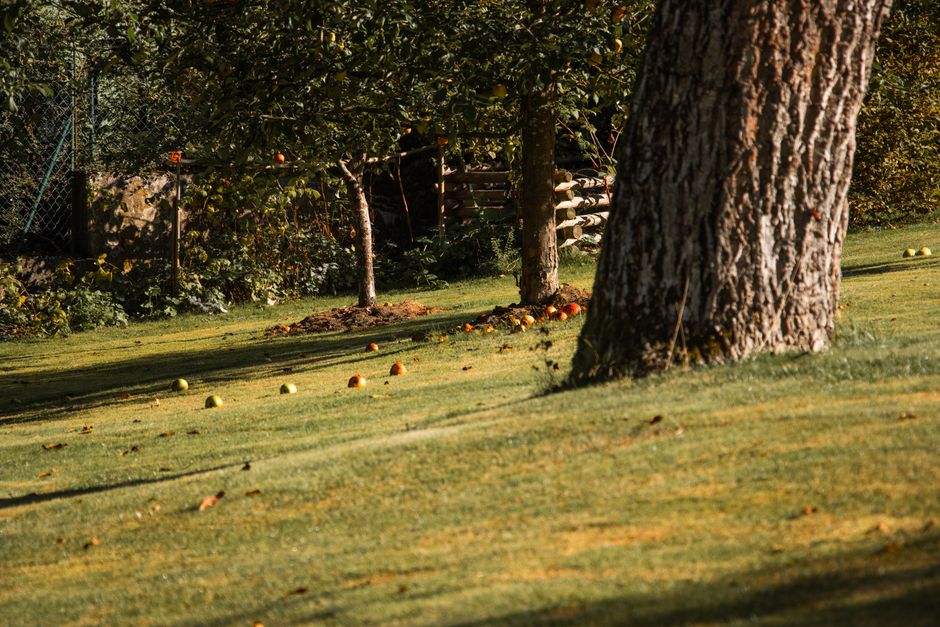
7 Bizarre Facts About Newton’s Falling Apple Discovery

7 Bizarre Facts About Newton’s Falling Apple Discovery

7 Bizarre Facts About Newton's Falling Apple Discovery

By Triv Central, Science Desk — Published August 13, 2026

Table of Contents

The image of an apple falling on Isaac Newton's head is one of science's most enduring legends. But the real story behind this pivotal moment in physics is far stranger than the simplified version taught in classrooms. Newton's apple wasn't just a lucky accident—it sparked a revolution in our understanding of gravity, motion, and the universe itself. The bizarre truth involves family disputes, missing trees, and a discovery that took decades to fully develop. What makes this tale of scientific discovery even more fascinating is how much of it has been embellished, forgotten, or misunderstood over the centuries. From the actual fate of the famous tree to Newton's own reluctance to share the story, the bizarre facts surrounding this breakthrough reveal as much about human nature as they do about physics.

Key Takeaways

  • Newton never claimed an apple hit his head—he saw one fall while contemplating gravity's reach
  • The original apple tree at Woolsthorpe Manor still stands and produces fruit today
  • Newton didn't publish his gravitational theory until more than 20 years after the apple incident
  • Clippings from Newton's apple tree have traveled to space and been planted worldwide
  • The story was first publicly shared not by Newton, but by his biographer decades later
  • Newton's research into gravity was part of broader experimental work that included alchemy and theology

The Bizarre Newton Falling Apple Story You Never Learned in School

Popular culture depicts an apple bonking Newton on the head, jolting him into his "eureka" moment. The reality is considerably more nuanced. Newton himself described watching an apple fall from a tree in the orchard at Woolsthorpe Manor in Lincolnshire around 1666, when he had retreated there during the Great Plague of London. He wasn't struck by the fruit—he was struck by a question: if gravity could pull an apple down from a branch, could it also reach as far as the moon? This simple observation led Newton to wonder whether the same force governing falling objects on Earth might also control the moon's orbit. The apple didn't give him instant answers. Instead, it planted a seed of curiosity that would grow into his universal law of gravitation. The discovery required years of mathematical development, experimental verification, and theoretical refinement before Newton felt confident enough to share it with the scientific community.

How Newton's Apple Tree Became a Scientific Relic

The apple tree at Woolsthorpe Manor isn't just a historical footnote—it's a living monument to scientific discovery. The tree, a variety known as Flower of Kent, still grows on the grounds where Newton conducted his early research into physics and optics. Remarkably, this same tree has survived storms, disease, and the passage of more than three centuries. In 1820, a violent storm toppled the aging tree, but it refused to die. New shoots emerged from the fallen trunk, and the tree regenerated itself. Today's visitors can see this resilient survivor, which continues to produce apples each season. The National Trust, which manages Woolsthorpe Manor, carefully preserves the tree as both a botanical specimen and a symbol of scientific curiosity. Clippings from Newton's tree have been grafted and planted around the world, from Cambridge University to MIT to the Royal Observatory in Greenwich. In 2010, a piece of the tree even traveled aboard Space Shuttle Atlantis to the International Space Station, bringing Newton's inspiration full circle into the realm of orbital mechanics he helped explain.

1. Newton Kept His Apple Story Secret for Decades

Newton experienced his famous apple observation in 1666, but he didn't share the anecdote publicly for most of his life. The story only became widely known after biographer William Stukeley recorded it in a memoir written in 1752, twenty-five years after Newton's death. Stukeley claimed Newton had told him the story during a conversation in 1726, when Newton was 83 years old and reflecting on his early discoveries. Why the long silence? Newton was famously secretive about his work, often delaying publication for years or even decades. He feared criticism and controversy, particularly from rival scientists. His groundbreaking "Principia Mathematica," which outlined his laws of motion and universal gravitation, wasn't published until 1687—more than two decades after the apple incident. Newton's reticence meant that one of science's most famous origin stories nearly vanished into obscurity.

2. The Apple Didn't Fall Straight Down

Newton's observation of the falling apple led him to a profound realization about motion that contradicts common assumptions. The apple didn't simply fall straight down—it followed a curved path as the Earth rotated beneath it. This insight was crucial to understanding that the moon, too, was constantly "falling" toward Earth, but its tangential velocity kept it in orbit rather than crashing into the planet. This concept of projectile motion and orbital mechanics revolutionized physics. Newton recognized that an object thrown horizontally would follow a curved trajectory, and if thrown fast enough (at what we now call orbital velocity), it would fall around the Earth indefinitely. The apple's fall and the moon's orbit were manifestations of the same fundamental force—gravity—acting across different scales.

3. Newton's Apple Research Competed with His Alchemy Experiments

While developing his theory of gravitation, Newton simultaneously devoted enormous energy to alchemy and the search for the philosopher's stone. Modern analysis of his papers reveals he wrote more about chemistry, alchemy, and theology than about physics. Newton saw no contradiction between these pursuits—he believed understanding the forces that held matter together and the forces that governed celestial motion were part of the same grand investigation into nature's secrets. His alchemical experiments involved dangerous substances like mercury and antimony. Some historians speculate that mercury poisoning may have contributed to Newton's infamous mental breakdown in 1693. The apple tree incident represents just one facet of Newton's wide-ranging experimental and theoretical work, which spanned everything from optics to biblical chronology.

4. The Apple Variety Is Now Rare and Considered Inedible

The Flower of Kent apple that allegedly inspired Newton is a cooking apple, not a dessert variety. These large, green apples are hard, sour, and generally considered unpleasant to eat raw. They were traditionally used for baking and making cider. The variety has become quite rare in modern times, though efforts to preserve it have intensified due to its historical significance. Ironically, the apple that symbolizes knowledge and discovery tastes terrible straight from the tree. This fact adds another layer of peculiarity to the legend—Newton's moment of insight came from observing an apple most people wouldn't want to eat. The tree's survival and the preservation of its cultivar now serve scientific history rather than culinary purposes.

5. Multiple Witnesses Claimed Different Apple Stories

Newton told slightly different versions of the apple story to different people, creating confusion among historians. Some accounts emphasize the visual observation of the falling fruit, while others suggest Newton was sitting beneath the tree in contemplation. The variations aren't necessarily contradictions—they likely reflect Newton recounting the memory from different angles over many years. This multiplicity of versions has led some skeptics to question whether the apple incident happened at all. Most historians, however, believe the core truth: Newton did observe a falling apple at Woolsthorpe and it did prompt him to think about gravity's reach. The embellishments and variations came later, as the story was retold and romanticized.

6. Newton's Apple Predated His Understanding of Calculus

The apple observation occurred during Newton's "year of wonders" (1665-1666), when he made extraordinary progress in mathematics, optics, and physics while isolated at Woolsthorpe during the plague. However, Newton needed to develop new mathematical tools—what he called "fluxions" and we now call calculus—to properly describe gravitational attraction mathematically. The intuition came from the apple, but the proof required inventing an entirely new branch of mathematics. Newton's development of calculus (simultaneously and independently developed by Gottfried Wilhelm Leibniz) gave him the tools to calculate how gravitational force decreased with distance and how it governed planetary orbits. The falling apple asked a question that took advanced mathematics to answer.

7. The Apple Tree Has Its Own Security Detail

Given its historical importance and advanced age, Newton's apple tree receives careful monitoring and protection. Groundskeepers at Woolsthorpe Manor regularly inspect it for disease, pest damage, and structural weakness. The tree has survived centuries partly through good fortune and partly through deliberate conservation efforts by successive generations of caretakers. When storms threaten, precautions are taken to support vulnerable branches. The tree's immediate area is protected from excessive foot traffic that could compact the soil around its roots. This level of care for a single tree underscores how deeply the Newton apple legend resonates—it represents not just a moment of discovery, but the spirit of scientific inquiry itself.

Frequently Asked Questions

Did an apple really fall on Newton's head?

No, Newton never claimed an apple struck his head. He observed an apple falling from a tree, which prompted him to contemplate whether gravity extended beyond Earth to the moon. The head-bonking version is a later embellishment.

Is Newton's original apple tree still alive?

Yes, the tree at Woolsthorpe Manor still stands and produces apples. Though it fell during a storm in 1820, it regenerated from the roots and continues to thrive today, more than 350 years after Newton's observation.

When did Newton publish his theory of gravity?

Newton published his universal law of gravitation in "Philosophiæ Naturalis Principia Mathematica" in 1687, approximately 21 years after the apple incident that inspired his initial thinking about gravitational force.

What kind of apple was it?

The apple was a Flower of Kent, a large green cooking apple that is sour and hard when eaten raw. This variety is now rare but has been preserved through grafting from the original tree. The apple that fell at Woolsthorpe Manor more than three centuries ago continues to inspire scientists, educators, and curious minds worldwide. Descendants of that original tree now grow on multiple continents, and the story—however embellished—reminds us that world-changing discoveries often begin with simple observations. Newton's genius wasn't just in watching an apple fall, but in asking why it fell and having the mathematical brilliance to find the answer that binds together everything from fruit to planets to galaxies.