









1 / 10 Questions
0 Points

What instrument did jazz legend Louis Armstrong make famous?

Trumpet

Saxophone

Trombone

Clarinet

Points won
0
Correct score
0%

More Questions

More Articles

Why Does DNA Carry Instructions for Every Living Cell

Why Does DNA Carry Instructions for Every Living Cell

Why Does DNA Carry Instructions for Every Living Cell

By Triv Central, Science Desk — Published September 27, 2026

Table of Contents

Inside every living cell on Earth—from the bacteria on your skin to the neurons firing in your brain—sits a molecule so elegantly designed that it can store, copy, and transmit the complete instruction manual for building and maintaining life. DNA doesn't just carry instructions for every living cell by accident. This double-helix molecule earned its role through billions of years of chemistry and biology working in concert, creating a storage system more compact and reliable than any human invention.

The answer lies in DNA's unique chemical structure and its ability to self-replicate with astonishing accuracy. This scientific discovery revolutionized our understanding of heredity, disease, and evolution itself.

Key Takeaways

  • DNA's double-helix structure allows it to store genetic information in sequences of four chemical bases: adenine, thymine, guanine, and cytosine.
  • The complementary base-pairing system (A with T, G with C) enables DNA to copy itself accurately during cell division.
  • A single human cell contains roughly six feet of DNA packed into a nucleus smaller than a red blood cell.
  • DNA's chemical stability allows genetic information to survive for thousands of years under the right conditions.
  • The genetic code is nearly universal across all living organisms, from bacteria to blue whales.
  • DNA's instructions are read by cellular machinery that translates genetic sequences into proteins, the workhorses of every cell.

The Chemistry Behind Genetic Storage

DNA functions as life's instruction manual because of its remarkable chemical properties. The molecule consists of two long chains of nucleotides twisted into a double helix. Each nucleotide contains a sugar molecule, a phosphate group, and one of four nitrogen-containing bases. The sequence of these bases—adenine (A), thymine (T), guanine (G), and cytosine (C)—forms the genetic code.

What makes this chemistry so effective for information storage? The bases pair in a highly specific way: adenine always bonds with thymine, and guanine always pairs with cytosine. This complementary pairing means each strand of the double helix contains the information needed to reconstruct the other strand. It's like having a master key and a perfectly matching lock—one determines the other.

The chemical bonds holding DNA together strike an ideal balance. The hydrogen bonds between base pairs are strong enough to keep the structure stable, yet weak enough to be separated when the cell needs to read the genetic instructions or copy the DNA. This dual nature allows DNA to function both as a stable archive and an accessible library.

How Cells Read DNA's Instructions

Carrying instructions means nothing if those instructions can't be read and executed. Cells have evolved sophisticated molecular machinery to translate DNA sequences into functional proteins. The process begins when enzymes unzip a section of the double helix, exposing the genetic code. An intermediary molecule called RNA then creates a temporary copy of the instructions.

This RNA copy travels from the cell's nucleus to structures called ribosomes, where the genetic code is translated into chains of amino acids. These chains fold into proteins—the molecules that perform virtually every task in living cells. Some proteins form structural components like collagen in your skin. Others act as enzymes that speed up chemical reactions. Still others regulate which genes get turned on or off.

The elegance of this system lies in its universality. The same basic code works in bacteria, oak trees, and humans. A sequence spelling out "make insulin" would produce the same protein whether read by a human cell or a bacterial cell in a laboratory experiment. This consistency across all life suggests a single common ancestor and makes modern genetic research and biotechnology possible.

Why DNA Outcompetes Other Molecules

Life could theoretically use other molecules to store genetic information, so why DNA? The answer involves both chemistry and biology. DNA's close chemical cousin, RNA, actually may have come first in the history of life. RNA can both store information and catalyze chemical reactions, making it a candidate for the original genetic material.

However, DNA offers crucial advantages. Its double-stranded structure provides built-in error-checking—if one strand gets damaged, the other serves as a backup template for repair. The thymine base in DNA (rather than RNA's uracil) makes the molecule more chemically stable over long periods. These properties make DNA ideal for long-term information storage across generations.

The discovery of DNA's structure in the 1950s represented a watershed moment in biology and chemistry. Scientists could finally explain how traits pass from parents to offspring, how mutations occur, and how evolution operates at the molecular level. This breakthrough research opened entirely new fields of scientific inquiry, from genetic medicine to forensic science.

The Incredible Density of Genetic Information

DNA's information storage capacity surpasses any technology humans have created. Consider the numbers: the human genome contains roughly three billion base pairs. If you printed out this genetic code in standard book format, it would fill about 200 volumes of 1,000 pages each. Yet all this information fits inside a cell nucleus measuring about 0.006 millimeters across.

This compact storage becomes possible through elaborate packaging. DNA wraps around protein spools called histones, which then coil and fold into increasingly dense structures. During cell division, chromosomes condense even further—up to 10,000 times more compact than the relaxed DNA strand. It's equivalent to taking 200 volumes of books and compressing them into something smaller than a grain of sand.

Organism Approximate Base Pairs Number of Chromosomes
E. coli bacterium 4.6 million 1
Fruit fly 140 million 8
Human 3 billion 46
Paris japonica (plant) 150 billion 48

DNA's Role in Evolution and Adaptation

DNA carries instructions that aren't static—they change over time through mutations, creating the raw material for evolution. When cells copy DNA before dividing, enzymes occasionally make mistakes. Radiation, chemicals, or simple copying errors can alter the genetic code. Most mutations have no effect or prove harmful, but occasionally one provides an advantage.

These beneficial mutations accumulate over generations, allowing populations to adapt to changing environments. The same molecule that faithfully preserves genetic information across billions of cell divisions also permits the variation necessary for life to evolve. This balance between stability and flexibility explains why DNA-based life has thrived for billions of years while adapting to nearly every environment on Earth.

Frequently Asked Questions

Why do all living things use DNA instead of different molecules?

All known life uses DNA because we all descend from a common ancestor that evolved this system billions of years ago. DNA's chemical stability, self-replicating ability, and error-correction mechanisms made it so successful that no competing system gained a foothold.

Can DNA instructions be the same in different species?

Yes—humans share about 60 percent of their DNA sequences with fruit flies and roughly 99 percent with chimpanzees. Many genes performing basic cellular functions remain nearly identical across vastly different organisms because they evolved early and work so well that changing them would be harmful.

How long can DNA preserve information?

Under ideal conditions—cold, dry, dark environments—DNA can remain readable for hundreds of thousands of years. Scientists have successfully sequenced DNA from fossils over 700,000 years old, though the information becomes increasingly fragmented over time.

Does every cell in your body contain identical DNA?

Nearly every cell contains the same complete set of DNA instructions, but different cell types read different sections. A liver cell and a brain cell have identical DNA but activate different genes, producing the specialized proteins that make each cell type unique.

The fact that a molecule just two nanometers wide can contain the complete blueprint for building and operating something as complex as a human being remains one of nature's most elegant solutions. Every time a cell divides, every time a trait passes to the next generation, DNA quietly performs its essential task—preserving the instructions that make life possible.
Why Actors Don’t Say Macbeth in Theaters: The Curse Explained

Why Actors Don’t Say Macbeth in Theaters: The Curse Explained

Why Actors Don't Say Macbeth in Theaters: The Curse Explained

By Triv Central, Staff Writer — Published July 22, 2026

Table of Contents

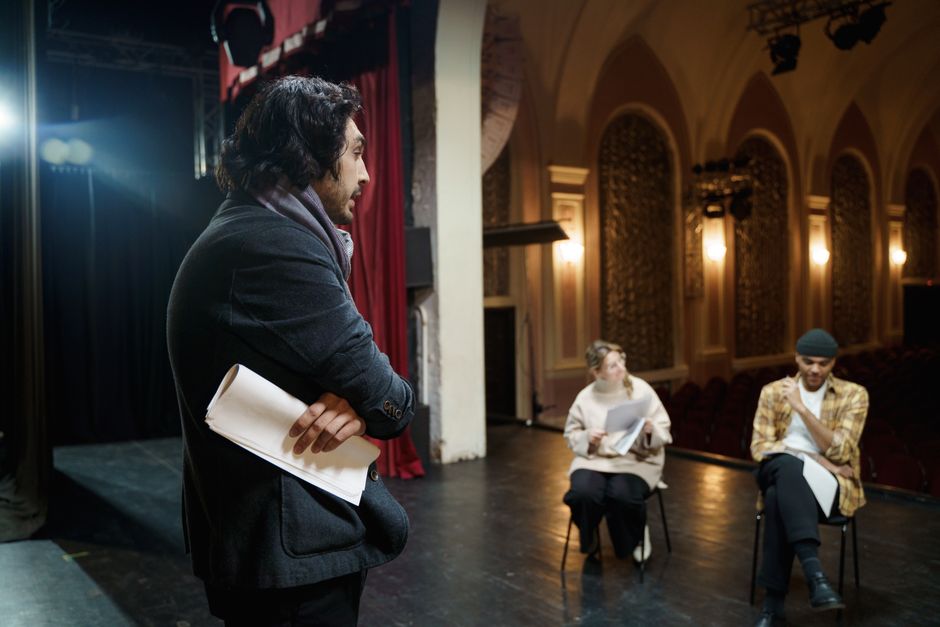
Walk into any theater and whisper the name of Shakespeare's Scottish play, and you might witness actors recoiling in horror. For centuries, performers have refused to utter "Macbeth" inside a playhouse, calling it instead "The Scottish Play" or simply "That Play." This theatrical superstition ranks among the most enduring traditions in show business, blending fascinating facts about stage accidents, historical trivia, and the surprising psychology of performers who genuinely fear breaking this ancient taboo. The so-called "Macbeth curse" isn't just theatrical folklore. Documented incidents of injuries, deaths, and disasters surrounding productions of this particular tragedy have given actors plenty of reason to take the superstition seriously, whether they believe in curses or simply respect tradition.

Key Takeaways

  • Actors traditionally avoid saying "Macbeth" inside theaters, calling it "The Scottish Play" to ward off bad luck.
  • The superstition may have originated from real accidents during early performances, including reports of actual weapons being used instead of props.
  • Shakespeare's play contains authentic incantations that some believed could summon genuine supernatural forces when spoken aloud.
  • Productions of Macbeth have experienced a statistically unusual number of accidents, fires, and deaths throughout theater history.
  • Breaking the curse requires a specific ritual: leaving the theater, spinning three times, spitting, swearing, and knocking to be readmitted.
  • The superstition remains so strong that many modern actors refuse to test it, even if they don't believe in supernatural curses.

Why Actors Avoid Saying Macbeth in Theaters: Origins of the Superstition

The curse legend traces back to the play's earliest performances in the 1600s. According to theatrical tradition, the boy actor originally cast as Lady Macbeth died suddenly before the premiere, forcing Shakespeare himself to step into the role. Whether this story holds historical truth remains debatable, but it established a pattern of misfortune that would follow the production for centuries. One practical explanation involves the play's popularity as a financial救命稻草. When theaters faced bankruptcy, they would mount Macbeth to draw crowds and save their season. The play became associated with struggling theaters and desperate circumstances. Productions were often rushed, under-rehearsed, and performed in deteriorating venues—a recipe for accidents that had nothing to do with supernatural forces. The witches' scenes present another interesting angle. Shakespeare incorporated actual phrases from contemporary occult practices into the weird sisters' incantations. Some believed these weren't theatrical inventions but genuine spells that could invoke dark forces when recited. Practitioners of witchcraft in Shakespeare's era reportedly cursed the play for revealing their secrets, though no historical evidence confirms this colorful claim.

Documented Disasters and the Statistical Reality

Real accidents have reinforced the superstition across centuries. Macbeth contains more fight scenes, battles, and stage combat than most Shakespearean works, naturally increasing injury risk. The play's dark themes and ambitious staging have led directors to attempt elaborate effects that sometimes went catastrophically wrong. Historical records document fires destroying theaters during Macbeth performances, actors being stabbed with real daggers mistakenly substituted for props, and fatal falls from castle battlements. During one 17th-century performance, the actor playing Macbeth allegedly used a real dagger instead of a prop, killing the actor playing Duncan on stage. While the specifics of such stories often blur into legend, the pattern of accidents remains consistent enough to unnerve performers. Twentieth-century productions continued the trend. Renowned actor Laurence Olivier experienced multiple mishaps during his Macbeth performances, including a stage weight nearly crushing him and a sword breaking mid-fight. Diana Wynyard, playing Lady Macbeth in one production, sleepwalked off the stage and fell into the orchestra pit. These incidents, whether coincidence or curse, keep the superstition alive.

The Ritual Cleansing: Breaking the Curse

Theater tradition prescribes a specific remedy if someone accidentally speaks the forbidden name inside a playhouse. The offender must immediately exit the theater building, turn around three times (some versions specify clockwise, others counterclockwise), spit over their left shoulder, swear or recite a line from another Shakespeare play, then knock on the door and request permission to reenter. Variations exist across different theatrical communities. Some actors recite a line from Hamlet, particularly "Angels and ministers of grace defend us." Others prefer a Shakespearean insult or curse. The ritual serves both as penance and as a psychological reset, allowing performers to move past the transgression and refocus on their work. Does the ritual actually work? From a psychological perspective, it provides closure and control over an anxiety-provoking situation. Performers who believe they've properly cleansed the curse can return to work without the mental burden of worrying about impending disaster.

Why the Superstition Persists in Modern Theater

Even actors who dismiss supernatural explanations often respect the Macbeth taboo. Theater culture values tradition intensely, and refusing to say the play's name functions as a tribal marker—a way of signaling membership in the theatrical community and respect for its customs. Confirmation bias plays a significant role. When accidents happen during Macbeth productions, they reinforce the curse narrative. When accidents occur during other plays, they're dismissed as random misfortune. This selective attention creates a self-fulfilling prophecy where Macbeth productions receive extra scrutiny and every mishap becomes evidence of the curse. The superstition also serves practical purposes. It reminds casts and crews to stay alert during a physically demanding production. The psychological weight of the curse encourages extra caution during fight choreography and technical effects. In this sense, the superstition might actually prevent accidents by heightening awareness of danger.

Comparing Theatrical Superstitions Across Cultures

Superstition Origin Practice
The Macbeth Curse English theater, 17th century Never say "Macbeth" inside a theater; use "The Scottish Play"
Ghost Light American theater tradition Always leave a single light burning on dark stages to appease theater ghosts
No Whistling Backstage Maritime theater tradition Whistling backstage brings bad luck; originated when sailors used whistles for cues
Break a Leg Multiple possible origins Wish performers bad luck to reverse jinxes; saying "good luck" is considered unlucky

Frequently Asked Questions

What happens if you say Macbeth in a theater?

According to tradition, saying "Macbeth" inside a theater invites bad luck, accidents, or disaster to the production. The offender must perform a cleansing ritual: exit the building, spin three times, spit, swear or quote another Shakespeare play, then knock and request readmission.

Why is Macbeth considered cursed?

The curse legend stems from centuries of documented accidents, injuries, and deaths during Macbeth productions, combined with the play's use of authentic occult phrases in the witches' scenes. Whether supernatural or coincidental, the pattern of misfortune has made actors extremely cautious about the production.

Do modern actors still follow the Macbeth superstition?

Yes, the vast majority of professional actors continue avoiding the play's name inside theaters, even those who don't believe in curses. Respecting the tradition signals membership in the theatrical community and maintains centuries of cultural practice.

Has anyone ever tested the Macbeth curse scientifically?

No rigorous scientific study has examined whether Macbeth productions experience statistically more accidents than other plays. The curse persists through anecdotal evidence, confirmation bias, and cultural tradition rather than empirical proof, though the play's numerous fight scenes do create genuine safety challenges. The next time you attend a theater performance, listen carefully to how actors and crew refer to Shakespeare's darkest tragedy. You'll notice the careful dance around a single word, a linguistic superstition that connects modern performers to centuries of theatrical tradition. Whether curse or coincidence, the power of collective belief shapes behavior just as surely as any supernatural force—and that might be the most fascinating aspect of the phenomenon.