
Why Do Antibiotics Kill Bacteria But Not Human Cells
By Trivia Daily, Science Desk — Published September 12, 2026
Table of Contents
- Key Takeaways
- How Antibiotics Kill Bacteria Through Selective Toxicity
- The Cell Wall: Bacteria’s Unique Vulnerability
- Ribosomes: Similar Function, Different Structure
- Metabolic Pathways Bacteria Can’t Live Without
- Common Antibiotic Classes and Their Bacterial Targets
- The Discovery That Changed Medicine
- Frequently Asked Questions
Every time you swallow an antibiotic pill, a remarkable feat of biological chemistry unfolds inside your body. The medication hunts down bacterial invaders with surgical precision while leaving your own cells completely unharmed. This selectivity isn’t accidental—it’s the result of fundamental differences between bacterial and human cells that scientists have learned to exploit. Understanding how antibiotics kill bacteria without damaging us reveals one of medicine’s most elegant solutions to fighting infection.
The secret lies in targeting structures and processes that bacteria possess but human cells don’t. Because bacteria evolved as single-celled organisms with vastly different architecture than our complex eukaryotic cells, they developed unique features that became their Achilles’ heel once researchers discovered how to attack them.
Key Takeaways
- Antibiotics exploit fundamental biological differences between bacterial cells and human cells to selectively kill invaders without harming the host.
- Bacterial cell walls, made of peptidoglycan, are a primary target that human cells completely lack, making them ideal for selective attack.
- Many antibiotics disrupt bacterial ribosomes, which differ structurally from human ribosomes despite performing similar protein-building functions.
- The discovery of penicillin’s selective toxicity in the early 20th century revolutionized medicine and sparked decades of antibiotic research.
- Different classes of antibiotics exploit different bacterial vulnerabilities, from DNA replication to metabolic pathways unique to microbes.
- Understanding selective toxicity remains crucial in the ongoing scientific battle against antibiotic-resistant bacteria.
How Antibiotics Kill Bacteria Through Selective Toxicity
The principle behind antibiotic action is called selective toxicity—the ability of a drug to harm one organism without significantly affecting another. This concept drives all effective antibiotic therapy. Scientists designing antibiotics search for targets that exist in bacteria but not in humans, or that differ enough between the two that drugs can distinguish between them.
Bacterial cells are prokaryotes, meaning they lack the membrane-bound nucleus and organelles found in eukaryotic human cells. This fundamental difference in cellular organization creates numerous opportunities for selective attack. Bacteria must build protective cell walls, replicate their DNA differently, manufacture proteins using distinct machinery, and metabolize nutrients through pathways humans don’t use. Each of these differences represents a potential target.
The chemistry of selective toxicity requires antibiotics to recognize bacterial molecules and bind to them preferentially. When an antibiotic molecule encounters a bacterial ribosome, for example, it fits into binding sites that simply don’t exist on human ribosomes. It’s like a key designed for one specific lock—even though both bacterial and human cells make proteins, the machinery differs enough that the antibiotic only interferes with the bacterial version.
The Cell Wall: Bacteria’s Unique Vulnerability
Perhaps the most exploited difference is the bacterial cell wall. Human cells have flexible membranes made of lipids and proteins, but bacteria surround themselves with a rigid wall made of peptidoglycan—a mesh-like polymer of sugars and amino acids. This structure doesn’t exist anywhere in the human body.
Penicillin and related beta-lactam antibiotics work by blocking enzymes that build and repair this peptidoglycan wall. Without a functional wall, bacteria cannot maintain their shape or withstand internal pressure. They eventually burst like overfilled balloons. Human cells, lacking peptidoglycan entirely, remain completely unaffected by this disruption. The bacteria die while your cells carry on normally.
Vancomycin, another powerful antibiotic, takes a different approach to the same target. Instead of blocking the building enzymes, it binds directly to peptidoglycan building blocks, preventing them from being incorporated into the wall. The result is the same—bacterial death—but the mechanism showcases how multiple scientific strategies can exploit a single bacterial vulnerability.
Ribosomes: Similar Function, Different Structure
Both bacteria and humans build proteins using ribosomes, molecular machines that translate genetic instructions into functional proteins. Despite performing identical jobs, bacterial ribosomes differ significantly in size and structure from human ribosomes. This difference is subtle but sufficient for selective targeting.
Bacterial ribosomes are designated 70S (based on their sedimentation rate in experiments), while human ribosomes are 80S. The “S” units don’t add arithmetically—they reflect physical properties measured in laboratory centrifuges—but the practical result is that antibiotics can distinguish between them. Tetracyclines, aminoglycosides, and macrolides all bind to bacterial ribosomes and prevent protein synthesis without significantly affecting human protein production.
The binding is highly specific. An antibiotic molecule like streptomycin fits into pockets on the bacterial ribosome’s structure, distorting its shape and causing it to misread genetic code. Human ribosomes lack these exact pockets, so the drug passes them by. This selectivity isn’t perfect—high doses of some antibiotics can affect human mitochondrial ribosomes, which resemble bacterial ribosomes—but at therapeutic doses, the effect on bacteria vastly outweighs any impact on human cells.
Metabolic Pathways Bacteria Can’t Live Without
Bacteria synthesize certain essential molecules that humans obtain from diet, creating another opportunity for selective attack. Folic acid, a B vitamin crucial for DNA synthesis, must be manufactured by bacteria from scratch. Humans simply absorb folic acid from food, so we lack the enzymatic machinery bacteria use to make it.
Sulfonamide antibiotics and trimethoprim interfere with bacterial folic acid synthesis at different steps in the biochemical pathway. Deprived of folic acid, bacteria cannot make DNA or divide. Human cells continue making DNA normally because they use dietary folic acid rather than synthesizing it. This metabolic difference turns an essential bacterial process into a fatal weakness.
Other antibiotics target bacterial DNA replication machinery directly. Fluoroquinolones inhibit DNA gyrase and topoisomerase IV, enzymes that bacteria use to unwind and copy their circular chromosomes. While humans have similar enzymes, the bacterial versions differ enough in structure that fluoroquinolones bind much more tightly to bacterial enzymes. The bacteria cannot replicate their DNA, while human DNA replication proceeds unimpeded.
Common Antibiotic Classes and Their Bacterial Targets
| Antibiotic Class | Primary Target | How It Exploits Bacterial Differences |
|---|---|---|
| Beta-lactams (penicillin, cephalosporins) | Cell wall synthesis | Block peptidoglycan formation; humans lack cell walls entirely |
| Tetracyclines | Protein synthesis | Bind to 70S bacterial ribosomes; don’t fit 80S human ribosomes |
| Fluoroquinolones | DNA replication | Inhibit bacterial DNA gyrase with much higher affinity than human enzymes |
| Sulfonamides | Folic acid synthesis | Block bacterial enzyme pathway; humans obtain folic acid from diet |
| Aminoglycosides | Protein synthesis | Cause bacterial ribosome misreading; human ribosomes structurally different |
The Discovery That Changed Medicine
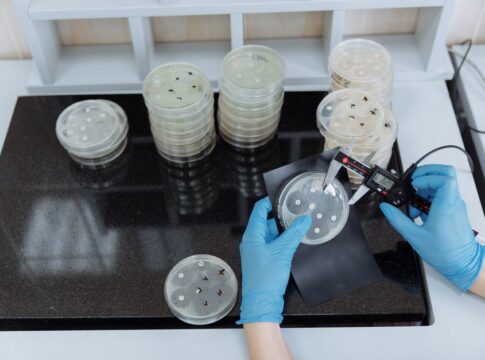
The realization that antibiotics could selectively kill bacteria emerged from careful scientific observation in the early twentieth century. Alexander Fleming’s discovery of penicillin in 1928 demonstrated that a mold-produced substance could kill bacteria in laboratory dishes without harming animal cells. This observation sparked intense research into understanding the biological basis of selective toxicity.
Scientists conducting experiments throughout the 1930s and 1940s worked to isolate, purify, and test antibiotics, gradually uncovering the mechanisms behind their selectivity. The breakthrough research revealed that successful antibiotics targeted distinctly bacterial features. This scientific understanding transformed antibiotic development from accidental discovery into rational drug design, where researchers could deliberately seek compounds that exploited known differences between bacterial and human biology.
The chemistry and biology of selective toxicity continue to guide modern antibiotic research. As bacteria evolve resistance to existing drugs, scientists search for new bacterial vulnerabilities—unique enzymes, structural features, or metabolic pathways that can be safely targeted without harming human cells.
Frequently Asked Questions
Can antibiotics ever harm human cells?
Yes, though antibiotics are designed for selective toxicity, they can cause side effects. Some antibiotics affect human mitochondria (which resemble bacteria) or disrupt beneficial gut bacteria. However, at prescribed doses, their impact on disease-causing bacteria far exceeds any effect on human cells.
Why don’t antibiotics work on viruses?
Viruses lack the cellular machinery that antibiotics target. They don’t have cell walls, ribosomes, or independent metabolic pathways—they hijack human cells to reproduce. Since viruses rely almost entirely on host cell machinery, there are few virus-specific targets that antibiotics could attack without harming human cells.
Do all bacteria have the same vulnerabilities to antibiotics?
No, different bacterial species have different structures and metabolic pathways. Gram-positive and Gram-negative bacteria have different cell wall structures, making them susceptible to different antibiotics. This is why doctors sometimes need to identify the specific bacteria causing an infection before choosing the most effective treatment.
How do bacteria become resistant to antibiotics?
Bacteria evolve resistance through mutations that alter antibiotic targets or through acquiring genes that break down antibiotics or pump them out of cells. When antibiotics kill susceptible bacteria, resistant ones survive and multiply, eventually dominating the population. This natural selection process is accelerated by antibiotic overuse.
The elegant selectivity of antibiotics—their ability to distinguish friend from foe at the molecular level—represents one of biology’s most practical applications. Every successful antibiotic exploits the deep evolutionary differences between our eukaryotic cells and the prokaryotic invaders that threaten us. As bacteria continue evolving new defenses, the scientific search for unexploited bacterial vulnerabilities becomes ever more crucial, driving researchers to explore the fundamental chemistry and biology that separates us from the microscopic world we constantly battle.