
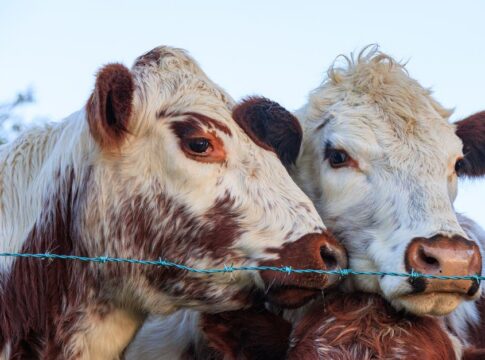
Cows Have Best Friends and Get Stressed When Separated
By Trivia Daily, Weird Facts Desk — Published July 20, 2026
Table of Contents
- Key Takeaways
- How Cows Friends Stressed Research Uncovered This Odd Behavior
- The Science Behind Bovine Friendships
- Measuring the Impact of Separation
- Comparing Cow Social Behavior to Other Animals
- What This Means for Animal Welfare
- Frequently Asked Questions
Cows are often dismissed as simple farm animals, but these gentle giants harbor a secret emotional life that rivals many creatures we consider more intelligent. Research has revealed one of the most endearing and bizarre truths about bovine behavior: cows form close friendships with specific herd members and experience measurable stress when separated from their chosen companions. This strange but scientifically documented phenomenon challenges our assumptions about farm animal intelligence and emotion, revealing that cows possess social bonds far more complex than most people realize.
The discovery that cows maintain best friends represents a fascinating curiosity in animal behavior research. These aren’t casual acquaintances grazing side by side—they’re genuine, preference-based relationships that shape daily behavior and physiological responses.
Key Takeaways
- Cows form selective friendships with specific individuals in their herd, spending significantly more time with their chosen companions than with other cows.
- When separated from their best friends, cows show elevated heart rates and increased cortisol levels, indicating genuine psychological stress.
- Cows paired with their friends produce more milk and exhibit calmer behavior than those housed with random herd members.
- These social bonds develop through grooming, synchronized grazing, and resting in close proximity over extended periods.
- Cattle possess strong memory capabilities, recognizing and remembering individual herd members for years.
- Understanding bovine friendship has practical implications for animal welfare and farm productivity.
How Cows Friends Stressed Research Uncovered This Odd Behavior
Scientists studying cattle behavior began noticing unusual patterns in how cows organized themselves within herds. Rather than mixing randomly, cattle consistently chose to spend time with the same one or two individuals. Researchers at the University of Northampton conducted studies measuring heart rate variability and cortisol levels—biological markers of stress—in cows under different social conditions.
The results were striking. When cows were penned with their preferred companion, their heart rates remained steady and stress hormones stayed low. Separate that same cow from its friend and place it with unfamiliar herd members, and physiological stress indicators spiked dramatically. The data painted a clear picture: these relationships mattered deeply to the animals experiencing them.
What makes this discovery particularly intriguing is how it mirrors social bonding in species we typically consider more emotionally sophisticated. Cows don’t just tolerate proximity to certain individuals—they actively seek them out and show distress at separation, much like dogs, horses, or even humans.
The Science Behind Bovine Friendships
Cattle are highly social animals with complex herd hierarchies. Within these structures, individual cows develop preferences based on personality compatibility, shared experiences, and possibly even family relationships. Young calves often maintain bonds with siblings throughout their lives, while adult cows form new friendships through repeated positive interactions.
These bonds serve important evolutionary functions. Cows with strong social connections benefit from coordinated vigilance against predators, shared knowledge about food sources, and mutual grooming that reduces parasite loads. A cow with a trusted companion can afford to spend more time with its head down grazing because its friend serves as an additional set of eyes watching for threats.
The grooming behavior between bovine friends is particularly telling. Cows will lick and nuzzle their preferred companions in specific patterns, focusing on areas the other cow cannot easily reach. This mutual grooming releases endorphins and strengthens social bonds through physical contact and cooperation.
Measuring the Impact of Separation
When researchers separate bonded cows, the stress response is immediate and measurable. Heart rates can increase by 15 percent or more. Cortisol levels rise within minutes. The separated cow may vocalize more frequently, a behavior interpreted as calling for its missing companion.
Perhaps most compelling from a practical standpoint, dairy cows separated from their friends produce less milk. The stress of social disruption directly impacts their physiological functions and productivity. Farmers who understand and respect these social bonds by keeping friendly pairs together often see improved yields and healthier animals.
The duration of stress depends on several factors. If a cow can see or hear its friend but cannot reach it, the stress response may be prolonged. Complete separation from the herd entirely generates even more severe stress than separation from a best friend alone, suggesting cows maintain a tiered system of social preferences.
Comparing Cow Social Behavior to Other Animals
| Animal | Social Bond Type | Stress Response to Separation |
|---|---|---|
| Cows | Selective friendships within herds | Elevated heart rate, increased cortisol, reduced milk production |
| Horses | Paired bonds and herd hierarchy | Anxiety behaviors, vocalization, pacing |
| Elephants | Lifelong family units and friendships | Prolonged distress, grieving behaviors, group disruption |
| Dogs | Pack bonds and human attachment | Separation anxiety, vocalization, destructive behavior |
What This Means for Animal Welfare
The recognition that cows experience genuine friendship and separation distress has important implications for how we treat cattle in agricultural settings. Modern farming practices often move animals between pens, sell individuals to different operations, or group cattle based purely on logistical convenience without considering existing social bonds.
Progressive farms now consider social structures when managing herds. Keeping bonded pairs together during transport, housing friends in adjacent stalls, and allowing calves to maintain relationships with their mothers longer all reduce stress and improve animal welfare. These practices aren’t merely compassionate—they’re economically sensible, as stressed cattle gain weight more slowly, produce less milk, and show compromised immune function.
Some agricultural researchers advocate for “friendship mapping” within herds, documenting which animals prefer each other’s company and using that information to minimize social disruption during routine farm operations. While this requires more observation and record-keeping, the payoff in animal health and productivity can be substantial.
Frequently Asked Questions
Do cows remember their friends after long separations?
Yes, cows have excellent long-term memory and can recognize individual herd members even after years of separation. Studies show cattle remember both positive and negative interactions with specific individuals for extended periods.
How many close friends does a typical cow have?
Most cows form particularly strong bonds with one to three other individuals within their herd, though they maintain broader social awareness of the entire group. These primary friendships receive the most grooming attention and proximity time.
Can cows form friendships with other species?
Cows can develop bonds with other species including horses, goats, and even humans who interact with them regularly. These cross-species relationships show similar patterns of preference and recognition, though they may lack some of the grooming behaviors seen between cattle.
Are bulls as social as cows?
Bulls exhibit social behavior but often show different patterns than cows. Young bulls maintain friendships, but adult bulls in breeding groups may display more competitive and territorial behavior. Castrated males (steers) generally show social bonding similar to cows.
The next time you pass a field of grazing cattle, look closely at how they arrange themselves. Those two cows standing side by side, tails swishing in synchronized rhythm, might just be best friends enjoying each other’s company—a reminder that emotional complexity exists in unexpected places throughout the animal kingdom.