










1 / 10 Questions
0 Points

Delaware's unusual circular border on its northern side is centered on which city?

Wilmington

Newark

New Castle

Dover

Points won
0
Correct score
0%

More Questions

More Articles

Top 10 Fascinating Facts About World Traditions

Top 10 Fascinating Facts About World Traditions

⏱️ 7 min read

Every culture around the globe has developed unique traditions that reflect centuries of history, beliefs, and values. These customs serve as threads connecting past generations to the present, offering insights into how different societies celebrate, mourn, honor, and live. From ancient rituals that have survived millennia to surprising practices that continue to baffle outsiders, world traditions reveal the incredible diversity of human expression. Understanding these customs not only broadens our perspective but also highlights the common threads of humanity that unite us all.

Exploring the Richness of Global Cultural Practices

1. The Spanish Tradition of Eating Twelve Grapes at Midnight

In Spain and several Latin American countries, people welcome the New Year by eating exactly twelve grapes, one with each chime of the clock at midnight. This tradition, known as "Las Doce Uvas de la Suerte" (The Twelve Lucky Grapes), dates back to 1909 when grape growers in Alicante promoted the custom to sell surplus harvest. Each grape represents good luck for one month of the coming year. The challenge lies in consuming all twelve grapes before the clock stops chiming—no easy feat! This seemingly simple act has become so embedded in Spanish culture that television broadcasts feature the clock tower in Madrid's Puerta del Sol, with millions of Spaniards participating simultaneously.

2. Japan's Coming of Age Day Celebration

Every second Monday of January, Japan celebrates Seijin no Hi, or Coming of Age Day, honoring all those who have turned twenty in the past year. Young women dress in elaborate furisode kimonos, often costing thousands of dollars, while young men typically wear traditional hakama or modern suits. The celebration marks the transition to adulthood and the acquisition of legal rights and responsibilities. Municipal governments host ceremonies where officials encourage the new adults to become self-reliant members of society. This tradition beautifully combines ancient customs with modern civic responsibility, showcasing Japan's respect for both heritage and contemporary values.

3. The Maasai Warrior Jumping Dance

The Maasai people of Kenya and Tanzania perform the "adumu," or jumping dance, as a crucial part of their warrior coming-of-age ceremony. Young Maasai warriors form a circle and take turns jumping straight into the air as high as possible while maintaining a narrow, stiff posture. The higher a warrior jumps, the more attractive he is considered to potential brides. This tradition demonstrates strength, stamina, and fitness—qualities essential for protecting the community. The rhythmic chanting and the competitive yet communal nature of the dance reflect the Maasai values of both individual excellence and collective identity.

4. Denmark's Cinnamon Showering for Singles

In Denmark, a peculiar tradition awaits those who remain unmarried by their twenty-fifth birthday. Friends and family gather to shower the single person with cinnamon, either sprinkling it on them or, in more enthusiastic celebrations, completely covering them in the spice. The tradition allegedly dates back centuries when Danish spice salesmen traveled extensively for work and often remained bachelors. At age thirty, if still unmarried, the spice upgrades to pepper. While messy and playful, this custom reflects Danish humor and the culture's lighthearted approach to social milestones.

5. The Hindu Festival of Holi's Colorful Origins

Holi, the Festival of Colors celebrated primarily in India and Nepal, involves people throwing vibrant colored powders and water at each other in joyous celebration. Beyond the spectacular visuals, this tradition carries deep religious significance, commemorating the victory of good over evil and the arrival of spring. The tradition encourages people of all social classes, ages, and backgrounds to interact freely, temporarily dissolving social barriers. The colors themselves originally came from natural sources like turmeric and flowers, though synthetic versions are common today. This festival exemplifies how traditions can promote social equality and communal joy.

6. Scotland's First-Footing New Year Custom

In Scotland, the first person to cross a household's threshold after midnight on New Year's Day—known as the "first-footer"—is believed to bring fortune for the coming year. Traditionally, the ideal first-footer is a tall, dark-haired male bearing symbolic gifts: coal for warmth, shortbread for food, salt for flavor, and whisky for good cheer. This Celtic tradition emphasizes hospitality and the symbolic importance of welcoming the new year properly. The custom remains popular throughout Scotland and reflects the Scottish value placed on community, generosity, and good fortune.

7. Mexico's Day of the Dead Altars

Contrary to somber mourning traditions in many cultures, Mexico's Día de los Muertos (Day of the Dead) celebrates deceased loved ones with vibrant altars, or "ofrendas." Families construct elaborate displays featuring photographs, favorite foods, marigolds, sugar skulls, and personal belongings of the departed. The tradition, recognized by UNESCO as part of humanity's intangible cultural heritage, stems from indigenous Aztec beliefs merged with Catholic influences. Rather than viewing death as an ending, this tradition embraces it as part of life's continuum, believing that spirits return annually to reunite with families. The colorful celebration transforms grief into joyful remembrance.

8. The Ethiopian Coffee Ceremony

In Ethiopia, the birthplace of coffee, the traditional coffee ceremony represents hospitality, friendship, and respect. The elaborate ritual can take several hours and involves roasting green coffee beans over an open flame, grinding them by hand, and brewing the coffee in a special pot called a jebena. The hostess serves the coffee in three rounds, each with its own name and significance. Guests are expected to participate in all three rounds, with the third believed to bestow blessings. This tradition showcases how everyday activities can be elevated into meaningful social rituals that strengthen community bonds.

9. Polynesian Tattoo Traditions and Their Meanings

For Polynesian cultures, including Samoan, Maori, and Hawaiian societies, tattoos represent far more than body decoration—they're sacred records of genealogy, social status, and personal achievements. Traditional Polynesian tattooing involves hand-tapping ink into skin using specialized tools, a painful process that could take weeks or months to complete. Each symbol and pattern carries specific meaning, telling the wearer's life story. The Samoan "pe'a" (male tattoo) covering from waist to knees represents a rite of passage into manhood, while incomplete tattoos bring shame. These traditions demonstrate how body art can serve as living historical documents.

10. The Turkish Evil Eye Protection Custom

The "nazar" or evil eye amulet appears throughout Turkey and surrounding regions as protection against malevolent glares believed to cause misfortune. These distinctive blue glass beads, usually circular with concentric circles resembling an eye, adorn homes, vehicles, jewelry, and even newborn babies. The tradition stems from ancient Mesopotamian beliefs and has been adopted across Mediterranean and Middle Eastern cultures. When a nazar breaks, believers interpret it as having successfully absorbed and deflected negative energy. This tradition illustrates how protective superstitions persist even in modern societies, offering psychological comfort and cultural continuity.

The Universal Thread of Human Experience

These ten traditions represent just a fraction of the countless customs practiced worldwide, yet they reveal universal themes: the marking of life transitions, the honoring of ancestors, the protection of loved ones, and the celebration of community. While the specific practices vary dramatically—from throwing colored powder to jumping competitions to elaborate coffee ceremonies—they all serve to strengthen social bonds and provide meaning to human experiences. Understanding and appreciating these diverse traditions enriches our global perspective and reminds us that beneath cultural differences lies a shared humanity seeking connection, purpose, and celebration. As globalization continues to connect distant corners of the world, preserving and respecting these unique traditions becomes increasingly important for maintaining cultural diversity and identity.
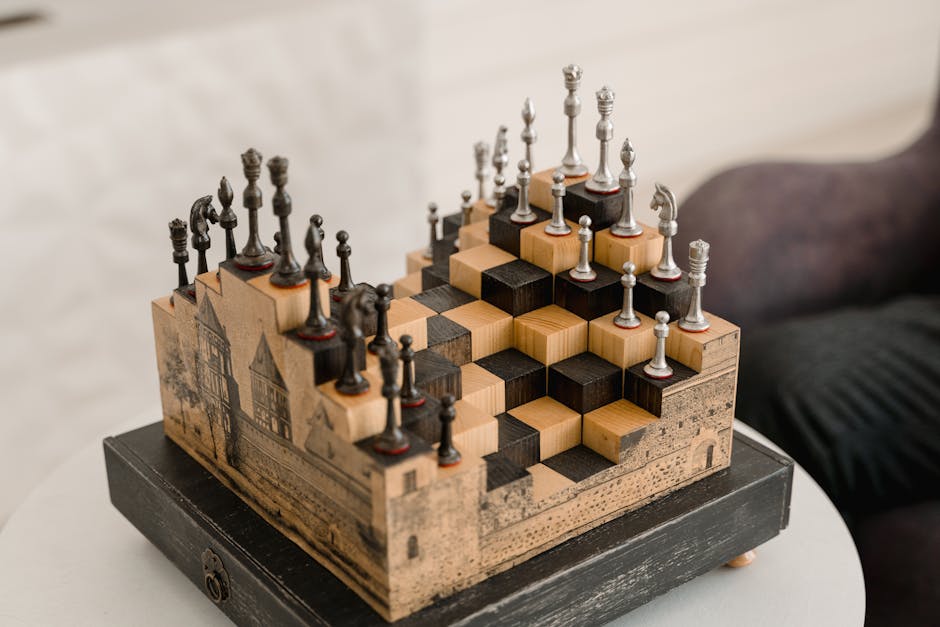
Top 10 Thinking Challenges for Daily Training

Top 10 Thinking Challenges for Daily Training

⏱️ 5 min read

Mental fitness requires consistent exercise, just as physical health demands regular workouts. Engaging in daily thinking challenges sharpens cognitive abilities, enhances problem-solving skills, and keeps the mind agile throughout life. The following collection presents diverse mental exercises designed to stimulate different aspects of cognitive function, from logical reasoning to creative visualization. Incorporating these challenges into a daily routine can significantly improve mental acuity, memory retention, and analytical capabilities.

Essential Brain Training Exercises for Cognitive Enhancement

1. The Classic Logic Grid Puzzle

Logic grid puzzles present scenarios with multiple variables that must be matched correctly using process of elimination. These challenges typically provide a series of clues about relationships between people, objects, or attributes. Solvers must create a grid and systematically eliminate possibilities until the correct solution emerges. This exercise strengthens deductive reasoning, attention to detail, and organizational thinking. Regular practice with logic grids improves the ability to handle complex information sets and draw accurate conclusions from limited data. These puzzles range from beginner level with three categories to advanced challenges involving five or more interconnected variables.

2. Pattern Recognition Sequences

Sequence puzzles challenge the brain to identify underlying patterns in series of numbers, letters, shapes, or symbols. The solver must determine the rule governing the progression and predict the next element in the sequence. These challenges engage both the analytical left hemisphere and the pattern-recognizing right hemisphere of the brain. Common pattern types include arithmetic progressions, geometric sequences, alternating patterns, and complex multi-rule systems. Mastering pattern recognition enhances predictive thinking, mathematical reasoning, and the ability to detect subtle relationships in seemingly unrelated information.

3. Spatial Visualization Rotations

Mental rotation exercises require visualizing how three-dimensional objects appear when rotated in space. Participants view an object from one perspective and must identify how it would look from different angles or determine which of several options represents the same object rotated. This challenge activates spatial reasoning centers in the brain, improving the ability to manipulate mental images. Engineers, architects, and surgeons particularly benefit from enhanced spatial visualization skills, though these abilities prove valuable in countless everyday situations from packing luggage efficiently to understanding maps and diagrams.

4. Word Association Networks

Creating word association chains challenges the brain to find creative connections between seemingly unrelated terms. Starting with one word, the solver must build a bridge to a target word through logical associations, with each intermediate word connecting meaningfully to the previous one. This exercise enhances semantic memory, creative thinking, and linguistic flexibility. It strengthens neural pathways between different knowledge domains and improves the ability to think laterally. Advanced versions impose restrictions such as limiting the number of steps or requiring all intermediate words to belong to specific categories.

5. Mathematical Riddles and Number Puzzles

Number-based brain teasers combine mathematical operations with logical reasoning to create engaging challenges. These might involve magic squares where rows and columns sum to identical totals, number pyramids requiring specific calculations, or arithmetic riddles with hidden variables. Unlike straightforward mathematics, these puzzles require creative approaches and often have multiple solution pathways. They develop numerical fluency, algebraic thinking, and the ability to approach quantitative problems from unconventional angles. Regular practice builds confidence with numbers and reduces anxiety around mathematical tasks.

6. Strategic Memory Matching Games

Memory challenges extend beyond simple recall to incorporate strategic elements. Progressive memory games present increasingly complex sequences of colors, sounds, positions, or patterns that must be reproduced accurately. Advanced versions add interference tasks or require remembering multiple sequences simultaneously. These exercises strengthen working memory capacity, which correlates strongly with fluid intelligence and academic performance. They also improve concentration, focus maintenance, and resistance to distraction—skills essential in information-saturated modern environments.

7. Lateral Thinking Scenarios

Lateral thinking puzzles present strange situations that require abandoning conventional assumptions to reach solutions. These scenarios often involve mysterious circumstances with logical explanations that become apparent only when questioning initial interpretations. The famous "man in the elevator" puzzle exemplifies this category: understanding why someone rides the elevator only partway requires recognizing unstated information. These challenges combat cognitive rigidity and encourage questioning assumptions—valuable skills for innovation and creative problem-solving in professional and personal contexts.

8. Cryptographic Code Breaking

Cipher puzzles challenge solvers to decrypt encoded messages using various cryptographic techniques. Simple substitution ciphers replace each letter with another according to a consistent pattern, while more complex systems involve transposition, polyalphabetic substitution, or mathematical transformations. Breaking codes requires pattern recognition, frequency analysis, and systematic hypothesis testing. This challenge combines linguistic knowledge, logical reasoning, and persistence. It develops analytical stamina—the ability to continue working methodically on problems despite initial failures and frustration.

9. Verbal Reasoning Analogies

Analogy puzzles present relationships between pairs of concepts, requiring identification of parallel relationships in different contexts. The classic format "A is to B as C is to D" tests understanding of semantic relationships, proportional thinking, and abstract reasoning. Analogies might involve synonyms, antonyms, part-whole relationships, functional connections, or categorical hierarchies. Mastering analogical reasoning improves vocabulary, conceptual understanding, and the ability to transfer knowledge across domains—a hallmark of expert-level thinking in any field.

10. Visual Illusion Analysis

Examining optical illusions and perceptual puzzles reveals how the brain constructs reality from sensory input. Challenges involve identifying hidden images, resolving ambiguous figures that shift between interpretations, or analyzing impossible objects. These exercises illuminate cognitive biases and perceptual shortcuts that influence daily decision-making. Understanding how the visual system can be deceived cultivates metacognitive awareness—thinking about thinking itself. This awareness helps recognize when intuitive judgments might be misleading and when more careful analysis is warranted.

Maximizing Cognitive Benefits Through Consistent Practice

Incorporating these ten thinking challenges into daily routines creates a comprehensive mental fitness program. The diversity of these exercises ensures balanced cognitive development, targeting different brain regions and mental capabilities. Starting with five to ten minutes daily and gradually increasing duration yields optimal results without causing mental fatigue. Rotating through different challenge types maintains engagement and prevents adaptation that reduces training effectiveness. Like physical exercise, consistency matters more than intensity—regular brief sessions produce superior long-term results compared to sporadic marathon training periods. These brain teasers offer enjoyable paths to maintaining cognitive sharpness, reducing age-related mental decline, and enhancing overall intellectual performance across all life domains.