
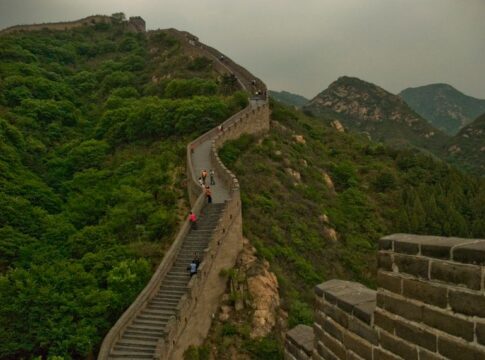
7 Surprising Facts About the Great Wall of China
By Trivia Daily, Staff Writer — Published August 1, 2026
Table of Contents
- Key Takeaways
- Surprising Facts About the Wall China and Its Construction
- Comparing Wall Sections Across Dynasties
- The Wall’s Role in Chinese Culture and Identity
- Modern Threats and Conservation Challenges
- Frequently Asked Questions
The Great Wall of China stands as one of humanity’s most ambitious architectural achievements, yet much of what people believe about this ancient wonder is wrapped in myth and misconception. Stretching across mountains, deserts, and grasslands, the wall china isn’t just a single continuous structure—it’s a network of walls, fortifications, and defensive systems built over centuries. These surprising facts will help you discover the fascinating truths behind one of the world’s most iconic monuments and explore details that even seasoned travelers might not know.
From its actual visibility from space to the materials that hold it together, the Great Wall continues to captivate curious minds around the globe. Let’s examine the amazing trivia and interesting realities that make this structure truly remarkable.
Key Takeaways
- The Great Wall is not a single continuous structure but a collection of walls built by different dynasties over approximately 2,000 years.
- Contrary to popular belief, the wall is not visible from space with the naked eye, according to astronauts who have actually been there.
- Sticky rice mortar was used in some sections, creating a bond so strong that many portions remain standing today.
- The total length of all wall segments and branches measures over 13,000 miles when accounting for overlapping sections.
- Millions of workers died during construction, with some estimates suggesting their remains were incorporated into the structure itself.
- Large portions of the wall have disappeared due to erosion, theft, and deliberate destruction over the centuries.
Surprising Facts About the Wall China and Its Construction
1. It’s Not One Wall, But Many Walls Built Over Centuries
The Great Wall isn’t a single construction project but rather a series of fortifications built by different Chinese dynasties and kingdoms. The earliest walls date back to the 7th century BCE, when various states constructed defensive barriers during the Warring States period. The most famous sections that tourists visit today were built during the Ming Dynasty (1368-1644 CE), but these represent just one chapter in the wall’s long history. Different rulers connected, extended, or rebuilt earlier walls according to their strategic needs, creating the complex network we recognize today. This means the structure evolved over roughly 2,000 years, with construction techniques, materials, and purposes varying dramatically across different eras and regions.
2. The “Space Visibility” Myth Is Completely False
One of the most persistent myths claims the Great Wall is the only human-made structure visible from space with the naked eye. Astronauts have thoroughly debunked this claim. While the wall is long, it’s also relatively narrow—typically 15 to 30 feet wide—making it nearly impossible to distinguish from orbit without optical aid. NASA astronauts have confirmed that from low Earth orbit, highways, airports, and cities are far more visible than the wall. The myth likely originated from a 1938 claim made before anyone had actually traveled to space. From the moon, no human-made structures are visible at all. This misconception has been so widespread that it appeared in textbooks for decades, demonstrating how easily trivia can transform into accepted “fact” without proper verification.
3. Sticky Rice Mortar Created an Incredibly Strong Bond
During the Ming Dynasty, builders discovered an ingenious construction technique that still impresses materials scientists today. They mixed sticky rice soup with standard mortar made from lime and water, creating a composite material of remarkable strength and durability. The amylopectin from the rice filled in gaps and created a tighter, more water-resistant bond between bricks and stones. This organic compound actually made the mortar more resistant to erosion and earthquakes than purely mineral-based alternatives. Researchers studying the chemistry of these ancient walls have found that the rice-lime mixture is still so strong that in some places, it’s harder to break the mortar than the stones themselves. This same technique was used in tombs, pagodas, and other important structures throughout China, proving that ancient engineers understood materials science in remarkably sophisticated ways.
4. The Total Length Exceeds 13,000 Miles
When people ask how long the Great Wall is, the answer depends on what you’re measuring. A 2012 archaeological survey conducted by China’s State Administration of Cultural Heritage revealed that the wall system, including all branches, secondary sections, and associated fortifications, spans approximately 13,171 miles (21,196 kilometers). This measurement accounts for walls built across different dynasties that sometimes overlapped or ran parallel to each other. The main Ming Dynasty wall alone measures about 5,500 miles. To put this in perspective, the total length could stretch more than halfway around Earth’s equator. The wall crosses multiple provinces and autonomous regions, traversing incredibly diverse terrain from sea level to mountain peaks exceeding 5,000 feet in elevation.
5. Human Remains May Be Part of the Structure
The human cost of building the Great Wall was staggering. Estimates suggest that hundreds of thousands to potentially millions of workers died during its construction over the centuries—from accidents, exhaustion, disease, and harsh working conditions. A persistent legend claims that workers who died were buried within the wall itself, their bodies becoming part of the structure. While archaeological evidence for this practice is limited and disputed, historical records do confirm that the construction claimed countless lives. Workers included soldiers, peasants, and prisoners who labored under brutal conditions. The wall became a symbol not just of defensive might but of imperial power’s ability to mobilize massive human resources regardless of cost. Whether or not actual remains are embedded in the structure, the wall undeniably represents an enormous sacrifice of human life and labor.
6. Much of the Wall Has Disappeared
Despite its fame and grandeur, approximately 30 percent of the Ming Dynasty wall has vanished, and earlier sections have fared even worse. Natural erosion from wind, rain, and sandstorms has worn away exposed sections, particularly in desert regions where vegetation doesn’t stabilize the soil. Human activity has been equally destructive. Locals have stolen bricks and stones for building materials for their homes and farms—a practice that continued well into the 20th century. During the Cultural Revolution, some sections were deliberately damaged. Even today, vandalism and unregulated tourism continue to threaten vulnerable portions. Conservation efforts face enormous challenges given the wall’s vast length and remote locations. Some sections that appear on historical maps have been reduced to barely visible mounds of earth, making preservation a race against time.
7. It Never Actually Kept Invaders Out
The Great Wall’s effectiveness as a military defense has been greatly exaggerated. Throughout history, invaders repeatedly breached or bypassed it. The Mongols under Genghis Khan conquered China despite the wall’s presence. The Manchus, who established the Qing Dynasty in 1644, entered through gates opened by a traitorous Ming general rather than scaling the walls. The structure worked better as a means of controlling trade, regulating immigration, and collecting customs duties than as an impenetrable military barrier. Watchtowers allowed for signal fires and communication across vast distances, serving more as an early warning system than a true defensive fortification. The wall’s real value lay in psychological deterrence, logistical support for troops, and demonstrating imperial authority rather than physically preventing invasion. Its symbolic power as a unifying national monument has always exceeded its practical military effectiveness.
Comparing Wall Sections Across Dynasties
| Dynasty/Period | Approximate Dates | Primary Materials | Current Condition |
|---|---|---|---|
| Warring States | 7th-3rd century BCE | Rammed earth, wood | Mostly disappeared |
| Qin Dynasty | 221-206 BCE | Rammed earth, stone | Fragmentary remains |
| Han Dynasty | 206 BCE-220 CE | Rammed earth, tamped loess | Partial sections in desert regions |
| Ming Dynasty | 1368-1644 CE | Brick, stone, lime mortar | Best preserved, most visited |
The Wall’s Role in Chinese Culture and Identity
Beyond its physical presence, the Great Wall occupies a central place in Chinese cultural consciousness. It appears in countless poems, paintings, and folk tales spanning centuries. During the 20th century, the wall transformed from a symbol of imperial isolation into an emblem of national resilience and unity. The phrase “He who has not climbed the Great Wall is not a true man,” attributed to Mao Zedong, reflects how the structure became intertwined with concepts of Chinese identity and achievement. Today, the wall serves as China’s most recognizable cultural export and tourism draw, attracting millions of visitors annually.
The structure’s influence extends into language itself. Chinese idioms and expressions reference the wall as a metaphor for persistence, strength, and overcoming obstacles. Its image appears on currency, stamps, and official emblems. This cultural significance has helped drive modern conservation efforts, as the wall represents not just historical architecture but living heritage. International recognition, including its designation as a UNESCO World Heritage Site in 1987, has reinforced its status as a treasure of global importance rather than merely a national monument.
Modern Threats and Conservation Challenges
Protecting the Great Wall presents unique difficulties. Its enormous length—spanning multiple climate zones and terrains—means that no single preservation approach works everywhere. Remote sections receive little monitoring, making them vulnerable to theft and vandalism. Some areas have been damaged by nearby mining, construction, and infrastructure projects. Tourism itself creates a paradox: visitor revenue funds conservation, but foot traffic and touching accelerate deterioration of fragile surfaces.
Conservation efforts employ both traditional and modern techniques. Drones survey remote sections, documenting damage and changes over time. Restoration work attempts to balance historical authenticity with structural stability, though debates continue about how much intervention is appropriate. Some experts advocate for “stabilization” rather than full reconstruction, preserving walls in their weathered state while preventing further collapse. Others argue that certain tourist sections require more extensive restoration to handle visitor loads safely. The challenge lies in protecting a structure that was never meant to last forever while respecting its archaeological and historical integrity.
Frequently Asked Questions
How long did it take to build the Great Wall of China?
The Great Wall wasn’t built in a single continuous project but rather constructed over approximately 2,000 years by different dynasties and kingdoms. The most famous sections took about 200 years to complete during the Ming Dynasty alone.
Can you walk the entire length of the Great Wall?
Walking the entire length is virtually impossible due to gaps, collapsed sections, dangerous terrain, and areas on private land or in restricted military zones. Several people have attempted extended hikes covering major portions, but no complete end-to-end walk of all sections has been verified.
What was the Great Wall originally built to protect against?
The wall was primarily built to defend against invasions and raids from nomadic groups from the northern steppes, including the Mongols and various other tribes. It also controlled trade along the Silk Road and regulated immigration and emigration.
Is the Great Wall still being built or extended today?
No new sections are being built, but restoration and preservation work continues on existing portions. Modern efforts focus on preventing further deterioration and repairing damaged sections rather than extending the wall’s length.
The Great Wall continues to reveal secrets as archaeologists study previously unexplored sections and historians reinterpret ancient records. Each discovery reminds us that even our most familiar landmarks hold mysteries waiting to be uncovered, challenging us to question what we think we know about the past.