
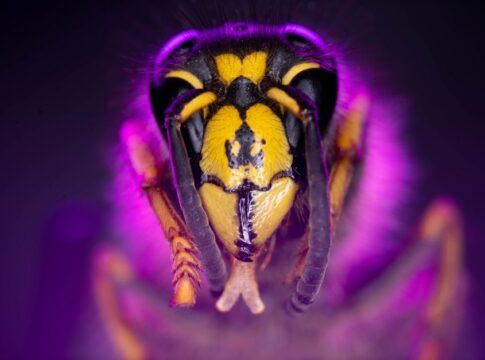
Why Does Honeybee Venom Hurt More Than Wasp Stings
By Trivia Daily, Staff Writer — Published November 1, 2026
Table of Contents
- Key Takeaways
- The Anatomy Behind Honeybee Venom Hurt and Delivery
- Comparing Venom Chemistry Across Stinging Insects
- Why Quick Stinger Removal Makes All the Difference
- The Surprising Purpose of Alarm Pheromones
- Common Myths About Bee and Wasp Stings Debunked
- Frequently Asked Questions
Anyone who’s been stung by both a honeybee and a wasp will tell you there’s a difference. The honeybee’s sting feels sharper, burns longer, and leaves a more memorable mark. But here’s a surprising fact: honeybee venom doesn’t actually hurt more than wasp stings in most cases. The persistent belief stems from a fascinating quirk of anatomy rather than venom potency. When you discover the real reason behind the pain difference, you’ll never look at these insects the same way again.
The truth is that wasps can sting repeatedly while honeybees die after a single sting, leaving their barbed stinger embedded in your skin. That barbed stinger continues pumping venom into the wound for up to a minute after the bee has flown away (or died). The longer venom exposure creates more intense, prolonged pain—not because the venom itself is more potent, but because you’re receiving a larger dose over time.
Key Takeaways
- Honeybee stingers have backward-facing barbs that anchor in mammalian skin, causing the stinger to tear away from the bee’s body along with the venom sac.
- The detached venom sac continues to pulse and inject venom for 45 to 60 seconds after the bee has left, delivering more toxin than a typical wasp sting.
- Wasp stingers are smooth and can be withdrawn cleanly, allowing wasps to sting multiple times but typically delivering less total venom per encounter.
- Honeybee venom contains melittin, a peptide that accounts for roughly half the dry weight of the venom and causes the burning sensation.
- The pain from a honeybee sting registers around 2.0 on the Schmidt Pain Index, comparable to many wasp species despite popular belief.
- Removing a honeybee stinger quickly—within 20 seconds—can reduce venom delivery by up to 90 percent.
The Anatomy Behind Honeybee Venom Hurt and Delivery
Honeybees evolved their barbed stingers as a defense mechanism against thick-skinned predators like bears and badgers. The barbs work like fishhooks, digging deeper into flesh with any pulling motion. When a honeybee stings a mammal, including humans, the stinger lodges firmly in the elastic skin. As the bee tries to fly away, the stinger apparatus tears from her abdomen, taking with it not just the stinger but also the venom sac, muscles, and part of the digestive tract. This catastrophic injury kills the bee within minutes.
But here’s the amazing part: even after separation, the venom sac keeps working. Tiny muscles attached to the sac continue contracting rhythmically, driving the barbed stinger deeper while pumping more venom into the wound. This autonomous pumping action is controlled by a simple nerve ganglion that doesn’t require input from the bee’s brain. The system can deliver venom for nearly a minute, ensuring maximum defensive impact even at the cost of the individual bee’s life.
Wasps, by contrast, have smooth or minimally barbed stingers that slide cleanly in and out of skin. A yellowjacket or paper wasp can sting multiple times in rapid succession, but each individual sting delivers a smaller, more controlled dose of venom. The wasp retains full control over how much venom to inject and can even deliver “dry” stings as warnings.
Comparing Venom Chemistry Across Stinging Insects
| Insect | Primary Pain Component | Venom Amount (Typical) | Schmidt Pain Rating |
|---|---|---|---|
| Honeybee | Melittin (50% of dry venom) | 50–140 micrograms | 2.0 |
| Yellowjacket | Kinins and phospholipases | 2–15 micrograms per sting | 2.0 |
| Paper Wasp | Serotonin and histamine | 10–30 micrograms | 3.0 |
| Bald-faced Hornet | Acetylcholine and histamine | 15–40 micrograms | 2.0 |
The Schmidt Pain Index, developed by entomologist Justin Schmidt, rates stings on a scale from 0 to 4 based on the intensity of pain. Interestingly, honeybees and most common wasps score similarly—around 2.0. The paper wasp ranks slightly higher at 3.0, meaning its venom is actually more painful per unit than honeybee venom. What makes honeybee stings feel worse is the total dose delivered by that persistent venom sac.
Why Quick Stinger Removal Makes All the Difference
Speed matters when you’ve been stung by a honeybee. Research has shown that removing the stinger within 20 seconds can prevent up to 90 percent of the venom from entering your system. After a full minute, virtually all the venom has been injected. This creates a critical window for action.
The old advice about scraping versus pinching the stinger turns out to be less important than simply acting fast. Early studies suggested that pinching the venom sac would squeeze more venom into the wound, but more recent research indicates that the sac empties automatically regardless of removal method. What counts is getting that stinger out immediately, whether you scrape it with a fingernail, credit card, or just pinch and pull.
For wasp stings, removal speed is irrelevant because the wasp takes its stinger with it. The venom delivery is essentially instantaneous, completed within a second or two of the sting. You can’t reduce the dose after the fact.
The Surprising Purpose of Alarm Pheromones
When a honeybee stings, it releases alarm pheromones from glands near the stinger. These chemical signals smell faintly of bananas—specifically, they contain isopentyl acetate, the same compound that gives banana oil its characteristic scent. The pheromone marks you as a threat and recruits other bees to join the defensive attack.
This explains why disturbing a beehive can lead to multiple stings in the same area. Each sting releases more alarm pheromone, creating a positive feedback loop that summons additional defenders. Wasps use similar chemical communication, but their smooth stingers mean they rely more on individual wasps delivering multiple stings rather than recruiting massive numbers of nestmates.
The evolutionary logic is clear: honeybees defend large stores of honey and thousands of larvae, making their nests high-value targets. The combination of barbed stingers, autonomous venom delivery, and alarm pheromones creates a formidable defense system that protects the colony even when individual bees sacrifice themselves.
Common Myths About Bee and Wasp Stings Debunked
One persistent myth claims that honeybees are gentle while wasps are aggressive. In reality, both insects sting only when defending their nests or when trapped against skin. Honeybees actually have more reason to avoid stinging because it costs them their lives, while wasps can sting without dying and may be quicker to do so.
Another misconception holds that allergic reactions are more common with bee stings than wasp stings. Medical data shows that venom allergies occur at similar rates for both groups, though cross-reactivity between bee and wasp venoms is limited. Someone allergic to honeybee venom isn’t automatically allergic to wasp venom, and vice versa, because the protein compositions differ significantly.
The idea that certain blood types or diets attract stinging insects more than others lacks scientific support. What does attract them? Rapid movements, dark colors, and floral fragrances—all of which can be mistaken for threats or flowers.
Frequently Asked Questions
Do bumblebees have barbed stingers like honeybees?
No, bumblebees have smooth stingers similar to wasps and can sting multiple times without dying. Despite being bees, they don’t lose their stingers when they sting mammals, making them more like wasps in this regard.
Can you build immunity to bee stings by being stung repeatedly?
Beekeepers often develop reduced reactions to stings through repeated low-level exposure, but this isn’t true immunity—it’s desensitization. Conversely, repeated stings can also trigger venom allergies in some people, so the response varies by individual.
Why do some wasp stings hurt more than others?
Different wasp species have different venom compositions, with paper wasps generally delivering more painful stings than yellowjackets. The location of the sting on your body also matters, with areas rich in nerve endings (like fingers and face) registering more pain.
Is it true that male bees can’t sting?
Yes, male bees (drones) have no stingers at all. The stinger evolved from an egg-laying organ called an ovipositor, so only female bees and wasps can sting. Males are completely harmless despite their sometimes intimidating appearance.
The next time you encounter a honeybee, remember that her willingness to sting comes with the ultimate price. That barbed stinger represents millions of years of evolution favoring colony defense over individual survival—a remarkable example of how nature balances individual sacrifice against collective benefit. The pain you feel isn’t just venom; it’s the final act of a creature defending something larger than itself.