
Why Do Oscar Statuettes Cost Only One Dollar to Make
By Trivia Daily, Staff Writer — Published November 3, 2026
Table of Contents
- Key Takeaways
- The Oscar Statuettes Cost Mystery: Materials vs. Symbolism
- The One-Dollar Buyback Agreement
- Manufacturing Process and True Production Costs
- Exceptions and Special Circumstances
- Oscar Statuettes Cost Comparison: Then and Now
- Frequently Asked Questions
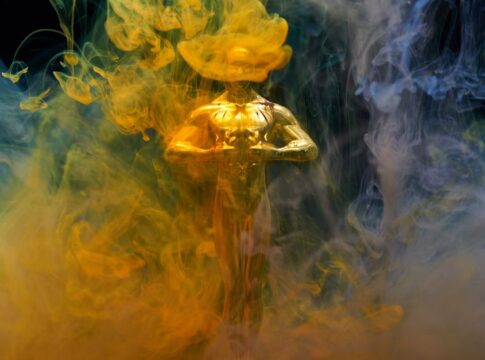
The Academy Awards statuette—thirteen and a half inches of golden prestige—represents the pinnacle of cinematic achievement. Yet here’s a surprising truth: Oscar statuettes cost only about one dollar in raw materials to produce. This astonishing fact reveals a fascinating disconnect between symbolic value and manufacturing expense, one that has shaped Hollywood’s most coveted prize for nearly a century.
The figure itself might seem shockingly low for such an iconic trophy, but the explanation lies in the materials and the Academy’s unique rules governing ownership. What appears to be solid gold is actually gold-plated britannium, a tin-copper-antimony alloy, making each statuette far less expensive than its appearance suggests. Even more intriguing is the Academy’s policy requiring winners to sell their Oscars back to the organization for exactly one dollar before offering them to anyone else—a rule that has protected the award’s integrity while creating one of entertainment’s most interesting trivia facts.
Key Takeaways
- Oscar statuettes are made primarily from britannium (a pewter-like alloy), then electroplated with copper, nickel, silver, and finally 24-karat gold.
- The actual material cost of producing each statuette is approximately one dollar, though manufacturing and finishing add significantly more expense.
- Since 1951, the Academy requires winners to sign an agreement offering to sell their Oscar back to the Academy for one dollar before selling to anyone else.
- This one-dollar buyback policy prevents statuettes from being sold on the open market, where they could potentially fetch hundreds of thousands of dollars.
- Each Oscar weighs eight and a half pounds and stands thirteen and a half inches tall, depicting a knight holding a crusader’s sword.
- The Chicago-based company R.S. Owens has manufactured the statuettes since 1982, producing approximately fifty Oscars annually.
The Oscar Statuettes Cost Mystery: Materials vs. Symbolism
When people discover that Oscar statuettes cost only about a dollar in raw materials, the natural question follows: how can something so valuable be so cheap? The answer lies in understanding what the Oscar actually contains. The statuette isn’t solid gold—it never has been. The base metal is britannium, an alloy composed primarily of tin with small amounts of copper and antimony. This pewter-like material provides structural integrity while remaining relatively inexpensive and easy to work with.
The manufacturing process transforms this humble alloy into a gleaming symbol of excellence through electroplating. Each statuette receives multiple layers: copper forms the foundation, followed by nickel for smoothness, then silver, and finally a coating of 24-karat gold. The gold layer itself is remarkably thin—just a few microns—which explains why the precious metal contributes minimally to the overall material cost. The entire statuette contains less than fifty dollars’ worth of gold at current market prices, and when you subtract the gold from the equation, you’re left with approximately one dollar of base metal.
This economical construction has practical benefits. Producing dozens of statuettes annually would become prohibitively expensive if they were solid gold. The current design allows the Academy to maintain consistency and quality while keeping production costs reasonable. The true expense lies not in materials but in the skilled craftsmanship required to cast, polish, and plate each piece to exacting standards.
The One-Dollar Buyback Agreement
The Academy of Motion Picture Arts and Sciences implemented its one-dollar rule in 1951 after noticing that Oscar statuettes were occasionally appearing at auctions and in private sales. The organization determined that allowing winners to profit from selling their awards undermined the honor the statuette represented. The solution was elegantly simple: require all winners to sign an agreement stipulating that before offering the Oscar to any third party, they must first offer to sell it back to the Academy for one dollar.
This policy effectively removes the secondary market for modern Oscars. While a winner can still display their statuette, pass it to heirs, or donate it to museums, they cannot legally sell it for profit without first giving the Academy the opportunity to reclaim it for a single dollar. The rule applies to all Oscars awarded since 1951, though statuettes awarded before that date occasionally surface at auction and can command impressive sums—sometimes exceeding one million dollars.
The buyback provision protects the award’s integrity in several ways. It prevents wealthy collectors from accumulating Oscars as mere curiosities. It ensures that the statuette remains connected to the achievement it represents rather than becoming a commodity. And it maintains the Academy’s control over these symbols of its brand and mission.
Manufacturing Process and True Production Costs
While the raw materials cost approximately one dollar, the complete production process involves considerably more expense. R.S. Owens, the Chicago-based manufacturer that has produced Oscars since 1982, employs skilled artisans who spend several weeks creating each batch of statuettes. The process begins with casting the britannium into the iconic knight figure designed by MGM art director Cedric Gibbons and sculptor George Stanley in 1929.
After casting, each statuette undergoes extensive finishing work. Craftspeople carefully polish the surface to remove imperfections and create the smooth finish necessary for proper electroplating. The multi-layer plating process itself requires precision timing and temperature control to ensure even coverage and proper adhesion. Finally, each Oscar receives hand-buffing to achieve its characteristic mirror-like shine.
The total manufacturing cost per statuette—including labor, facilities, quality control, and the thin layers of precious metals—runs several hundred dollars. Still a bargain compared to the award’s symbolic value, but substantially more than the one-dollar material cost that makes for such compelling trivia. The Academy orders approximately fifty statuettes each year to account for winners plus a small number of spares.
Exceptions and Special Circumstances
The one-dollar rule contains some notable exceptions. Statuettes awarded before 1951 are exempt, which is why collectors have occasionally purchased vintage Oscars at auction. In 1999, Michael Jackson paid $1.5 million for producer David O. Selznick’s Best Picture Oscar for “Gone with the Wind.” Steven Spielberg later purchased Bette Davis’s Oscars and returned them to the Academy, demonstrating both the market value of pre-1951 awards and the symbolic importance of keeping them within the film community.
Heirs of Oscar winners sometimes challenge the buyback provision, arguing they should be free to sell inherited statuettes. The Academy has generally prevailed in these disputes, though legal battles occasionally arise. The organization’s position remains firm: the Oscar represents an achievement, not a transferable asset, and maintaining this distinction preserves the award’s meaning.
Oscar Statuettes Cost Comparison: Then and Now
| Era | Base Material | Approximate Material Cost | Special Notes |
|---|---|---|---|
| 1929-1942 | Gold-plated bronze | Under $5 | Original design; heavier than modern versions |
| 1943-1945 | Painted plaster | Under $1 | Wartime metal shortages; later exchanged for metal versions |
| 1946-present | Gold-plated britannium | Approximately $1 | Current standard; lighter than bronze predecessors |
Frequently Asked Questions
Can Oscar winners legally sell their statuettes?
Winners of Oscars awarded after 1951 must first offer to sell their statuette back to the Academy for one dollar before selling to anyone else, effectively preventing open-market sales. Pre-1951 Oscars are exempt from this rule and occasionally appear at auction.
Has anyone ever melted down an Oscar for its gold content?
There are no documented cases of anyone melting down an Oscar, likely because the thin gold plating contains only a few dollars’ worth of the precious metal. The symbolic value far exceeds any recoverable material worth.
Why did the Academy choose britannium instead of another metal?
Britannium offers an ideal combination of durability, workability, and cost-effectiveness. The alloy accepts electroplating well, maintains fine detail from casting, and weighs enough to feel substantial without being unwieldy.
Do Emmy, Grammy, and Tony awards have similar buyback policies?
The Emmy Awards implemented a similar buyback provision, though the Grammy and Tony awards have different policies. Each organization balances honoring achievement with protecting the integrity of their respective prizes.
The one-dollar Oscar remains one of entertainment’s most delightful paradoxes—a trophy worth virtually nothing in materials yet priceless in meaning. That such an inexpensive object can represent the highest achievement in film speaks to the power of symbols over substance, and reminds us that true value rarely correlates with manufacturing cost. The next time you watch the Academy Awards, remember that each winner clutches roughly a dollar’s worth of metal transformed by context, craft, and collective agreement into something genuinely irreplaceable.