








7 Fascinating Facts About How Rubik's Cube Works
By Trivia Daily, Staff Writer — Published September 3, 2026
Table of Contents
- Key Takeaways
- How the Rubik Cube Works: The Internal Mechanism
- The Mathematics Behind the Colors
- Why the Cube Remains Popular Decades Later
- Frequently Asked Questions
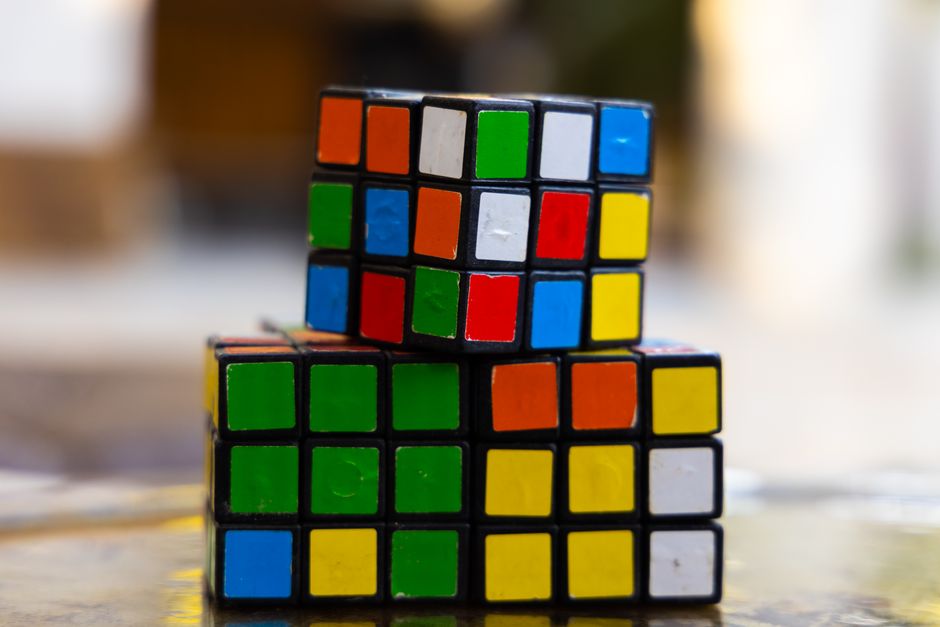
That colorful 3x3 puzzle sitting on your desk holds secrets far more intriguing than most people realize. When you twist a Rubik's Cube, you're not just scrambling stickers—you're exploring one of mathematics' most elegant mechanical marvels. Understanding how a Rubik cube works reveals surprising engineering, mind-boggling mathematics, and a design so clever it revolutionized puzzles forever. The trivia behind this iconic brain teaser will change how you see every twist and turn.
Created in 1974 by Hungarian architect Ernő Rubik, the cube wasn't originally designed as a toy at all. Rubik wanted to teach his students about three-dimensional geometry. What he built became a global phenomenon that has captivated curious minds for decades, spawning world records, speedcubing championships, and countless hours of fascination.
Key Takeaways
- The Rubik's Cube has 43 quintillion possible configurations, yet only one solution arrangement.
- A hidden internal mechanism allows all six faces to rotate independently without falling apart.
- Every scrambled cube can be solved in 20 moves or fewer, a fact proven by mathematicians and computers.
- The original cube was called the "Magic Cube" and took Rubik himself over a month to solve the first time.
- World record holders can solve the standard cube in under four seconds using advanced algorithms.
- The center pieces never actually move relative to each other—they define each face's color.
How the Rubik Cube Works: The Internal Mechanism
At the heart of every Rubik's Cube lies a surprisingly simple yet brilliant mechanism. The cube doesn't use magnets, glue, or complex electronics. Instead, a three-dimensional cross-shaped axle sits at the core, with the six center pieces attached to it. These center pieces never move relative to one another—when you see white opposite yellow and red opposite orange, that relationship never changes.
The corner and edge pieces are held in place by interlocking notches and curved feet that hook under the center pieces. This allows each face to rotate freely while keeping the entire puzzle intact. The tension can be adjusted by tightening or loosening screws in the core, which is why speedcubers often customize their cubes for faster turning. It's mechanical poetry: 26 movable pieces (8 corners, 12 edges, and 6 centers) working in perfect harmony.
1. The Cube Has 43 Quintillion Possible Combinations
When mathematicians calculated the total number of possible positions for a standard 3x3x3 Rubik's Cube, they arrived at an astronomical figure: 43,252,003,274,489,856,000. That's roughly 43 quintillion—a number so large that if every person on Earth scrambled one cube per second, it would take billions of years to see every possible configuration. Yet despite this staggering complexity, only one of those positions shows all six solid-colored faces. The mathematical principle behind this involves permutations and combinations of the corner and edge pieces, accounting for their orientation and position. This incredible number makes the Rubik's Cube one of the most complex mechanical puzzles ever mass-produced, yet it remains solvable through logical algorithms.
2. God's Number Is Twenty
Mathematicians and computer scientists spent decades trying to answer a deceptively simple question: what's the maximum number of moves needed to solve any scrambled Rubik's Cube? In 2010, researchers finally proved that every possible configuration can be solved in 20 moves or fewer. This maximum is called "God's Number"—the optimal solution a omniscient being would use. The proof required analyzing billions of cube positions using powerful computers and clever mathematical grouping. Most human solvers use 50 to 100 moves because we follow memorized algorithms rather than finding the absolute shortest path. But knowing that 20 moves always suffice reveals an amazing underlying order within the cube's apparent chaos.
3. The Center Pieces Define Everything
Here's something that surprises many casual solvers: the center piece of each face never moves relative to the other centers. When you hold a cube with white on top and green facing you, the white center will always be opposite the yellow center, and green will always be opposite blue. The centers are fixed to the internal mechanism, rotating in place but never changing position. This means the centers aren't really "pieces" you need to solve—they're anchors that tell you where each color belongs. Understanding this transforms your solving strategy. You're not moving centers to match corners; you're moving corners and edges to match the immovable centers. It's a fixed reference frame disguised as a movable puzzle.
4. Speedcubers Use Finger Tricks and Lubrication
The world's fastest Rubik's Cube solvers don't just know algorithms—they've turned solving into a precise physical skill. Speedcubers can solve a standard cube in under four seconds, with world records hovering around 3.5 seconds. They achieve these amazing times through specialized techniques most casual solvers never discover. Finger tricks allow solvers to execute multiple moves with single, fluid motions rather than regripping the cube. Modern speedcubes are also heavily modified with specialized lubricants (typically silicone-based) that reduce friction between internal components. The springs are adjusted to precise tensions that balance speed with control. Top competitors can recognize patterns and execute solution sequences faster than most people can follow visually, turning problem-solving into athletic performance.
5. The Original Prototype Nearly Fell Apart
When Ernő Rubik first built his wooden prototype in 1974, he faced a significant engineering challenge: how to make all six faces rotate independently without the cube disintegrating. His early attempts used rubber bands and paper clips to hold pieces together. The breakthrough came when he developed the internal mechanism with curved feet on each piece that locked under the center pieces while still allowing rotation. Rubik initially called his invention the "Magic Cube," and it took him over a month to solve his own creation the first time. He wasn't even sure a solution existed until he found it himself. The cube didn't reach international markets until 1980, when it was renamed the Rubik's Cube and became one of the best-selling puzzles in history, with over 400 million units sold worldwide.
6. Parity Makes Certain Moves Impossible
Mathematical constraints built into the cube's structure mean certain configurations are physically impossible to achieve through legal moves. You cannot swap just two edge pieces without affecting anything else. You cannot flip a single edge piece in place. You cannot rotate just one corner. These restrictions exist because of mathematical parity—the cube's mechanics preserve certain mathematical properties through every turn. If you disassemble a cube and reassemble it with one edge flipped or two pieces swapped, you'll create an unsolvable configuration. The cube will look normal, but no sequence of legal moves will ever solve it. This built-in mathematical consistency is part of what makes the Rubik's Cube so elegant: the rules encoded in its physical structure guarantee that any scramble created through turning can be undone through turning.
7. Blindfolded Solving Uses Memory Palaces
One of the most impressive feats in competitive cubing is blindfolded solving, where competitors memorize a scrambled cube's configuration, put on a blindfold, and solve it entirely from memory. World record holders can do this in under 15 seconds. They use memory techniques borrowed from ancient mnemonics, often employing "memory palaces" where each piece position is associated with a location in an imagined space or a character in a story. Solvers memorize the sequence of piece movements needed rather than the cube's appearance. They convert the visual puzzle into an auditory or narrative sequence, then execute the solution through muscle memory alone. This transforms the Rubik's Cube from a visual-spatial challenge into a test of memory encoding and recall—proving that the cube engages far more than just pattern recognition.
The Mathematics Behind the Colors
Group theory, a branch of abstract algebra, provides the mathematical framework for understanding the Rubik's Cube. Every move on the cube represents a permutation—a rearrangement of the pieces. The set of all possible moves forms what mathematicians call a group, and the cube's solvable positions form a subgroup within the much larger set of all theoretical arrangements. This is why you can't create certain configurations: they lie outside the group of positions reachable through legal moves.
The cube has become a teaching tool in university mathematics courses. Professors use it to illustrate commutators, conjugates, and other algebraic concepts. What looks like a children's toy is actually a physical manifestation of sophisticated mathematical structures. The cube makes abstract algebra tangible, turning equations into something you can hold and manipulate.
Why the Cube Remains Popular Decades Later
Unlike fads that fade, the Rubik's Cube has endured for nearly 50 years. Its appeal crosses cultures and generations because it offers something rare: a perfect balance of accessibility and depth. Anyone can scramble it. Children can learn basic solving methods. Yet the cube also rewards mastery with speed, efficiency, and increasingly advanced techniques.
The rise of online tutorials and global competitions has created a thriving community. YouTube channels teach methods ranging from beginner-friendly layer-by-layer approaches to advanced techniques like CFOP (Cross, F2L, OLL, PLL) and Roux. Competitions sanctioned by the World Cube Association draw thousands of participants who compete in categories including one-handed solving, solving with feet (discontinued in recent years), and solving larger cubes up to 7x7x7.
| Cube Type | Pieces | Possible Positions | World Record (approx.) |
|---|---|---|---|
| 2x2x2 | 8 corners | 3.7 million | 0.5 seconds |
| 3x3x3 | 26 movable | 43 quintillion | 3.5 seconds |
| 4x4x4 | 56 movable | 7.4 quattuordecillion | 17 seconds |
| 5x5x5 | 98 movable | 282 duodecillion | 33 seconds |
Frequently Asked Questions
Can every scrambled Rubik's Cube be solved?
Yes, every cube scrambled through legal turns can be solved. However, if someone disassembles the cube and reassembles it incorrectly (with pieces in impossible positions), it becomes unsolvable because those configurations violate the cube's mathematical constraints.
How long does it take to learn to solve a Rubik's Cube?
Most people can learn a beginner method in a few hours to a few days of practice. Solving your first cube typically takes 5 to 10 minutes. With practice, casual solvers can reduce their time to under two minutes within weeks.
Are Rubik's Cube competitions real?
Yes, the World Cube Association sanctions official competitions worldwide where thousands of competitors solve cubes for speed. Events include standard 3x3x3, larger cubes, blindfolded solving, one-handed solving, and solving with the fewest moves possible.
What's the difference between a cheap cube and a speed cube?
Speed cubes feature improved internal mechanisms, better lubrication, adjustable tension, and smoother corner cutting (the ability to continue turning even when faces aren't perfectly aligned). These modifications allow much faster turning with less effort compared to the original Rubik's brand design.
The next time you pick up a Rubik's Cube, remember you're holding a mathematical marvel disguised as a toy. Each twist explores a tiny fraction of those 43 quintillion possibilities, following rules encoded in plastic and geometry. Whether you solve it in three seconds or three days, you're participating in one of the most elegant puzzles humanity has ever created—proof that sometimes the most fascinating complexity emerges from beautifully simple mechanisms.