











1 / 10 Questions
0 Points

Which Government Building Holds The World Record For Most Bathrooms?

The White House

Buckingham Palace

The Pentagon

The Kremlin

Points won
0
Correct score
0%

More Questions

More Articles

Top 10 Brain Teasers You Can Solve in One Minute

Top 10 Brain Teasers You Can Solve in One Minute

⏱️ 6 min read

Mental agility and quick thinking are skills that can be sharpened with practice, and nothing accomplishes this better than engaging brain teasers that challenge logic, lateral thinking, and pattern recognition. The following collection presents puzzles specifically designed to be solved within sixty seconds, making them perfect for quick mental workouts during breaks or as warm-up exercises for more challenging problems. Each teaser tests different cognitive abilities while remaining accessible to puzzle enthusiasts of all levels.

Quick-Fire Puzzles to Sharpen Your Mind

1. The Missing Dollar Mystery

Three guests check into a hotel room that costs $30. They each contribute $10 and head to their room. Later, the manager realizes the room should only cost $25, so he gives the bellboy $5 to return to the guests. The bellboy, unable to split $5 evenly three ways, gives each guest $1 back and pockets $2 for himself. Now each guest has paid $9 (totaling $27), and the bellboy has $2, which equals $29. Where did the missing dollar go?

The solution lies in recognizing faulty arithmetic. The guests paid $27 total: $25 went to the hotel and $2 to the bellboy. There's no missing dollar—the puzzle intentionally misdirects by adding the bellboy's $2 to the $27 instead of recognizing it's already included in that amount.

2. The Bridge and Torch Problem

Four people need to cross a bridge at night with only one torch, which must be used when crossing. The bridge can hold only two people at a time. Person A takes 1 minute to cross, Person B takes 2 minutes, Person C takes 5 minutes, and Person D takes 10 minutes. When two people cross together, they move at the slower person's pace. What's the minimum time needed for everyone to cross?

The optimal solution is 17 minutes. A and B cross first (2 minutes), A returns (1 minute), C and D cross together (10 minutes), B returns (2 minutes), then A and B cross again (2 minutes). Many attempt to have the fastest person shuttle everyone across, but sending the two slowest together saves crucial time.

3. The Counterfeit Coin Challenge

You have twelve identical-looking coins, but one is counterfeit and weighs slightly different from the others. You have a balance scale and can use it exactly three times. How do you identify the counterfeit coin and determine whether it's heavier or lighter?

Divide the coins into three groups of four. Weigh two groups; if they balance, the counterfeit is in the third group. If they don't balance, you know which group contains it and whether it's heavy or light. The second weighing narrows it to one or two coins, and the third weighing confirms which coin is counterfeit. This puzzle demonstrates the power of strategic information gathering.

4. The Three Switches Enigma

You're outside a closed room with three light switches. Each switch controls one of three light bulbs inside the room. You can manipulate the switches however you like, but once you open the door, you cannot touch the switches again. How do you determine which switch controls which bulb?

Turn on the first switch and leave it on for several minutes. Then turn it off and immediately turn on the second switch. Enter the room: the lit bulb corresponds to the second switch, the warm but unlit bulb corresponds to the first switch, and the cold, unlit bulb corresponds to the third switch. This solution requires thinking beyond simple on/off states.

5. The Water Jug Dilemma

You have a 5-liter jug and a 3-liter jug with no measurement markings. You need to measure exactly 4 liters of water. How do you accomplish this?

Fill the 5-liter jug completely, then pour water from it into the 3-liter jug, leaving 2 liters in the larger jug. Empty the 3-liter jug, transfer the 2 liters into it, then fill the 5-liter jug again. Pour from the 5-liter jug into the 3-liter jug (which already has 2 liters) until the smaller jug is full, leaving exactly 4 liters in the larger jug.

6. The Clock Angle Problem

At what time between 2:00 and 3:00 will the minute hand and hour hand of a clock overlap?

The hands overlap at approximately 2:10:54 (2 hours, 10 minutes, and 54.5 seconds). The hour hand moves 0.5 degrees per minute, while the minute hand moves 6 degrees per minute. At 2:00, they're 60 degrees apart. Solving for when they meet requires calculating: 60 ÷ (6 - 0.5) = 10.909 minutes after 2:00. This puzzle combines geometry with time calculation.

7. The Birthday Probability Paradox

How many people need to be in a room for there to be a greater than 50% chance that at least two people share the same birthday?

Surprisingly, only 23 people are needed. This counterintuitive result occurs because we're not comparing everyone to one specific date, but rather any matching pair among all possible pairs. With 23 people, there are 253 possible pairs, making matches much more likely than intuition suggests. At 50 people, the probability exceeds 97%.

8. The Fox, Chicken, and Grain Transport

A farmer needs to transport a fox, a chicken, and a bag of grain across a river. The boat can only carry the farmer and one item at a time. If left alone, the fox will eat the chicken, and the chicken will eat the grain. How does the farmer get everything across safely?

The farmer takes the chicken across first, returns alone, takes the fox across, brings the chicken back, leaves the chicken and takes the grain across, then returns for the chicken. The key insight is that items can be transported backward, not just forward. This classic logic puzzle tests sequential planning abilities.

9. The Handshake Calculation

At a party with 10 people, if everyone shakes hands with everyone else exactly once, how many total handshakes occur?

The answer is 45 handshakes. This can be calculated using the formula n(n-1)/2, where n is the number of people. Each person shakes hands with 9 others, giving 90, but this counts each handshake twice, so divide by 2. This puzzle demonstrates the practical application of combinatorial mathematics and helps develop mental calculation skills.

10. The Alphabet Sequence Pattern

What letter comes next in this sequence: O, T, T, F, F, S, S, E, N, __?

The answer is "T." The sequence represents the first letters of number words: One, Two, Three, Four, Five, Six, Seven, Eight, Nine, Ten. This type of puzzle challenges pattern recognition skills and rewards thinking beyond mathematical or alphabetical sequences. It demonstrates how creative encoding can obscure simple patterns, making solvers question their assumptions about how sequences work.

Benefits of Regular Brain Teaser Practice

These quick-solve brain teasers offer more than entertainment—they provide measurable cognitive benefits. Regular engagement with puzzles enhances problem-solving skills, improves memory retention, and develops lateral thinking abilities. The one-minute timeframe makes these exercises ideal for incorporating into daily routines without requiring significant time commitments. They can serve as effective mental palate cleansers between tasks or as energizing warm-ups before tackling more complex challenges.

Each puzzle type exercises different cognitive muscles: logic puzzles strengthen deductive reasoning, mathematical teasers enhance numerical fluency, and lateral thinking problems encourage creative approach strategies. By practicing diverse puzzle types, individuals develop a more versatile problem-solving toolkit applicable to real-world situations beyond recreational mathematics.
How Bioluminescence Works in Deep Sea Creatures

How Bioluminescence Works in Deep Sea Creatures

How Bioluminescence Works in Deep Sea Creatures

By Triv Central, Science Desk — Published August 18, 2026

Table of Contents

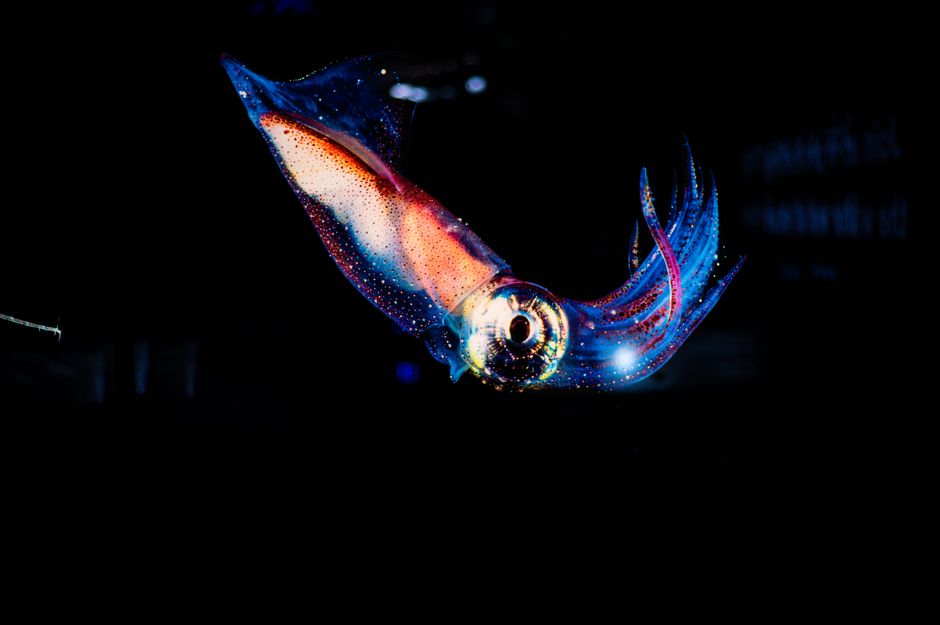
Thousands of feet beneath the ocean's surface, where sunlight never reaches, the darkness glows. More than 90 percent of deep sea creatures produce their own light through a chemical reaction called bioluminescence. Understanding how bioluminescence works deep in the ocean reveals one of nature's most elegant solutions to survival in perpetual darkness—a living light show powered by chemistry, refined by millions of years of biology, and studied through decades of scientific research. This natural phenomenon isn't just beautiful; it's functional. Deep sea animals use their living light to hunt prey, avoid predators, find mates, and communicate in an environment where traditional vision would be useless. The science behind this glow combines physics, chemistry, and evolutionary biology in ways researchers are still working to fully understand.

Key Takeaways

  • Bioluminescence results from a chemical reaction between a light-emitting molecule called luciferin and an enzyme called luciferase, producing light with minimal heat.
  • Approximately 76 percent of ocean animals in the deep sea can produce bioluminescent light, making it the most common form of communication in the largest habitat on Earth.
  • Deep sea creatures produce primarily blue and green light because these wavelengths travel farthest through water and match the sensitivity of most marine animals' eyes.
  • Some species create light through symbiotic bacteria living in specialized organs rather than producing the chemicals themselves.
  • Bioluminescent chemistry is so efficient that nearly 100 percent of the energy converts to light, compared to incandescent bulbs that waste most energy as heat.
  • Scientists have adapted bioluminescent proteins from marine creatures for medical research, including tracking cancer cells and monitoring gene expression.

The Chemistry Behind Living Light in Deep Ocean Waters

The fundamental process of how bioluminescence works deep in the ocean relies on a deceptively simple chemical reaction. A molecule called luciferin combines with oxygen in the presence of an enzyme called luciferase. This oxidation reaction produces an excited state molecule that releases energy as visible light when it returns to its ground state. The beauty of this system lies in its efficiency—it's often called "cold light" because virtually no energy is wasted as heat. Different species use different types of luciferin molecules. Coelenterazine is the most common luciferin in marine environments, found in jellyfish, squid, shrimp, and many fish species. The chemical structure varies slightly between species, which explains why some animals glow blue while others produce green light. These variations emerged through evolutionary adaptations to specific ecological niches and communication needs. The reaction requires precise control. Deep sea creatures house their bioluminescent chemistry in specialized light organs called photophores. These organs contain reflective layers, lenses, and color filters—biological structures that focus and direct the light just like a manufactured flashlight. Some species can control the intensity and duration of their glow, turning it on and off at will by regulating oxygen flow to the light-producing cells.

Why Blue Light Dominates the Deep

Walk through a deep ocean exhibit and you'll notice most bioluminescent displays glow blue or blue-green. This isn't coincidence—it's physics. Water absorbs different wavelengths of light at different rates. Red light disappears within the first few meters below the surface. Blue light, with its shorter wavelength, penetrates deepest, traveling much farther through seawater before being absorbed. Marine animals evolved to exploit this physical property. Most deep sea creatures produce blue light in the 470-480 nanometer range because it maximizes visibility in their environment. Their eyes evolved in parallel, developing peak sensitivity to these same blue wavelengths. It's a matched system honed by natural selection—produce the light that travels farthest and see the light that matters most. A few species break this rule. The dragonfish produces red bioluminescence in addition to blue. Since most deep sea creatures cannot see red light, this gives dragonfish a private spotlight—they can illuminate prey without being detected by predators or alerting their targets. This discovery by researchers demonstrated that evolutionary arms races in the deep ocean produce innovations as sophisticated as any human technology.

Symbiotic Light: Bacteria as Living Lanterns

Not all deep sea creatures manufacture their own light. Many species take a shortcut by farming bioluminescent bacteria. The Hawaiian bobtail squid, anglerfish, and flashlight fish all maintain colonies of light-producing bacteria in specialized organs. The host provides nutrients and a safe home; the bacteria provide illumination. This symbiotic relationship represents a different evolutionary strategy—outsourcing light production to microscopic specialists. The bacteria involved, primarily from the genus Vibrio and Photobacterium, glow continuously. The host animal controls the display by covering or uncovering the bacterial light organ, using shutters of dark tissue or by rotating the organ away from view. Female anglerfish famously use a glowing lure dangling in front of their mouths, packed with bioluminescent bacteria, to attract prey in the pitch-black depths. This bacterial approach has advantages. The host doesn't need to synthesize complex luciferin molecules or maintain the cellular machinery for light production. The trade-off is less precise control—you can't vary intensity as easily, only turn the light on or off by blocking it. Different species have evolved different solutions to this engineering challenge.

Functions of Bioluminescence in the Abyss

Deep sea creatures deploy bioluminescence for remarkably diverse purposes. Counterillumination is perhaps the cleverest: fish like hatchetfish have light organs on their undersides that match the faint light filtering from above, erasing their silhouette when viewed from below. Predators looking up see no shadow, no outline—just the background glow of the distant surface. Other species use bioluminescence offensively. The vampire squid, when threatened, ejects a cloud of glowing mucus rather than ink. This luminescent blob confuses predators while the squid escapes into darkness. Some shrimp species vomit bioluminescent fluid directly at attackers, temporarily blinding them with light in an environment adapted to darkness. Communication through light patterns helps species find mates in the vast emptiness of deep water. Many squid and fish flash species-specific patterns, like a maritime Morse code. The frequency, duration, and pattern of flashes serve as identification signals in an environment where finding another member of your species might be a rare event worth advertising.

Comparing Bioluminescent Strategies in Deep Sea Animals

Species Light Source Primary Function Color
Anglerfish Bacterial symbiont Prey attraction Blue-green
Hatchetfish Chemical (own cells) Counterillumination Blue
Dragonfish Chemical (own cells) Prey illumination Red and blue
Vampire squid Chemical (own cells) Defense/escape Blue
Flashlight fish Bacterial symbiont Communication/prey detection Blue-green

Scientific Applications and Ongoing Research

The discovery of green fluorescent protein (GFP) from the jellyfish Aequorea victoria revolutionized biological research. Scientists now use this bioluminescent protein to tag and track specific cells, genes, and proteins in living organisms. The researchers who isolated and developed GFP as a research tool received the Nobel Prize in Chemistry in 2008, demonstrating how studying deep sea biology yields practical applications far beyond marine science. Current research explores using bioluminescent chemistry for sustainable lighting, medical imaging, and environmental sensors. The efficiency of biological light production—nearly perfect conversion of chemical energy to light—offers lessons for developing better LED technology and other lighting systems. Medical researchers employ luciferase enzymes to detect specific molecules in diagnostic tests, turning the presence of disease markers into visible light signals. Deep sea exploration continues to reveal new bioluminescent species and mechanisms. Remotely operated vehicles equipped with specialized cameras document creatures at depths humans cannot survive. Each expedition discovers organisms with novel light-producing strategies, expanding our understanding of what's chemically and biologically possible. The deep ocean remains largely unexplored, suggesting many more bioluminescent discoveries await.

Frequently Asked Questions

Can humans see all types of bioluminescence in the deep sea?

Human eyes can see most bioluminescent displays from deep sea creatures, particularly blue and green light. However, some species produce ultraviolet or infrared wavelengths outside our visible spectrum that require special equipment to detect. Most deep sea bioluminescence falls within the range human vision evolved to perceive.

Do bioluminescent deep sea creatures glow all the time?

Most bioluminescent deep sea animals control their light production, turning it on only when needed for hunting, defense, or communication. Continuous glowing would waste energy and attract unwanted attention from predators. Species hosting symbiotic bacteria may glow continuously but use shutters or covers to control when the light is visible.

Why don't shallow water fish use bioluminescence as much as deep sea creatures?

Sunlight provides ample illumination in shallow waters, making bioluminescence less advantageous for most functions. The energy cost of producing light offers little benefit when ambient light already exists. In the perpetual darkness below about 1,000 meters, bioluminescence becomes essential for survival, driving its evolution across most deep sea species.

Is bioluminescence the same as phosphorescence?

No, these are different phenomena. Bioluminescence is light produced by living organisms through chemical reactions. Phosphorescence is light absorbed and then slowly re-emitted by certain materials. Some marine organisms that appear to glow are actually phosphorescent dinoflagellates, but true bioluminescence involves active light production, not passive re-emission. The next time you see footage of a glowing jellyfish or an anglerfish's luminous lure, remember you're watching chemistry and evolution collaborate in near-perfect efficiency. These creatures solved the engineering challenge of producing light without heat millions of years before humans invented the light bulb, and they did it in the most inhospitable environment on the planet. That's worth pondering in the dark.