
Why Honey Never Spoils: The Ancient Food That Lasts Forever
By Trivia Daily, Staff Writer — Published July 23, 2026
Table of Contents
- Key Takeaways
- Why Honey Never Spoils: The Chemistry Behind the Magic
- The Honeybee’s Remarkable Manufacturing Process
- Ancient Honey: Archaeological Evidence That Lasts Millennia
- Common Myths About Honey Preservation
- When Honey Can Spoil: The Rare Exceptions
- Frequently Asked Questions
Archaeologists excavating ancient Egyptian tombs have made a surprising discovery: pots of honey thousands of years old, still perfectly edible. This amazing fact reveals one of nature’s most remarkable preservation systems. Honey never spoils, and the science behind this phenomenon is as fascinating as the trivia itself. Unlike virtually every other natural food, honey can sit on a shelf for decades, centuries, or even millennia without going bad.
The secret lies in honey’s unique chemical composition and the extraordinary work of honeybees. These industrious insects create a food so hostile to bacteria and microorganisms that nothing can survive in it long enough to cause decay.
Key Takeaways
- Honey’s extremely low moisture content (around 17-18%) makes it impossible for bacteria and microorganisms to survive and multiply.
- The natural acidity of honey, with a pH between 3 and 4.5, creates an environment where most harmful organisms cannot thrive.
- When bees make honey, an enzyme in their stomachs produces hydrogen peroxide, a natural antimicrobial compound.
- Archaeologists have discovered 3,000-year-old honey in Egyptian tombs that remains unspoiled and technically edible.
- Honey is hygroscopic, meaning it absorbs moisture from its environment rather than releasing it, further preventing microbial growth.
- The high sugar concentration in honey creates an osmotic effect that pulls water out of bacterial cells, killing them through dehydration.
Why Honey Never Spoils: The Chemistry Behind the Magic
Three primary factors work together to make honey virtually immortal. First, honey contains very little water. Most foods spoil because bacteria, fungi, and other microorganisms need moisture to grow and reproduce. Honey typically contains only 17-18% water, far below the minimum threshold microbes require.
Second, honey is incredibly acidic. With a pH ranging from 3 to 4.5, it’s acidic enough to kill most bacteria on contact. This acidity comes from gluconic acid, which forms when bees add an enzyme called glucose oxidase to the nectar they collect. The same chemical reaction produces hydrogen peroxide as a byproduct, adding another layer of antimicrobial protection.
Third, honey’s extremely high sugar concentration creates what scientists call an osmotic environment. When bacteria encounter honey, the sugar draws water out of their cells through osmosis. Without adequate water, the bacterial cells dehydrate and die. It’s the same principle used in preserving jams and jellies, but honey takes it to an extreme.
The Honeybee’s Remarkable Manufacturing Process
Bees don’t just collect honey—they engineer it. Worker bees gather nectar, which contains about 60-80% water, far too much for long-term storage. Back at the hive, bees pass the nectar between themselves, adding enzymes from their stomachs. They then spread the nectar in thin layers across the honeycomb and fan it with their wings. This evaporation process continues until the water content drops below 20%.
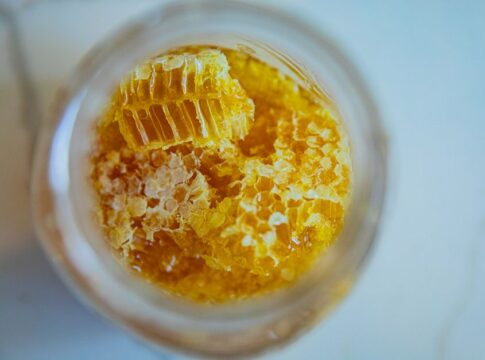
Once the honey reaches the right consistency, bees seal the honeycomb cells with beeswax. This capping creates an airtight environment that prevents moisture from re-entering. The combination of low moisture, high acidity, and antimicrobial compounds makes the sealed honey effectively sterile.
Ancient Honey: Archaeological Evidence That Lasts Millennia
The oldest honey ever discovered comes from the tomb of King Tut and other Egyptian burial sites, dating back more than 3,000 years. When archaeologists opened these ancient vessels, they found the honey had darkened and crystallized, but it hadn’t spoiled. The honey remained chemically stable enough that, theoretically, someone could eat it without harm.
Georgian archaeologists have also found honey residue in clay vessels dating back 5,500 years, though these samples had dried out over time. The presence of honey in ancient tombs wasn’t accidental—Egyptians valued honey for its preservative properties and included it in burial goods, believing it would sustain the deceased in the afterlife.
These discoveries aren’t just interesting trivia. They demonstrate honey’s unique position in human history as a food that transcends normal biological limitations.
Common Myths About Honey Preservation
Many people believe crystallized honey has gone bad. This is false. Crystallization is a natural process that occurs when glucose in the honey separates from the water and forms crystals. The honey remains perfectly safe to eat and retains all its nutritional properties. You can return crystallized honey to liquid form by gently warming it in a water bath.
Another myth suggests that honey needs refrigeration. In fact, refrigerating honey accelerates crystallization and offers no preservation benefit. Honey should be stored at room temperature in a sealed container.
Some people worry about foam or bubbles on honey’s surface. This typically results from tiny air bubbles introduced during bottling or pouring, not spoilage. True spoilage in honey is extremely rare and only occurs if the honey has been diluted with water, raising the moisture content above 19%.
When Honey Can Spoil: The Rare Exceptions
While pure honey never spoils under normal conditions, adulterated or improperly stored honey can ferment. If honey’s moisture content rises above 19%, naturally occurring yeast can become active and begin fermenting the sugars. This produces alcohol, carbon dioxide, and off-flavors—signs that the honey has indeed spoiled.
Commercial honey sometimes gets diluted with water or corn syrup, compromising its natural preservation properties. Raw honey from beekeepers occasionally contains higher moisture content if harvested before bees have fully cured it. In these cases, fermentation becomes possible.
| Condition | Moisture Content | Spoilage Risk |
|---|---|---|
| Properly cured honey | 17-18% | None (indefinite shelf life) |
| Marginal honey | 19-20% | Low (may ferment over time) |
| High-moisture honey | Above 20% | High (will likely ferment) |
Frequently Asked Questions
Can honey really last thousands of years?
Yes, honey can remain edible for thousands of years if stored in a sealed container. Archaeological evidence from Egyptian tombs proves honey’s extraordinary longevity, with 3,000-year-old samples found still preserved and technically safe to consume.
Does honey need to be refrigerated?
No, honey should never be refrigerated. Cold temperatures accelerate crystallization and provide no preservation benefit since honey’s natural properties already prevent spoilage. Store honey at room temperature in a tightly sealed container.
Is crystallized honey still good to eat?
Absolutely. Crystallization is a natural process that doesn’t affect honey’s safety or nutritional value. You can eat crystallized honey as-is or gently warm it in a water bath to return it to liquid form.
What makes honey antibacterial?
Honey’s antibacterial properties come from three main factors: extremely low moisture content that dehydrates bacteria, high acidity that kills microorganisms, and hydrogen peroxide produced by enzymes bees add during honey production.
The next time you drizzle honey into your tea or spread it on toast, consider the remarkable engineering behind every golden drop. Bees have perfected a food preservation technique that humans still can’t fully replicate—a sweet reminder that nature sometimes outperforms even our most advanced technology.