1 / 10 Questions
0 Points

What Year Did The Beatles Release 'Sgt. Pepper's'?

1969

1967

1965

1968

Points won
0
Correct score
0%

More Questions

More Articles

9 Strange Facts About Bioluminescent Creatures That Glow

9 Strange Facts About Bioluminescent Creatures That Glow

9 Strange Facts About Bioluminescent Creatures That Glow

By Triv Central, Science Desk — Published August 2, 2026

Table of Contents

Beneath the ocean's surface and deep within forests, some of the strangest bioluminescent creatures on Earth produce their own light through chemistry that seems almost magical. These glowing organisms harness chemical reactions to create cold light, a phenomenon that has fascinated scientists for centuries and continues to drive cutting-edge research in biology and chemistry. The science behind their glow reveals nature's mastery of biochemistry at its most spectacular. From fireflies blinking in summer meadows to deep-sea fish illuminating the abyss, bioluminescence represents one of evolution's most remarkable experiments. The physics and chemistry involved are so efficient that researchers study these creatures to develop new technologies, from medical imaging to sustainable lighting.

Key Takeaways

  • Approximately 90 percent of deep-sea creatures produce their own light through chemical reactions.
  • Bioluminescent light is "cold light" with nearly 100 percent energy efficiency, producing almost no heat.
  • The chemical luciferin and enzyme luciferase power most bioluminescent reactions across different species.
  • Some species use bioluminescence as a burglar alarm, attracting larger predators to scare away attackers.
  • Firefly synchronization involves thousands of insects flashing in perfect unison through chemical signaling.
  • Scientists have adapted bioluminescent proteins for revolutionary medical research and diagnostic tools.

The Chemistry Behind Living Light

The scientific discovery of how organisms create light revealed a surprisingly universal chemical process. Most bioluminescent creatures rely on a molecule called luciferin that reacts with oxygen in the presence of an enzyme called luciferase. This reaction releases energy as visible light rather than heat, achieving an efficiency that puts human-made lighting to shame. In contrast to incandescent bulbs that waste most energy as heat, bioluminescent reactions convert nearly all their chemical energy directly into light. Different species have evolved their own variations of luciferin, though the basic chemistry remains similar. Marine organisms often use a different form than terrestrial creatures like fireflies, suggesting that bioluminescence evolved independently multiple times throughout Earth's history. This convergent evolution demonstrates that producing light offers such significant survival advantages that nature invented it again and again through different chemical pathways.

Deep-Sea Dominance of Glowing Life

The vast majority of bioluminescent species live in the ocean's depths, where sunlight never penetrates. Research expeditions have documented that roughly 90 percent of organisms living below 500 meters can produce their own light. In this perpetual darkness, bioluminescence serves purposes that range from attracting prey to finding mates in an environment where visual signals would otherwise be impossible. The anglerfish exemplifies this adaptation with its famous glowing lure dangling in front of razor-sharp teeth. That eerie light comes from bioluminescent bacteria living in a specialized structure, demonstrating a symbiotic relationship where the fish provides shelter and nutrients while bacteria provide the hunting lamp. Many deep-sea creatures have evolved photophores, specialized light-producing organs positioned strategically across their bodies for camouflage, communication, or predation.

Nine Strange Facts About Bioluminescent Creatures

1. Firefly Synchronization Creates Natural Light Shows

Certain firefly species in Southeast Asia and the Great Smoky Mountains perform synchronized flashing displays involving thousands of individual insects. Scientists studying this phenomenon discovered that fireflies adjust their internal clocks through chemical signals, gradually matching their flash patterns until entire trees pulse with coordinated light. This biology experiment in group coordination happens without any central conductor, emerging from simple rules followed by each individual firefly responding to its neighbors.

2. The Immortal Jellyfish Glows and Reverses Aging

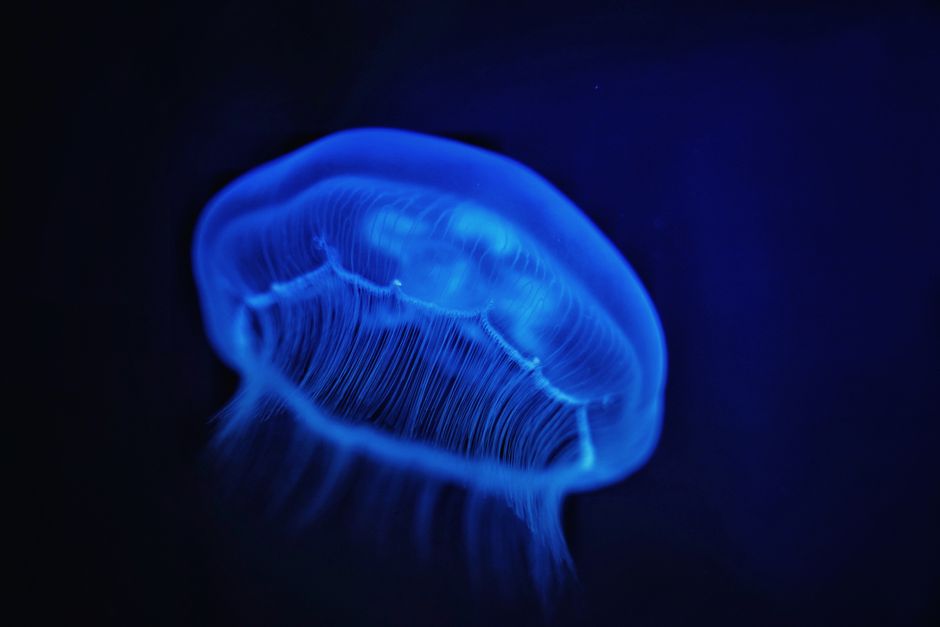
Turritopsis dohrnii, known as the immortal jellyfish, possesses bioluminescent properties and the remarkable ability to revert from adult form back to its juvenile polyp stage. This tiny creature, measuring just a few millimeters across, can theoretically cycle through its life stages indefinitely. Research into this species has opened new avenues in developmental biology, though its bioluminescence serves more conventional purposes like startling predators.

3. Bioluminescent Bacteria Outnumber All Other Glowing Organisms

Single-celled bacteria represent the most abundant bioluminescent life forms on Earth, vastly outnumbering glowing animals. These microorganisms often form symbiotic relationships with marine animals, living inside specialized organs and producing light in exchange for nutrients. The Hawaiian bobtail squid famously hosts Vibrio fischeri bacteria in its light organ, using the bacterial glow to eliminate its shadow when hunting at night—a form of counter-illumination camouflage that makes the squid invisible from below.

4. Some Species Use Bioluminescence as a Burglar Alarm

Dinoflagellates, microscopic marine organisms, flash brilliantly when disturbed by predators in a defensive strategy scientists call the "burglar alarm" effect. The sudden light attracts larger predators to the area, potentially threatening whatever disturbed the dinoflagellates in the first place. This creates a biological chain reaction where the prey essentially calls for backup, using light as a distress signal that brings danger to its attacker.

5. Railroad Worms Have Red and Green Headlights

The larvae of certain click beetles, called railroad worms, produce both red and green bioluminescent light from different body regions. They're among the very few terrestrial organisms capable of producing red bioluminescence, with green lights running along their bodies and red lights on their heads. The physics of producing different colored light requires different chemical variations of luciferin and luciferase, making these larvae remarkably complex chemical factories.

6. Bioluminescent Proteins Revolutionized Medical Research

Scientists extracted green fluorescent protein from the jellyfish Aequorea victoria, creating a tool that transformed biological research. This discovery earned a Nobel Prize in Chemistry in 2008 because the protein allowed researchers to track cellular processes in living organisms by making specific proteins glow. Medical experiments now routinely use modified versions to study cancer progression, neural activity, and gene expression in ways impossible before this bioluminescent breakthrough.

7. Glowing Mushrooms Use Light to Attract Spore Dispersers

Approximately 80 species of fungi produce a greenish glow through chemical reactions similar to those in animals, though fungi evolved bioluminescence completely independently. Scientific research suggests these mushrooms glow to attract insects during nighttime hours, with the insects then carrying fungal spores to new locations. The light intensity peaks at night and dims during daylight, indicating sophisticated biological control over the chemistry involved.

8. Cookie-Cutter Sharks Glow Everywhere Except One Spot

The cookie-cutter shark covers its underside with bioluminescent photophores except for a dark collar around its neck. When viewed from below, this creates the silhouette of a much smaller fish, luring larger predators close enough for the cookie-cutter to bite circular chunks from their flesh. This deceptive use of bioluminescence represents one of nature's more devious hunting strategies, turning light into camouflage and then weaponizing the disguise.

9. Bioluminescence Evolved Independently Over 40 Times

The ability to produce light has emerged separately across wildly different branches of the tree of life, from bacteria to fungi to insects to fish. This repeated evolution demonstrates that bioluminescence offers such powerful advantages that natural selection discovered the chemistry again and again. Each lineage developed its own molecular pathway, yet all arrive at the same basic physics: converting chemical energy into cold light with extraordinary efficiency.

Comparing Bioluminescent Efficiency to Human Technology

Light Source Energy Efficiency Heat Production
Bioluminescent organisms Nearly 100% Almost none
LED bulbs 80-90% Low
Fluorescent bulbs 21-30% Moderate
Incandescent bulbs 5% Very high

Frequently Asked Questions

What is the brightest bioluminescent creature?

The headlight fish produces the brightest continuous bioluminescence among known species, using symbiotic bacteria in large light organs beneath its eyes. Some squid species produce brighter flashes, but the headlight fish maintains constant illumination bright enough to read by in complete darkness.

Can humans see all bioluminescent light?

Humans can see most bioluminescent light, which typically appears blue-green because those wavelengths travel farthest through water. However, some deep-sea creatures produce red bioluminescence that many marine animals cannot see, effectively creating a private communication channel invisible to most predators and prey.

Do bioluminescent creatures glow all the time?

Most bioluminescent organisms control their light production, turning it on and off as needed for hunting, mating, or defense. Continuous glowing would waste energy and attract unwanted attention, so these creatures typically activate their bioluminescence only when it serves a specific purpose.

Are there any bioluminescent mammals?

Scientists recently discovered that platypuses and some flying squirrels exhibit biofluorescence under ultraviolet light, though this differs from true bioluminescence. No mammals are currently known to produce their own light through chemical reactions the way fireflies and jellyfish do, making bioluminescence remarkably absent from an entire class of animals. The glowing creatures inhabiting our planet reveal nature's mastery of chemistry and physics in ways that continue to surprise researchers. Each bioluminescent flash represents millions of years of evolutionary refinement, turning simple chemical reactions into survival tools as varied as the species that wield them. Next time you see a firefly's brief spark or watch waves shimmer with dinoflagellate light, you're witnessing one of Earth's most elegant solutions to the challenge of communication in darkness.
The Hidden Story Behind How Vinyl Records Are Made

The Hidden Story Behind How Vinyl Records Are Made

The Hidden Story Behind How Vinyl Records Are Made

By Triv Central, Staff Writer — Published October 3, 2026

Table of Contents

Every time a needle drops onto a spinning vinyl record, it traces a microscopic groove carved with precision that would make a watchmaker envious. What sounds like pure magic is actually a fascinating blend of chemistry, physics, and old-world craftsmanship. The hidden story behind how vinyl records are made reveals a manufacturing process that has remained surprisingly unchanged for decades, combining molten materials, metal stamping, and grooves so fine they're measured in micrometers. You might be surprised to discover that creating these analog music carriers involves techniques dating back over a century, yet still produces sound quality that audiophiles swear outperforms digital formats.

The journey from studio recording to playable disc is more complex than most music lovers realize, involving multiple stages of transformation and some truly amazing chemistry.

Key Takeaways

  • Vinyl records begin as a master lacquer disc coated with nitrocellulose, which is cut in real-time by a heated stylus following the audio waveform.
  • The manufacturing process requires creating metal "stampers" through electroplating, a technique that produces negative impressions of the original grooves.
  • Record grooves are typically only 25 to 40 micrometers wide—narrower than a human hair—yet contain all the information needed to reproduce complex music.
  • Modern vinyl is made from polyvinyl chloride (PVC) heated to approximately 150-170°C (300-340°F) and pressed between metal stampers at pressures exceeding 100 tons.
  • The entire pressing process takes only 30 seconds per record, though cooling and quality control add several more minutes.
  • Vinyl production experienced a remarkable resurgence, with sales increasing every year since 2006 after nearly disappearing in the 1990s.

The Hidden Story Behind Creating the Master Recording

The vinyl manufacturing process starts with something called a lacquer master, though calling it "lacquer" sells it short. This aluminum disc, typically 14 inches in diameter for a standard 12-inch record, gets coated with a layer of nitrocellulose lacquer compound. The coating must be perfectly smooth and uniform, as any imperfection will be reproduced thousands of times in the final pressings.

A lathe operator (yes, human skill still matters here) mounts the lacquer disc onto a cutting lathe. A heated sapphire or diamond stylus, vibrating in response to the audio signal, carves the groove into the soft lacquer in real-time. The stylus moves from the outer edge toward the center, creating a continuous spiral. The heat is crucial—it softens the lacquer just enough for clean cutting while the displaced material curls away as a thin ribbon.

This cutting process happens at exactly the playback speed. A 20-minute album side takes 20 minutes to cut. One mistake means starting over with a fresh lacquer disc. The precision required is extraordinary: the cutting stylus must maintain consistent depth and spacing while responding to frequencies ranging from deep bass (20 Hz) to high treble (20,000 Hz).

From Lacquer to Metal: The Electroplating Mystery

Here's where interesting chemistry takes over. The lacquer master, fragile and irreplaceable, gets sprayed with a fine silver or tin solution to make its surface electrically conductive. Then it's submerged in a nickel electroplating bath.

Over several hours, nickel atoms deposit onto the lacquer's surface, building up a metal shell that's an exact negative of the grooves. When thick enough (about 0.25 to 0.4 millimeters), this metal layer is carefully separated from the lacquer. This negative impression is called the "father."

The father is too valuable to use directly in production, so it gets electroplated again to create positive copies called "mothers." These mothers are then used to create multiple "stampers"—the negative impressions that will actually press records. A single lacquer master can spawn numerous stampers, each capable of pressing thousands of records before wearing out.

The Pressing Process: Heat, Pressure, and Perfect Timing

Vinyl pellets—usually black PVC, though colored variants exist—get fed into an extruder that melts them into a puck-shaped "biscuit" weighing about 135 to 150 grams. Paper labels are placed on both sides of this hot, soft biscuit, which then goes between two stampers in a hydraulic press.

The press closes with tremendous force. The heat and pressure cause the soft vinyl to flow into every microscopic detail of the stamper grooves. The press also trims the excess vinyl around the edges, creating the familiar circular shape. Steam or cold water circulates through the press platens to cool and harden the record rapidly.

Timing is everything. Too short, and the vinyl doesn't fill the grooves completely. Too long, and the record might warp or develop stress marks. Most pressing plants have dialed in the sweet spot through decades of experience.

Quality Control and the Limits of Perfection

Not every pressed record makes it to store shelves. Quality control inspectors examine records for various defects: off-center holes that cause pitch fluctuation, incomplete groove formation, surface noise from contaminants, or warping. Many plants test-play records from each pressing run to verify audio quality.

Even under ideal conditions, vinyl pressing has inherent limitations. Stampers wear down gradually, with the first few hundred pressings typically sounding better than later ones. Most stampers get retired after 1,000 to 1,500 pressings, though some plants push them further. The inner grooves of a record, moving slower past the stylus than outer grooves, face physical constraints that can reduce high-frequency response—a phenomenon called "inner groove distortion."

Comparing Vinyl Record Formats

Format Diameter Speed (RPM) Typical Playing Time Common Use
LP (Long Play) 12 inches 33⅓ 22 minutes per side Full albums
EP (Extended Play) 7 or 12 inches 33⅓ or 45 7-15 minutes per side Short albums, compilations
Single 7 inches 45 5 minutes per side Individual songs
78 RPM (obsolete) 10 or 12 inches 78 3-5 minutes per side Early recordings (pre-1950s)

The Curious Revival of an "Obsolete" Technology

Vinyl was supposed to die. Cassettes, CDs, and digital downloads each promised to deliver the final blow. Yet vinyl sales have grown consistently since the mid-2000s, defying every prediction. In 2020, vinyl revenue in the United States surpassed CD revenue for the first time since the 1980s—a stunning reversal.

Why? The reasons go beyond nostalgia. Vinyl offers tangible ownership in an age of streaming subscriptions. The large album artwork provides a canvas impossible on digital devices. Some listeners genuinely prefer the warm sound characteristics, including the subtle harmonic distortion that vinyl playback introduces. And there's something undeniably satisfying about the ritual: removing the record from its sleeve, placing it on the turntable, lowering the tonearm.

Modern pressing plants have invested in both vintage equipment and new technology. Some facilities use computer-controlled lathes for master cutting while maintaining 1960s-era hydraulic presses for the actual stamping. This blend of old and new reflects vinyl's unique position—a mature technology experiencing a second life.

Frequently Asked Questions

Why are vinyl records black?

Carbon black is added to PVC during manufacturing primarily to strengthen the vinyl and improve durability. It also helps hide impurities and recycled vinyl content. Colored vinyl omits carbon black but may have slightly inferior sound quality due to different additives.

How many records can one stamper produce?

A typical stamper can press between 1,000 and 1,500 records before the grooves wear down enough to affect sound quality. Some plants retire stampers earlier for audiophile releases, while others push them beyond 2,000 for less critical productions.

Can vinyl records actually sound better than digital formats?

Vinyl offers continuous analog waveforms rather than digital sampling, which some listeners prefer. However, vinyl also introduces surface noise, harmonic distortion, and frequency limitations. "Better" is subjective—vinyl sounds different, and many appreciate those specific characteristics.

Why do records have that distinctive smell?

The characteristic vinyl smell comes from volatile organic compounds released by PVC and the plasticizers added to keep records flexible. Fresh pressings smell stronger, and the scent fades over time as these compounds off-gas.

The next time you drop a needle onto a record, consider the remarkable journey that disc has taken—from molten plastic to microscopic grooves capable of reproducing an entire orchestra. It's a process that blends industrial chemistry with artisan craftsmanship, creating objects that are simultaneously mass-produced and somehow still special. That hidden complexity is part of what makes vinyl endure.