
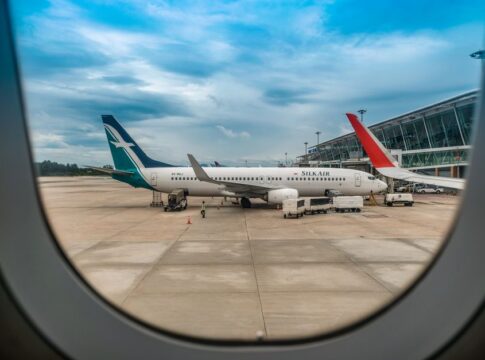
Why Airplane Windows Are Round: The Engineering Secret
By Trivia Daily, Staff Writer — Published July 28, 2026
Table of Contents
- Key Takeaways
- Why Airplane Windows Are Round: The Pressure Problem
- The Deadly Lesson: When Square Windows Failed
- The Physics Behind the Shape
- How Modern Airplane Windows Are Built
- Comparing Window Shapes Across Transportation
- Beyond Windows: Round Design in Aviation
- Frequently Asked Questions
Next time you settle into your airplane seat and glance out the window, take a moment to appreciate its rounded corners. Those smooth, oval edges aren’t just aesthetic choices—they’re lifesaving design decisions born from one of aviation’s most catastrophic engineering failures. The story of why airplane windows are round reveals fascinating truths about physics, pressure, and how engineers learn from tragedy to keep millions of passengers safe every year.
Before the 1950s, aircraft designers didn’t fully understand the deadly consequences of sharp corners at high altitudes. The switch to rounded windows represents a pivotal moment when aviation engineering transformed from trial-and-error experimentation into rigorous, science-based safety protocols.
Key Takeaways
- Square airplane windows caused catastrophic metal fatigue and explosive decompression in early commercial jets, leading to fatal crashes in the 1950s.
- Rounded windows distribute cabin pressure stress evenly across the fuselage, preventing dangerous stress concentration at corners.
- Modern aircraft cabins are pressurized to roughly 8,000 feet altitude equivalent while cruising at 35,000+ feet, creating enormous outward force on every window.
- The de Havilland Comet disasters directly led to mandatory round window designs across the entire aviation industry worldwide.
- Window shape engineering applies the same physics principles used in submarine portholes and spacecraft hatches.
- Each airplane window can withstand pressures equivalent to several tons of force pushing outward during flight.
Why Airplane Windows Are Round: The Pressure Problem
Commercial aircraft cruise at altitudes where outside air pressure is far too low for humans to survive. At 35,000 feet, atmospheric pressure drops to about one-quarter of sea-level pressure—your blood would literally boil without protection. To keep passengers alive and comfortable, airplane cabins are pressurized to simulate conditions at roughly 6,000 to 8,000 feet elevation.
This pressurization creates a critical engineering challenge. The cabin essentially becomes a tube filled with compressed air flying through near-vacuum conditions. Every square inch of the fuselage experiences constant outward force as the pressurized air inside pushes against the aircraft skin. Windows, being structural weak points, become potential failure sites where this pressure could escape catastrophically.
Sharp corners concentrate stress. When engineers design pressure vessels—whether airplanes, submarines, or boilers—they must account for how forces distribute across surfaces. Square or rectangular windows create 90-degree corners where stress concentrates intensely, like folding paper repeatedly at the same crease until it tears. Round windows, by contrast, distribute stress smoothly and evenly around their perimeter, with no weak points for cracks to exploit.
The Deadly Lesson: When Square Windows Failed
The de Havilland Comet entered service in 1952 as the world’s first commercial jetliner—a beautiful, revolutionary aircraft that promised to transform air travel. Its designers chose square windows for maximum visibility and modern aesthetics. Within two years, three Comets disintegrated mid-flight, killing everyone aboard.
Investigators discovered the horrifying cause: metal fatigue cracks originating at the corners of the square windows. Each pressurization cycle—every takeoff and landing—stressed the fuselage. Over time, microscopic cracks formed at the window corners where stress concentrated most intensely. Eventually, these cracks grew large enough that the fuselage explosively decompressed at altitude, tearing the aircraft apart.
The Comet disasters revolutionized aviation safety. Engineers conducted extensive testing, subjecting fuselages to repeated pressurization cycles in water tanks to simulate years of flight operations. The results were unambiguous: square windows were fundamentally unsafe for pressurized aircraft. The entire aviation industry adopted rounded windows, a standard that remains absolute today.
The Physics Behind the Shape
Stress concentration follows mathematical principles that engineers can calculate precisely. In a pressurized cylinder with a circular hole, stress distributes evenly around the opening’s circumference. The material experiences uniform tension, like a chain with equal force on every link.
Add corners, and everything changes. At each 90-degree angle, stress concentrates to levels several times higher than the surrounding material. These stress concentration points act like magnets for crack formation. Once a crack starts, it propagates along the path of highest stress—usually deeper into the corner—until structural failure occurs.
Modern aircraft windows typically feature oval or rounded rectangular shapes with generous corner radii. Even slightly rounded corners dramatically reduce stress concentration compared to sharp angles. The exact shape varies by aircraft model, but the principle remains constant: eliminate sharp corners to eliminate stress concentration points.
How Modern Airplane Windows Are Built
Today’s aircraft windows are engineering marvels comprising multiple layers of acrylic or polycarbonate materials. Most passenger windows have three panes: an outer pane bearing the primary structural load, a middle pane providing insulation, and an inner scratch pane protecting the structural layers from passenger contact.
The tiny hole you might notice in the inner pane serves a clever purpose. It equalizes pressure between the cabin and the gap between window panes, ensuring the outer pane bears the full pressure load. This “bleed hole” also prevents condensation from forming between layers where passengers couldn’t wipe it away.
Window frames are carefully engineered to flex slightly during pressurization cycles without cracking. The entire assembly must withstand temperature extremes from -65°F at cruise altitude to 120°F on desert tarmacs, pressure differentials equivalent to several tons of force, and years of repeated stress cycles—all while maintaining optical clarity and structural integrity.
Comparing Window Shapes Across Transportation
| Vehicle Type | Window Shape | Reason |
|---|---|---|
| Commercial Aircraft | Rounded/Oval | Prevents stress concentration from cabin pressurization |
| Submarines | Circular Portholes | Distributes external water pressure evenly |
| Spacecraft | Rounded | Manages extreme pressure differentials in vacuum |
| Cars and Buses | Rectangular/Square | No pressurization; minimal stress on structure |
| Trains | Rectangular/Square | Unpressurized; corners pose no safety risk |
Beyond Windows: Round Design in Aviation
The same physics principles extend throughout aircraft design. Fuselages themselves are cylindrical—the ideal shape for containing pressure. Cargo doors, access panels, and even rivet holes receive careful attention to minimize stress concentration. Engineers round edges, add reinforcement doublers around openings, and use computer modeling to identify potential weak points before aircraft ever fly.
Door frames on pressurized aircraft feature complex shapes that distribute loads while allowing the door to seal properly. Emergency exit hatches, despite their rectangular appearance, have heavily rounded corners and reinforced frames. Every opening in a pressurized fuselage represents a potential failure point that engineers must carefully manage.
Frequently Asked Questions
Why don’t cars and trains have round windows?
Ground vehicles aren’t pressurized, so their windows don’t experience the same stress concentration issues. Without pressure differentials pushing outward, square corners pose no structural danger, allowing designers to prioritize visibility, aesthetics, and manufacturing simplicity over stress distribution.
Can airplane windows break during flight?
While extremely rare, airplane windows can crack due to manufacturing defects, bird strikes, or other damage. However, the multi-layer design ensures that even if one pane cracks, the others maintain cabin pressure. Pilots can safely descend to lower altitude if a window is damaged.
Why are airplane windows so small compared to car windows?
Smaller windows mean smaller structural openings in the pressurized fuselage, reducing weight and maintaining strength. Each window adds complexity and potential failure points, so engineers balance passenger comfort with structural integrity and aircraft efficiency.
Do military aircraft have round windows too?
Yes, military aircraft that fly at high altitudes with pressurized cabins use rounded windows for the same physics reasons as commercial planes. Fighter jet canopies, though differently shaped, also avoid sharp corners where possible to manage stress from pressurization and aerodynamic forces.
The humble rounded airplane window represents decades of engineering wisdom compressed into a simple shape. Every smooth curve tells a story of lessons learned, lives saved, and the relentless human drive to understand how materials behave under stress. Those oval frames aren’t just portals to clouds and horizons—they’re monuments to the power of learning from failure and the elegant solutions that emerge when physics meets design.