
Why Bananas Are Curved: The Surprising Growth Science
By Trivia Daily, Staff Writer — Published July 24, 2026
Table of Contents
- Key Takeaways
- Understanding Bananas Curved Growth and Negative Geotropism
- The Role of Phototropism in Banana Shape
- Comparing Wild and Cultivated Banana Growth
- Common Myths About Banana Curvature
- The Practical Benefits of Curved Bananas
- Frequently Asked Questions
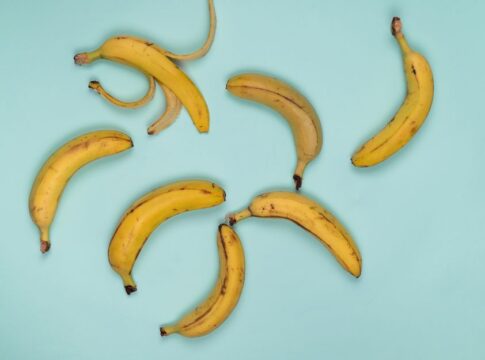
Every banana you’ve ever peeled shares a distinctive curved shape, arching gracefully upward like a crescent moon. This isn’t a coincidence or a quirk of selective breeding—it’s a fascinating example of plant biology in action. The story behind bananas curved growth reveals how these tropical fruits defy gravity through a process called negative geotropism, turning what could be a downward-drooping cluster into the iconic upward smile we recognize instantly.
Most people never stop to wonder why their breakfast fruit bends the way it does. The answer lies in an amazing interplay between sunlight, gravity, and plant hormones that transforms each developing banana from a small, downward-facing flower into the curved yellow fruit we find at grocery stores worldwide.
Key Takeaways
- Bananas curve upward due to negative geotropism, a growth response that makes them grow against gravity toward sunlight.
- Banana flowers initially point downward, but as fruits develop, they gradually rotate and curve upward over several weeks.
- The curvature is caused by uneven cell growth—cells on the shaded underside grow faster than those on the sun-exposed top.
- This curved growth pattern is universal across commercial banana varieties, making it one of nature’s most consistent fruit shapes.
- Wild bananas also exhibit this curvature, though they contain large seeds unlike the seedless cultivated varieties.
- The curved shape has no impact on nutritional value but makes bananas easier to pack and transport in bunches.
Understanding Bananas Curved Growth and Negative Geotropism
Bananas don’t grow on trees—they grow on large herbaceous plants that can reach heights of 20 feet or more. The banana “tree” is actually the world’s largest herb, with a stem made of tightly packed leaf bases rather than woody tissue. When the plant is ready to fruit, it sends up a large flower spike that emerges from the top of the plant and initially hangs downward under its own weight.
This is where the interesting science begins. The flower spike contains rows of flowers arranged in clusters called “hands,” with individual bananas called “fingers.” At first, these flowers point toward the ground, a natural result of gravity pulling on the heavy flower structure. But as pollination occurs and the tiny fruits begin developing, something remarkable happens.
The young bananas start exhibiting negative geotropism—a biological process where plant parts grow in opposition to gravitational pull. Unlike roots, which display positive geotropism by growing downward into soil, banana fruits begin curving upward toward the sky. This directional growth is triggered by plant hormones called auxins that accumulate on the lower, shaded side of each developing banana.
These auxins stimulate faster cell division and elongation on the underside of the fruit. The top side, exposed to more sunlight, grows more slowly. This differential growth rate causes the banana to curve progressively upward as it matures, creating the familiar arc shape. The process takes several weeks, during which the banana gradually rotates from a downward orientation to an upward one.
The Role of Phototropism in Banana Shape
Negative geotropism isn’t the only force at work. Bananas also respond to light through phototropism, the tendency of plants to grow toward light sources. As the banana bunch hangs from the plant, sunlight comes primarily from above and to the sides. The developing fruits naturally orient themselves to maximize light exposure, which supports photosynthesis in the fruit’s green skin during early growth stages.
This dual response to both gravity and light creates the consistent curvature pattern. Every banana in a bunch experiences similar conditions—hanging from the same stalk, exposed to comparable light angles, subject to identical gravitational forces. The result is a uniform curved shape across all fingers in a hand, and all hands on the bunch.
The curvature continues until the banana reaches its full size, typically measuring seven to nine inches for common Cavendish bananas. At this point, the fruit is still green and firm. The curved shape remains fixed even after the banana is harvested and ripens from green to yellow, as the structural shape has been permanently set during the growth phase.
Comparing Wild and Cultivated Banana Growth
| Characteristic | Wild Bananas | Cultivated Bananas |
|---|---|---|
| Curvature | Present, often more pronounced | Present, consistent arc shape |
| Seeds | Large, hard, numerous | Tiny, sterile, barely noticeable |
| Size | Typically smaller | Larger, bred for size |
| Growth trigger | Same negative geotropism | Same negative geotropism |
| Edibility | Limited due to seeds | Fully edible flesh |
Common Myths About Banana Curvature
Several misconceptions persist about why bananas curve. Some people believe the shape is engineered by farmers using special molds or growing techniques. This is false—the curve is entirely natural and occurs without human intervention. Bananas grown in commercial plantations and those growing wild in tropical forests both display the same characteristic arc.
Another myth suggests that bananas are curved to fit better in human hands. While the shape does make them convenient to hold, this is coincidental rather than causal. The curvature evolved long before humans began cultivating bananas. Wild banana species have existed for thousands of years, developing their curved growth pattern as a response to environmental factors, not human preference.
Some claim that only certain banana varieties curve, while others grow straight. In reality, all banana varieties exhibit this upward curvature to some degree, though the exact angle and arc may vary slightly between species. The fundamental growth mechanism remains consistent across the banana family.
The Practical Benefits of Curved Bananas
While the curve develops naturally through biological processes, it does offer practical advantages for both the plant and commercial harvesting. For the plant, positioning fruits upward may help protect them from ground-dwelling pests and reduce the risk of rot from contact with wet soil or debris. The upward orientation also allows better air circulation around the bunch.
For commercial purposes, the curved shape allows bananas to nestle together efficiently in bunches during transport. The natural arc creates spaces between individual fruits, reducing bruising and pressure points that could damage the delicate flesh. This compact yet cushioned arrangement has made bananas one of the world’s most successfully shipped fresh fruits, traveling from tropical growing regions to markets worldwide.
Interestingly, the degree of curvature can vary slightly based on growing conditions. Bananas receiving consistent sunlight from one direction may develop a more pronounced curve than those in more shaded or variable light conditions. However, the basic upward arc remains a universal feature of banana development.
Frequently Asked Questions
Do all bananas curve in the same direction?
Yes, bananas universally curve upward toward the sky as they grow, opposing gravity. Individual bananas in a bunch all curve in similar arcs because they respond to the same environmental cues—gravity pulling down and light coming from above.
Can you grow straight bananas?
No, you cannot prevent the natural curvature without damaging the fruit. The curve is built into the banana’s cellular growth pattern through negative geotropism, and attempting to force straight growth would interfere with healthy development and likely result in damaged or deformed fruit.
Are curved bananas more nutritious than straight ones?
No, the curvature has no effect on nutritional content. Bananas contain the same amounts of potassium, vitamin B6, vitamin C, and fiber regardless of how curved they are. The shape is purely structural, not nutritional.
Why don’t plantains curve as much as regular bananas?
Plantains do curve through the same negative geotropism process, but they’re often larger and heavier, which can result in a gentler arc. The fundamental growth mechanism is identical, though the visual result may appear slightly different due to size and weight variations.
The next time you reach for a banana, take a moment to appreciate the elegant arc in your hand. That simple curve represents millions of years of plant evolution, a sophisticated hormonal response system, and the quiet persistence of a fruit growing steadily toward the light. Nature’s design rarely wastes effort—and in the banana’s case, the solution to growing heavy fruit on a flexible plant created one of the most recognizable shapes in the produce aisle.