Why Crossword Puzzles Were Banned During World War Two
By Trivia Daily, Staff Writer — Published July 25, 2026
Table of Contents
- Key Takeaways
- The D-Day Crossword Puzzle Mystery and Crossword Puzzles Banned Concerns
- The Security Apparatus Behind Wartime Censorship
- How the Mystery Was Eventually Solved
- The Broader Impact on Puzzle Culture
- Crosswords as Intelligence Tools
- Frequently Asked Questions
During the darkest days of World War Two, British intelligence officers faced an unusual threat: crossword puzzles. In what sounds like the plot of a spy thriller, these seemingly innocent word games became the focus of serious wartime security concerns. The story of why crossword puzzles were banned—or at least heavily scrutinized—during WWII reveals a fascinating intersection of espionage, paranoia, and one of history’s most surprising security investigations.
This curious chapter in wartime history demonstrates how even the most mundane aspects of daily life became potential security risks when nations fought for survival. The facts surrounding this episode are stranger than fiction.
Key Takeaways
- British security services investigated crossword puzzles in the Daily Telegraph after discovering D-Day code words appearing as solutions months before the invasion.
- The investigation focused on crossword compiler Leonard Dawe, whose puzzles contained words like “Utah,” “Omaha,” “Overlord,” and “Mulberry”—all classified operation names.
- MI5 interrogated Dawe but ultimately concluded the appearances were an extraordinary coincidence, not espionage.
- The incident reflected the intense security paranoia of wartime Britain, where any potential leak could cost thousands of lives.
- Decades later, a former student revealed he had fed Dawe overheard military slang from nearby American soldiers, unknowingly creating the security breach.
- While not technically “banned,” crosswords faced unprecedented scrutiny and censorship during the war years.
The D-Day Crossword Puzzle Mystery and Crossword Puzzles Banned Concerns
In May and June 1944, British intelligence officers noticed something alarming. The Daily Telegraph’s crossword puzzles contained answers that matched top-secret code words for the upcoming Normandy invasion. “Utah” and “Omaha” appeared—the code names for two invasion beaches. Then came “Overlord,” the operation’s overall code name, followed by “Mulberry,” referring to the portable harbors that would be towed across the English Channel.
The timing was devastating. Operation Overlord represented the Allies’ best chance to liberate Europe from Nazi occupation. Any security breach could alert German forces and doom the invasion before it began. MI5, Britain’s domestic intelligence service, immediately launched an investigation into compiler Leonard Dawe, a 54-year-old schoolteacher who had been creating Telegraph crosswords for over two decades.
Dawe was questioned intensively. Officers searched his home and school. They examined his background, associations, and possible connections to enemy agents. The stakes could not have been higher—if Dawe was signaling German intelligence through his puzzles, the entire Allied war effort hung in the balance.
The Security Apparatus Behind Wartime Censorship
Britain’s wartime censorship regime was extensive and thorough. The Ministry of Information controlled what newspapers could publish, and the Official Secrets Act gave authorities sweeping powers to investigate potential breaches. Crossword puzzles, like all newspaper content, fell under scrutiny.
Security services employed thousands of people to monitor communications, publications, and potential intelligence leaks. They tracked everything from personal letters to radio broadcasts. In this environment, crossword puzzles represented a theoretically perfect vehicle for coded messages—publicly visible yet potentially containing hidden meanings only a recipient would understand.
The paranoia was not entirely misplaced. German intelligence had used creative methods to communicate with agents in Britain. The security services had to investigate every anomaly, no matter how unlikely.
How the Mystery Was Eventually Solved
The 1944 investigation concluded that Dawe was innocent. The coincidences, while extraordinary, appeared to be just that—coincidences. Dawe returned to his teaching and crossword compiling, though undoubtedly shaken by the experience. The matter remained classified for years.
The truth emerged decades later, in 1984, when Ronald French came forward with an explanation. As a teenager during the war, French had been a student at Dawe’s school in south London. He revealed that Dawe would sometimes ask students to fill in blank crossword grids with words, which he would then use as inspiration for clues.
The school was located near military camps where American and Canadian troops were gathering for the invasion. Soldiers would talk freely around the local boys, using code words they had overheard. French and his classmates absorbed this military slang without understanding its significance and innocently fed these words to their teacher. Dawe, equally unaware of the words’ classified nature, incorporated them into his puzzles.
It was a security breach, but an entirely accidental one—the product of loose talk among soldiers, curious schoolboys, and a crossword compiler doing his job.
The Broader Impact on Puzzle Culture
While crosswords were never formally banned in Britain, the D-Day incident exemplifies how wartime security concerns affected everyday entertainment. Puzzle creators exercised extreme caution with word choices. Publishers understood that anything deemed suspicious could result in investigation or censorship.
The incident also highlighted the tension between maintaining public morale and ensuring security. Crossword puzzles were tremendously popular during the war—they provided mental escape and entertainment during dark times. Newspapers wanted to continue publishing them, but had to balance this against security imperatives.
| Code Word | Actual Meaning | Appearance Date |
|---|---|---|
| Utah | D-Day landing beach | May 1944 |
| Omaha | D-Day landing beach | May 1944 |
| Overlord | Overall invasion operation | June 1944 |
| Mulberry | Portable harbor | May 1944 |
| Neptune | Naval operation component | May 1944 |
Crosswords as Intelligence Tools
Interestingly, while some feared crosswords could leak secrets, British intelligence actually used them for recruitment. In 1942, the Daily Telegraph hosted a crossword competition to identify people who could solve puzzles quickly. The fastest solvers were quietly approached about working at Bletchley Park, the top-secret facility where codebreakers worked to crack German Enigma messages.
This makes perfect sense. Crossword expertise requires pattern recognition, vocabulary knowledge, lateral thinking, and persistence—exactly the skills needed for codebreaking. Several successful Bletchley Park codebreakers were recruited through this method, proving that puzzle-solving ability translated well to intelligence work.
Frequently Asked Questions
Were crossword puzzles actually banned during World War Two?
Crosswords were never officially banned in Britain or the United States during WWII, but they faced intense scrutiny and censorship. The Daily Telegraph incident led to investigations and heightened awareness about potential security risks in published puzzles.
Did any other crossword security incidents occur during the war?
The D-Day crossword incident was the most famous case, though wartime censors monitored all newspaper content closely. No other documented cases of classified information appearing in crosswords have been verified, though many publications exercised self-censorship to avoid suspicion.
How did Leonard Dawe react to being investigated by MI5?
Dawe was reportedly shocked and distressed by the investigation but cooperated fully with authorities. He continued compiling crosswords for the Daily Telegraph after being cleared, maintaining his innocence until his death in 1963, years before the true explanation emerged.
Are crossword puzzles still used in intelligence recruitment?
Intelligence agencies worldwide continue to value puzzle-solving skills. While modern recruitment methods have evolved, organizations like GCHQ in Britain and the NSA in the United States have used puzzles and code-breaking challenges to identify potential candidates with the analytical skills needed for intelligence work.
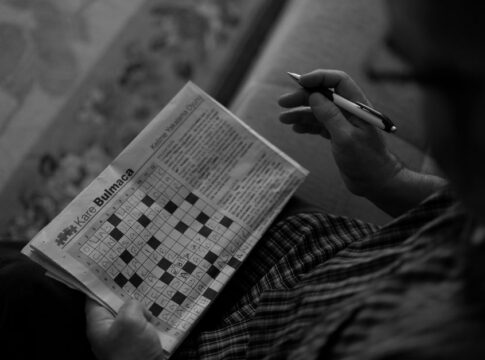
The wartime crossword controversy reminds us that even the most ordinary activities can become extraordinary under the pressure of global conflict. What began as innocent word games transformed into a security investigation that could have changed history. The next time you fill in a crossword puzzle, consider how those black-and-white grids once captured the attention of spies, soldiers, and schoolboys alike.