
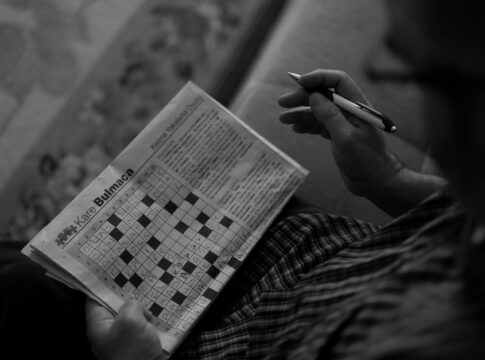
9 Fascinating Facts About How Crossword Puzzles Train Minds
By Trivia Daily, Staff Writer — Published October 19, 2026
Table of Contents
- Key Takeaways
- How Crossword Puzzles Train Your Brain’s Multiple Systems
- Comparing Crossword Difficulty Levels
- The Science Behind the Mental Benefits
- Frequently Asked Questions
Crossword puzzles have captivated millions for over a century, but they’re far more than simple entertainment. These clever grids of intersecting words actively reshape how your brain processes information, stores memories, and solves problems. The surprising truth is that each time you fill in a square, you’re engaging multiple cognitive systems simultaneously—building mental resilience that extends far beyond the puzzle page itself.
What makes these word games such powerful brain trainers? The answer lies in their unique ability to challenge language skills, memory recall, and pattern recognition all at once. From boosting vocabulary to potentially delaying cognitive decline, the benefits of regular puzzle-solving continue to amaze researchers studying brain health.
Key Takeaways
- Crossword puzzles train multiple brain regions simultaneously, strengthening neural connections through pattern recognition and memory recall.
- Regular puzzle-solving can expand working vocabulary by thousands of words through contextual learning.
- The difficulty sweet spot—puzzles that challenge but don’t frustrate—produces the strongest cognitive benefits.
- Crosswords activate both the left hemisphere (language) and right hemisphere (spatial reasoning) of the brain.
- Studies suggest consistent puzzle-solving may help maintain cognitive function as we age.
- The dopamine reward system fires when solving clues correctly, reinforcing learning and motivation.
How Crossword Puzzles Train Your Brain’s Multiple Systems
When you tackle a crossword, your brain doesn’t work in isolation. Multiple neural networks light up simultaneously. The left temporal lobe processes language and word meanings. The frontal cortex handles problem-solving and strategy. The hippocampus retrieves memories of words you’ve encountered before. This coordinated activity strengthens connections between brain regions, much like cross-training builds overall athletic fitness rather than just one muscle group.
The spatial reasoning required to visualize how words intersect engages your right hemisphere as well. You’re constantly asking: Does this word fit? Will it conflict with crossing answers? This back-and-forth between hemispheres creates what neuroscientists call “bilateral activation”—a workout for your whole brain.
1. They Build Vocabulary Through Contextual Learning
Every crossword introduces you to new words or reinforces ones you rarely use. Unlike rote memorization, puzzles teach vocabulary through context clues and intersecting letters—the same natural process by which children acquire language. When you deduce that a six-letter word for “ancient marketplace” starting with “ag” must be “agoras,” you’re learning through multiple reinforcing channels. The definition provides meaning, the letter count provides structure, and crossing words provide confirmation. This multi-sensory approach creates stronger memory traces than simply reading a definition in a dictionary.
2. Working Memory Gets a Serious Workout
Working memory—your brain’s scratchpad for holding temporary information—gets heavily exercised during puzzle-solving. You must remember clues while scanning for related answers, hold multiple potential words in mind simultaneously, and recall where you’ve seen similar patterns before. This constant juggling of information strengthens your working memory capacity, which research suggests can improve performance on unrelated tasks requiring mental manipulation of information.
3. Pattern Recognition Skills Sharpen With Practice
Experienced solvers quickly recognize common crossword patterns: three-letter words for “egg on,” typical abbreviations, and frequent letter combinations. This pattern recognition isn’t just useful for puzzles. The same neural circuits help you spot trends in data, recognize faces in crowds, and detect anomalies in familiar environments. Your brain becomes more efficient at extracting meaningful patterns from complex information—a skill that transfers to countless real-world situations.
4. The Difficulty Sweet Spot Matters Most
Not all crosswords provide equal cognitive benefits. Puzzles that are too easy become automatic, requiring little mental effort. Those that are impossibly hard lead to frustration and disengagement. The optimal zone—where about 60-80% of clues challenge you without overwhelming you—produces the strongest learning effects. This is why many newspapers feature puzzles that increase in difficulty throughout the week, allowing solvers to find their ideal challenge level.
5. Retrieval Practice Strengthens Long-Term Memory
Each time you recall a word from memory to fill a square, you’re engaging in what cognitive scientists call “retrieval practice.” This act of pulling information from long-term storage actually strengthens that memory, making it easier to access in the future. It’s why regular crossword solvers often develop impressive general knowledge—they’re constantly rehearsing information through active recall rather than passive review.
6. Dopamine Rewards Create a Learning Loop
Your brain releases dopamine when you successfully solve a challenging clue. This neurotransmitter doesn’t just make you feel good—it signals your brain to strengthen the neural pathways you just used. This natural reward system creates a positive feedback loop: solving puzzles feels satisfying, which motivates continued practice, which builds stronger cognitive skills. The difficulty progression in weekly puzzles cleverly exploits this system, providing regular doses of achievement.
7. Mental Flexibility Improves Through Multiple Interpretations
Crossword clues often require flexible thinking. A clue like “bank deposit” might refer to money, river sediment, or stored information. This constant need to consider multiple meanings and shift between interpretations trains cognitive flexibility—the ability to adapt your thinking when circumstances change. This mental agility proves valuable in everything from creative problem-solving to navigating social situations that require reading between the lines.
8. They May Help Maintain Cognitive Reserve
Research into cognitive reserve—the brain’s resilience against age-related decline—suggests that mentally stimulating activities throughout life may provide protective benefits. While crosswords alone aren’t a magic bullet against dementia, studies indicate that people who regularly engage in word puzzles tend to maintain better cognitive function as they age. The key appears to be consistent, long-term engagement rather than sporadic solving.
9. Social Solving Adds Collaborative Benefits
Many people solve crosswords collaboratively, whether with a partner over morning coffee or in competitive team settings. This social dimension adds another layer of cognitive benefit. You must articulate your reasoning, consider others’ perspectives, and negotiate conflicting answers. These social-cognitive skills—explaining your thought process, accepting correction, and building on others’ ideas—mirror the collaborative problem-solving required in professional and personal life.
Comparing Crossword Difficulty Levels
| Day of Week | Typical Difficulty | Best For |
|---|---|---|
| Monday | Easiest | Beginners building confidence |
| Tuesday-Wednesday | Easy to Moderate | Developing pattern recognition |
| Thursday-Friday | Moderate to Challenging | Experienced solvers seeking growth |
| Saturday | Most Difficult | Advanced solvers wanting maximum challenge |
| Sunday | Moderate (but larger) | Leisurely solving with more clues |
The Science Behind the Mental Benefits
Neuroimaging studies reveal that crossword solving activates the brain’s language centers more intensely than reading does. The active problem-solving component—searching for the right word rather than passively receiving it—creates stronger neural activation. This difference matters because active engagement consistently produces better learning outcomes than passive consumption across virtually all cognitive domains.
The hippocampus, crucial for memory formation, shows particular activity during puzzle-solving. Each successful answer creates a small memory trace linking the clue, the word, and the context. Over time, these traces accumulate into a rich network of associations that make future solving easier and more intuitive.
Frequently Asked Questions
How often should you do crossword puzzles for brain benefits?
Research suggests that solving crosswords three to four times per week provides measurable cognitive benefits. Consistency matters more than marathon sessions—regular engagement over months and years produces the strongest effects on vocabulary, memory, and problem-solving skills.
Can crossword puzzles actually prevent Alzheimer’s disease?
While crosswords alone cannot prevent Alzheimer’s, studies indicate that regular mental stimulation—including puzzles—may help delay the onset of cognitive symptoms. They’re one component of a brain-healthy lifestyle that also includes physical exercise, social engagement, and a balanced diet.
Are digital crosswords as beneficial as paper ones?
Both formats provide similar cognitive benefits since the core mental processes remain the same. However, some research suggests that writing by hand may provide slight additional memory benefits compared to typing, though the difference is modest compared to the benefits of solving itself.
Why do crosswords get easier with practice?
Regular solvers develop a mental database of common clue types, frequent answers, and typical wordplay patterns. This accumulated knowledge makes pattern recognition faster and more automatic, freeing up mental resources for the truly challenging clues. You’re not getting smarter—you’re getting more strategically efficient.
The next time you pick up a crossword puzzle, remember you’re not just passing time—you’re giving your brain a comprehensive workout that touches language, memory, logic, and creativity all at once. That simple grid of black and white squares holds remarkable power to keep your mind sharp, adaptable, and endlessly curious about the connections between words and ideas.