
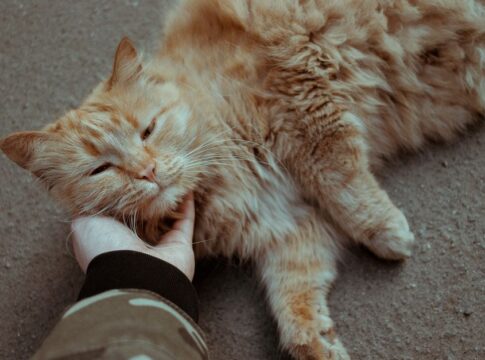
The Truth About Why Cats Purr When They Are Content
By Trivia Daily, Staff Writer — Published October 26, 2026
Table of Contents
- Key Takeaways
- The Truth About Cats Purr: More Than Just Happiness
- The Fascinating Science Behind the Sound
- The Healing Power of Vibrations
- Purring as Communication
- Which Cats Can and Cannot Purr
- Frequently Asked Questions
That rhythmic rumble your cat makes while curled up on your lap isn’t just adorable—it’s one of nature’s most intriguing mysteries. While most people assume cats purr exclusively when they’re happy, the truth about why cats purr reveals surprising facts that challenge this simple explanation. Scientists have discovered that purring serves multiple functions, some of which have nothing to do with contentment at all. Even more amazing? Cats may actually be healing themselves while they purr, using vibrations that promote bone density and tissue repair.
This everyday sound, so familiar to cat owners everywhere, holds secrets that researchers continue to explore. From newborn kittens communicating with their mothers to injured cats self-soothing, purring is far more complex than it appears.
Key Takeaways
- Cats purr at frequencies between 25 and 150 Hertz, which research suggests can promote bone healing and reduce pain in mammals.
- Purring isn’t limited to contentment—cats also purr when stressed, injured, giving birth, or even dying.
- The purring mechanism involves rapid twitching of muscles in the larynx, creating vibrations during both inhalation and exhalation.
- Kittens begin purring at just a few days old to communicate with their mothers, long before their eyes open.
- Domestic cats aren’t the only purring felines—smaller wild cats like bobcats and lynxes purr too, but big cats like lions cannot.
- Some scientists theorize that cats may purr to self-soothe and accelerate recovery from injuries, functioning as a low-energy healing mechanism.
The Truth About Cats Purr: More Than Just Happiness
The most common misconception about purring is that it always signals a happy cat. While contentment certainly triggers purring, veterinarians and animal behaviorists have documented cats purring in remarkably stressful situations. Injured cats purr in veterinary clinics. Mother cats purr during the intense physical strain of labor. Some cats purr in their final moments of life.
This pattern suggests purring serves as a self-soothing mechanism, similar to how humans might hum or rock back and forth when anxious. The vibrations may release endorphins that help cats manage pain and stress. Think of it as a built-in coping strategy that evolution favored because it helped cats survive difficult circumstances with minimal energy expenditure.
Cats are masters of energy conservation. Unlike dogs, who pant and expend considerable energy when stressed, cats have developed a low-energy method of self-regulation. Purring requires minimal effort but potentially provides maximum benefit, making it an efficient survival tool.
The Fascinating Science Behind the Sound
How do cats actually produce that distinctive rumble? The mechanism involves the laryngeal muscles—small muscles within the voice box that twitch rapidly, causing the vocal cords to separate and vibrate. This happens roughly 25 to 150 times per second, creating the characteristic purr frequency.
What makes this remarkable is that cats purr continuously during both breathing in and breathing out, creating an uninterrupted sound. Most vocalizations in mammals require exhalation, but cats have evolved a unique ability to maintain the purr throughout the entire respiratory cycle. The diaphragm acts as a piston, working in concert with the laryngeal muscles to sustain the vibration.
Scientists still debate some details of the exact mechanism, but most agree on the laryngeal muscle theory. The consistency of the frequency range across different cat species supports the idea that purring serves important biological functions beyond simple communication.
The Healing Power of Vibrations
Perhaps the most intriguing discovery about purring involves its potential therapeutic effects. Research into vibrational therapy has shown that frequencies between 25 and 50 Hertz can promote bone density and stimulate healing. Cats purr right in this range.
This has led some researchers to propose the “purr as therapy” hypothesis. Cats spend significant portions of their day resting and sleeping—far more than most mammals their size. This sedentary lifestyle could lead to bone density loss and muscle atrophy, yet cats maintain strong bones and flexible muscles well into old age. The regular vibrations from purring might counteract the negative effects of prolonged inactivity.
Studies on humans have shown that exposure to similar low-frequency vibrations can reduce pain, decrease swelling, and accelerate healing of fractures. While direct research on cats remains limited, the correlation is compelling. Cats may have evolved a self-healing mechanism that costs them almost nothing in terms of energy but provides significant health benefits.
Purring as Communication
Beyond self-soothing and potential healing, purring serves important social functions. Newborn kittens cannot see or hear for their first week of life, but they can purr and feel vibrations. Mother cats purr to guide blind kittens to nurse, and kittens purr back to signal they’re feeding successfully. This tactile communication system works when other senses aren’t yet functional.
Adult cats have refined purring into a sophisticated communication tool. Research has identified a specific “solicitation purr” that cats use when they want something from humans—typically food. This purr incorporates a higher-frequency sound similar to a baby’s cry, which humans find particularly difficult to ignore. Cats have essentially learned to manipulate human emotions through strategic purring.
Cats also purr during social bonding with other cats, though less frequently than when interacting with humans. This suggests that domestic cats have adapted their purring behavior specifically for human company, recognizing that we respond positively to the sound.
Which Cats Can and Cannot Purr
Not all felines purr the same way. The ability relates to anatomical structures in the throat. Cats are divided into two groups based on their laryngeal anatomy: those that can purr continuously and those that can roar.
| Can Purr (but not roar) | Can Roar (but not purr continuously) |
|---|---|
| Domestic cats | Lions |
| Bobcats | Tigers |
| Lynxes | Leopards |
| Cougars | Jaguars |
| Cheetahs | Snow leopards |
The difference lies in a small bone called the hyoid. In purring cats, the hyoid is completely ossified (hardened into bone), allowing the laryngeal muscles to vibrate it rapidly. In roaring cats, the hyoid is partially flexible, enabling the throat to expand dramatically for roaring but preventing continuous purring. Evolution apparently forced a choice: purr or roar, but not both.
Frequently Asked Questions
Do cats only purr when they’re happy?
No, cats purr in various situations including stress, pain, labor, and even when dying. While contentment is a common trigger, purring serves multiple functions including self-soothing and potentially healing.
Can big cats like lions and tigers purr?
Lions, tigers, leopards, and jaguars cannot purr continuously like domestic cats due to differences in their throat anatomy. However, they can make purr-like sounds during exhalation only, while true purring occurs during both inhalation and exhalation.
Why does my cat purr and then bite me?
This behavior, sometimes called “petting-induced aggression,” occurs when a cat becomes overstimulated. The purring may initially indicate contentment, but continued petting can cross a threshold where the cat needs the interaction to stop, leading to a warning bite.
At what age do kittens start purring?
Kittens begin purring within the first few days of life, often around two to three days old. This early purring helps them communicate with their mother before their eyes and ears have fully opened.
The next time your cat settles into your lap and begins that familiar rumble, remember you’re experiencing something far more complex than simple happiness. You’re witnessing a multi-purpose biological tool that has evolved over millions of years—part communication system, part self-healing mechanism, part emotional regulator. That unassuming purr represents one of nature’s most elegant solutions to the challenges of survival.