
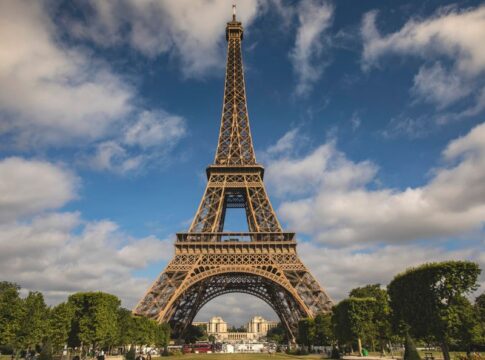
9 Surprising Facts About the Eiffel Tower Nobody Mentions
By Trivia Daily, Staff Writer — Published November 21, 2026
Table of Contents
- Key Takeaways
- Facts About the Eiffel Tower Nobody Mentions in Tourist Guides
- Engineering Innovations That Made It Possible
- Why It Nearly Disappeared From Paris Forever
- Frequently Asked Questions
The Eiffel Tower stands as one of the world’s most recognizable monuments, yet the trivia most people know barely scratches the surface. While everyone’s heard it was built for the 1889 World’s Fair, there are fascinating details about this iron giant that rarely make it into guidebooks or casual conversation. Did you know the tower actually grows taller in summer, or that it was nearly torn down after just twenty years? These surprising facts reveal a structure far more interesting than the postcard image suggests.
From its controversial beginnings to its modern-day quirks, the Eiffel Tower holds secrets that even frequent visitors overlook. Let’s explore the amazing stories and curious truths that make this Parisian landmark genuinely remarkable.
Key Takeaways
- The Eiffel Tower can grow more than six inches taller during hot summer days due to thermal expansion of its iron structure.
- Gustave Eiffel included a private apartment at the top of the tower, which he used to entertain distinguished guests like Thomas Edison.
- The tower was originally intended as a temporary structure and was scheduled for demolition in 1909.
- The iron lattice structure uses approximately 18,000 metallic parts held together by 2.5 million rivets.
- Wind causes the top of the tower to sway several inches, and the structure was engineered specifically to flex rather than resist.
- The tower’s paint job requires about 60 tons of paint and takes roughly three years to complete from top to bottom.
Facts About the Eiffel Tower Nobody Mentions in Tourist Guides
Most visitors snap photos and ascend to the viewing platforms without learning the genuinely curious engineering marvels and historical oddities that define this structure. The conventional narrative focuses on height and visitor numbers, but the real fascination lies in details that reveal how revolutionary and controversial this monument truly was.
The tower’s construction faced fierce opposition from Parisian artists and intellectuals who considered it an eyesore. A petition signed by prominent figures called it a “metal monstrosity” that would disfigure the city’s skyline. Today, it’s impossible to imagine Paris without it, but public opinion wasn’t always so favorable. The structure survived largely because it proved useful as a radio transmission tower, giving it practical value beyond aesthetics.
1. The Tower Actually Grows and Shrinks With Temperature
Iron expands when heated and contracts when cooled, and the Eiffel Tower demonstrates this principle dramatically. During hot summer days, the sun-facing side of the tower heats up significantly, causing the iron to expand. This thermal expansion can make the tower grow more than six inches (about 15 centimeters) taller. The structure doesn’t grow uniformly—the side facing the sun expands more than the shaded side, causing the top to lean slightly away from the sun. Engineers accounted for this movement in their original design, ensuring the tower could safely flex and shift without structural damage.
2. Gustave Eiffel Had a Secret Apartment at the Top
While millions of tourists visit the Eiffel Tower’s observation decks, few realize that Gustave Eiffel maintained a private apartment near the summit. This small, cozy space wasn’t luxurious by modern standards, but it was exclusive—many wealthy Parisians reportedly offered Eiffel substantial sums to rent it for a single night, and he refused them all. He used the apartment to conduct meteorological observations and to entertain notable guests. Thomas Edison visited the apartment in 1889, and Eiffel presented him with a phonograph recording. Today, visitors can see a recreation of this apartment complete with wax figures of Eiffel and Edison.
3. It Was Supposed to Be Demolished After Twenty Years
The Eiffel Tower was never meant to be permanent. The structure was built as the entrance arch for the 1889 World’s Fair (Exposition Universelle) celebrating the centennial of the French Revolution. The permit granted to Gustave Eiffel specified that the tower would be dismantled in 1909, just twenty years after construction. What saved it from demolition? Its usefulness for radio transmission. As wireless telegraphy developed in the early 1900s, the tower became invaluable for military and civilian communications. The antenna installed at the top made it too strategically important to tear down, and it has stood ever since.
4. The Structure Contains Precisely Engineered Wind Resistance
Gustave Eiffel was deeply concerned about wind forces, and his iron lattice design was specifically calculated to minimize wind resistance while maximizing stability. The tower’s open lattice structure allows wind to pass through it rather than pushing against a solid surface. Engineers calculated that wind pressure at the tower’s top could cause it to sway several inches in strong gusts—and it does. This flexibility is intentional. The iron framework bends slightly rather than resisting rigidly, which actually makes it stronger and more durable. Eiffel’s mathematical precision in accounting for wind loads was revolutionary for tall structure engineering.
5. The Assembly Used Revolutionary Prefabrication Techniques
The tower’s construction was remarkably fast—just over two years—because Eiffel pioneered prefabrication methods. Each of the approximately 18,000 metallic parts was manufactured in Eiffel’s factory to exact specifications, with holes pre-drilled for the 2.5 million rivets that would hold everything together. Workers assembled these components on-site like a massive three-dimensional puzzle. This level of precision was extraordinary for the 1880s. Only one worker died during construction, an exceptionally low fatality rate for a project of this scale and era, largely due to Eiffel’s insistence on safety measures including movable scaffolding and guardrails.
6. The Paint Color Has Changed Multiple Times
The Eiffel Tower hasn’t always been the bronze-brown color visitors see today. It was originally painted a reddish-brown, then changed to yellow in 1899. Over the decades, it’s been painted various shades, and since 1968, it’s been covered in a specially mixed shade called “Eiffel Tower Brown,” which comes in three progressively lighter tones from bottom to top. This graduated color scheme is deliberate—it creates an optical illusion that makes the tower appear more uniform against the sky. The entire repainting process requires about 60 tons of paint and takes roughly three years to complete, with workers constantly maintaining different sections.
7. It Served as a Billboard for Citroën
From 1925 to 1934, the Eiffel Tower became the world’s tallest advertisement. The French automobile manufacturer Citroën installed approximately 250,000 electric light bulbs on three sides of the tower, spelling out the company name in lights visible from 24 miles away. This spectacular illuminated sign made it into the Guinness World Records as the largest advertisement ever created at the time. The installation required substantial electrical infrastructure and was removed in 1934, but it remains a curious chapter in the tower’s commercial history.
8. There’s a Secret Bunker Beneath the South Pillar
Beneath one of the tower’s four massive legs lies a small military bunker installed during World War I. This underground space housed a secret telephone exchange and telegraph center that connected the tower’s radio transmitter to French military command. The facility played a role in intercepting enemy communications, and the tower’s radio capabilities contributed to the Allied victory. The bunker isn’t accessible to tourists, and many Parisians don’t even know it exists. The tower’s strategic communication value during both World Wars cemented its importance beyond tourism.
9. Lightning Strikes It About Five Times Per Year
As the tallest structure in Paris, the Eiffel Tower naturally attracts lightning strikes. The tower gets hit roughly five times annually on average, sometimes more during particularly stormy years. Gustave Eiffel installed a sophisticated lightning protection system, including copper conductors that safely channel electrical discharge into the ground. The tower essentially acts as its own lightning rod, protecting surrounding buildings. During storms, the metal structure becomes highly charged, and visitors are evacuated from the upper levels as a precaution. The lightning protection system has been updated over the years but still follows Eiffel’s original design principles.
Engineering Innovations That Made It Possible
The Eiffel Tower represented a quantum leap in iron construction techniques. Gustave Eiffel applied principles he’d refined building bridges and viaducts, including his understanding of how metal behaves under stress and wind loads. The tower’s four curved legs rise from separate concrete foundations and meet in a single point, distributing weight efficiently across the base. This design minimizes the pressure on the ground beneath—the tower exerts less pressure per square inch than a person sitting in a chair.
The lattice structure wasn’t just aesthetically striking; it was mathematically optimized. Eiffel and his engineers used graphical analysis to determine the precise shape and placement of every beam. The result was a structure that used the minimum amount of material necessary while achieving maximum strength. This efficiency was crucial—the entire iron structure weighs approximately 10,000 tons, but if you melted it down and spread it over the tower’s base area, it would form a layer only about six centimeters thick.
Why It Nearly Disappeared From Paris Forever
Beyond the planned 1909 demolition, the Eiffel Tower faced another existential threat during World War II. As German forces approached Paris in 1940, the French military considered destroying the tower to prevent it from being used for enemy communications. They didn’t follow through, but when the Germans occupied the city, Hitler ordered the tower destroyed as part of a plan to demolish Paris landmarks if the Allies retook the city. Thankfully, the German military commander Dietrich von Choltitz disobeyed this order, and the tower survived intact.
The tower’s elevators were sabotaged during the occupation, forcing German soldiers to climb the stairs if they wanted to reach the top. This small act of resistance meant that Hitler, who visited Paris in 1940, never ascended the tower. The French flag was raised at the summit during the liberation of Paris in 1944, a symbolic moment captured in photographs that circulated worldwide.
Frequently Asked Questions
How long did it take to build the Eiffel Tower?
Construction took approximately two years, two months, and five days, from January 1887 to March 1889. The remarkable speed was due to Gustave Eiffel’s prefabrication techniques, with most components manufactured off-site and assembled on location.
How much does the Eiffel Tower weigh?
The iron structure itself weighs about 10,000 tons. When you include the framework and non-metal components, the total weight is approximately 10,100 tons. Despite its massive appearance, the tower is relatively light for its size due to its efficient lattice design.
Can you see the Eiffel Tower sway in the wind?
Yes, though you’d need to be watching carefully or using instruments. In strong winds, the top of the tower can sway up to several inches. This movement is by design—the flexible structure is safer than a rigid one would be.
Why is the Eiffel Tower painted in three different shades?
The three progressively lighter shades from bottom to top create an optical illusion that makes the tower appear more uniform in color when viewed from the ground. Without this gradient, the top would appear darker against the sky due to atmospheric perspective.
The next time you see a photograph of the Eiffel Tower, remember there’s far more to this iron lattice than meets the eye. From its growing and shrinking in the heat to the secret apartment where Edison once visited, the tower remains a monument not just to French engineering, but to the fascinating details that emerge when you look beyond the obvious. Every rivet tells a story that most visitors never discover.