
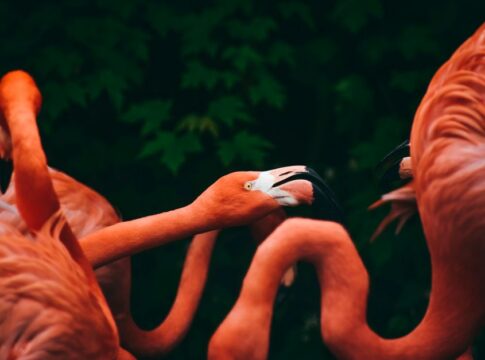
Why Flamingos Are Pink: The Surprising Truth About Color
By Triv Central, Animals Desk — Published July 20, 2026
Table of Contents
- Key Takeaways
- The Flamingos Pink Truth: It’s All About the Diet
- Not All Pink Is Created Equal: Species and Habitat Differences
- The Captivity Challenge: Keeping Flamingos Pink
- Beyond Beauty: Why Color Matters to Flamingos
- Frequently Asked Questions
Flamingos are among the most recognizable creatures in the animal kingdom, their vibrant pink plumage making them stand out in any wildlife setting. But here’s the flamingos pink truth that surprises most people: these elegant birds aren’t born pink at all. Baby flamingos emerge from their eggs covered in gray or white downy feathers, and they acquire their signature color through an entirely unexpected source—their diet.
The transformation from drab to dazzling reveals a remarkable connection between what animals eat and how they appear. This phenomenon makes flamingos living proof that you truly are what you eat, at least when it comes to color.
Key Takeaways
- Flamingo chicks are born with gray or white feathers and only develop pink coloration as they mature and consume their natural diet
- The pink hue comes from carotenoid pigments found in algae, brine shrimp, and other small crustaceans that flamingos filter from water
- Flamingos can range from pale pink to bright crimson depending on their species, habitat, and the concentration of carotenoids in their food
- Without carotenoid-rich food, captive flamingos will gradually lose their pink color and fade to white or pale gray
- The same pigments that color flamingos also give carrots, tomatoes, and salmon their distinctive hues
- Flamingo behavior includes spreading oil from a gland near their tail onto their feathers, which may help enhance and protect their coloration
The Flamingos Pink Truth: It’s All About the Diet
The secret behind flamingo coloration lies in a group of naturally occurring compounds called carotenoids. These organic pigments are produced by plants, algae, and certain bacteria, and they’re responsible for the red, orange, and yellow colors in countless species throughout nature. When flamingos feed in their wetland habitats, they consume enormous quantities of algae and tiny crustaceans like brine shrimp and copepods—all packed with carotenoids.
Flamingos are filter feeders. They use their uniquely shaped beaks to strain water and mud, trapping small organisms while expelling the liquid. A flamingo’s tongue acts like a piston, pumping water through comb-like structures called lamellae that line the inside of the beak. This efficient system allows a single bird to filter thousands of tiny food particles every day.
Once ingested, the carotenoids don’t simply pass through the digestive system. The flamingo’s liver breaks down these pigments and metabolizes them into pink and red molecules, which are then deposited into growing feathers, skin, and even the bird’s legs and beak. The process is so efficient that flamingos can maintain their brilliant coloration throughout their lives—as long as their diet remains rich in the right foods.
Not All Pink Is Created Equal: Species and Habitat Differences
The intensity of a flamingo’s color varies significantly across the six living flamingo species found around the world. These differences reflect both genetic factors and the specific ecosystems where each species lives.
| Species | Color Range | Primary Habitat |
|---|---|---|
| Greater Flamingo | Pale pink to white with pink highlights | Africa, Southern Europe, Asia |
| Caribbean Flamingo | Bright coral pink to salmon | Caribbean islands, Central America |
| Chilean Flamingo | Pale pink with bright red joints | South America |
| Lesser Flamingo | Dark pink to reddish | Africa, India |
| Andean Flamingo | Pale pink with yellow legs | High Altitude South American lakes |
| James’s Flamingo | Pale pink to white | High Altitude South American lakes |
The Caribbean flamingo tends to be among the most vividly colored, thanks to the carotenoid-rich brine shrimp abundant in its tropical habitat. Lesser flamingos, which feed primarily on blue-green algae called spirulina, also display particularly intense coloration. Geography matters—the specific algae and crustacean species available in each region contain varying concentrations of different carotenoids, creating the spectrum of shades we see across flamingo populations.
The Captivity Challenge: Keeping Flamingos Pink
Zoo and aquarium professionals learned about the dietary basis of flamingo color the hard way. Early captive flamingos often lost their pink hues, fading to an unimpressive grayish-white that disappointed visitors and concerned caretakers. The birds weren’t sick—they simply weren’t getting the carotenoids their bodies needed to produce pigment.
Modern zoos address this problem by supplementing flamingo diets with carotenoid-rich foods. Many facilities add natural sources like spirulina algae or specially formulated pellets containing synthetic carotenoids. Some zoos even feed their flamingos carrots and red peppers, which contain beta-carotene. The same compound that makes these vegetables orange can be converted by the flamingo’s body into the pink pigments they need.
The practice has become so refined that wildlife professionals can now maintain the vibrant coloration that makes flamingos such popular attractions. It’s also taught scientists valuable lessons about the relationship between diet, pigmentation, and overall health in birds.
Beyond Beauty: Why Color Matters to Flamingos
Flamingo coloration isn’t just for human admiration—it plays crucial roles in flamingo behavior and survival. Brighter birds are generally healthier birds, since producing and maintaining intense pigmentation requires a robust diet and efficient metabolism. During breeding season, the most vibrantly colored flamingos often have better success attracting mates.
Flamingos perform elaborate courtship displays in large groups, and individuals with deeper, richer coloration stand out from the crowd. Research has shown that both male and female flamingos prefer partners with more intense pink coloration, suggesting that color serves as an honest signal of fitness and foraging ability. A bright flamingo is advertising its success at finding food and converting it into pigment—traits that would benefit offspring.
Parent flamingos also secrete a carotenoid-rich substance called crop milk to feed their chicks. This nutritious secretion, produced in the upper digestive tract, contains so many pigments that parent birds often become noticeably paler during the weeks they’re feeding their young. They’re literally transferring their color—and the valuable nutrients behind it—to the next generation.
Frequently Asked Questions
Are flamingos the only birds that get their color from food?
No, many bird species derive their coloration from dietary carotenoids. Cardinals, goldfinches, and scarlet ibises all depend on carotenoid-rich diets to maintain their vibrant plumage. However, flamingos are among the most dramatic examples of diet-based coloration in the animal kingdom.
What happens if a flamingo stops eating carotenoids?
A flamingo deprived of carotenoids will gradually lose its pink color as it molts and grows new feathers. The process takes several months, and the bird will eventually become white or pale gray, though it remains otherwise healthy.
Do all flamingo body parts turn pink?
Yes, carotenoid pigments are deposited throughout the flamingo’s body. Their feathers, skin, legs, feet, and even the colored portions of their beaks all contain these pigments, creating the bird’s overall pink appearance.
Can flamingos be other colors besides pink?
Wild flamingos range from pale pink to deep crimson, but they never naturally occur in colors like blue or green. Without carotenoids, they simply become white or gray. The specific shade of pink depends on their diet and species, but the underlying chemistry remains the same.
The next time you see a flamingo’s brilliant plumage, remember that you’re witnessing one of nature’s most elegant demonstrations of biochemistry in action. These remarkable birds transform microscopic algae and tiny shrimp into a color so striking that flamingos have become cultural icons—all without ever producing a single pink pigment themselves. They’re not just pink birds; they’re living testaments to the unexpected ways that animals, their habitats, and their food sources intertwine.