
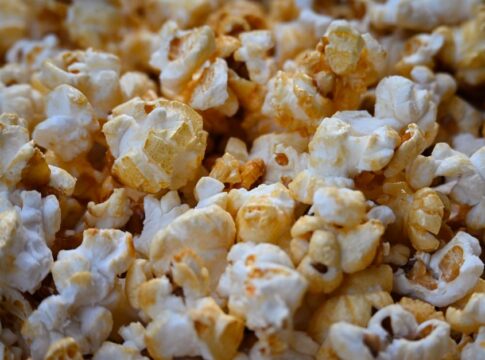
Why Does Popcorn Pop When You Heat It in Kernels
By Trivia Daily, Staff Writer — Published October 28, 2026
Table of Contents
- Key Takeaways
- The Science Behind Popcorn Heat Kernels and Their Explosive Transformation
- The Role of Moisture Content in Perfect Popping
- Common Popcorn Myths Busted
- Comparing Popcorn Varieties
- The Physics of the Pop Sound
- Frequently Asked Questions
Every movie night features the same delightful mystery: tiny, hard kernels transforming into fluffy white clouds with a satisfying pop. But what actually happens inside those kernels when you apply heat? The answer involves a fascinating combination of moisture, pressure, and a special hull structure that makes popcorn one of nature’s most entertaining snacks. Understanding why popcorn heat kernels explode reveals surprising facts about plant biology and physics working together in your microwave or stovetop.
The secret lies in each kernel’s unique anatomy. Unlike other corn varieties, popcorn kernels contain a small amount of water stored inside a circle of soft starch, all surrounded by a hard, moisture-sealed hull. When heated, this simple arrangement creates a tiny pressure cooker that eventually erupts in spectacular fashion.
Key Takeaways
- Popcorn kernels contain about 13-14% moisture trapped inside a hard, non-porous hull that acts like a pressure vessel.
- The hull must reach approximately 350°F (180°C) before the internal pressure builds enough to cause the kernel to explode.
- Only one variety of corn—Zea mays everta—has the right hull structure to pop; sweet corn and field corn won’t work.
- The starch inside gelatinizes and expands to roughly 40-50 times the kernel’s original size when it pops.
- Kernels that don’t pop, called “old maids,” typically have hull damage or insufficient moisture content.
- The popping sound occurs when the hull ruptures and pressurized steam escapes almost instantaneously.
The Science Behind Popcorn Heat Kernels and Their Explosive Transformation
The popping process begins with heat transfer. As the kernel’s temperature rises, the moisture inside converts to steam. But here’s where popcorn becomes interesting: the hull is extraordinarily resistant to letting that steam escape. This hard outer shell, made of a cellulose structure far denser than other corn varieties, can withstand significant internal pressure.
Inside, the pressure builds. The steam heats the starch granules, causing them to soften and gelatinize. Think of it as the starch becoming increasingly pliable, almost like a thick gel. As temperature and pressure continue rising, the hull holds firm—until it doesn’t.
When the internal pressure reaches about 135 pounds per square inch, the hull finally gives way. The rupture is catastrophic and nearly instantaneous. The superheated steam expands explosively, and the gelatinized starch is forced outward, rapidly cooling and solidifying into the familiar irregular shape we recognize as popped corn. The entire transformation takes only a fraction of a second.
Why Only Certain Corn Pops
Not all corn is created equal when it comes to popping. Zea mays everta, the botanical name for popcorn, possesses a hull roughly three times thicker and more moisture-resistant than sweet corn or field corn. This structural difference is everything. Without that pressure-vessel quality, steam simply escapes gradually as other corn varieties heat up, and no pop occurs.
Botanists have identified this trait as a specific genetic variation. The hard endosperm and tough pericarp (the scientific term for the hull) work together to create the necessary conditions. Attempts to pop regular corn kernels inevitably fail because the hull either cracks prematurely or never builds sufficient pressure.
The Role of Moisture Content in Perfect Popping
Moisture content determines popping success. Commercial popcorn producers carefully control this variable, aiming for that sweet spot of 13-14% water by weight. Too little moisture means insufficient steam pressure—the kernel might heat up but never pop. Too much moisture can actually weaken the hull or create uneven heating.
This explains why old popcorn often disappoints. Over time, kernels lose moisture to the surrounding air, especially if stored improperly. Once the water content drops below about 11%, the kernels become “duds.” Interestingly, you can sometimes revive slightly dried kernels by storing them in a sealed container with a small amount of water for a few days, allowing them to reabsorb moisture.
Temperature Thresholds and Popping Dynamics
The magic number is approximately 350°F (180°C). Below this temperature, the hull remains strong enough to contain the pressure indefinitely. Above it, the combination of steam pressure and hull stress reaches the breaking point. Different heating methods—air poppers, oil poppers, microwaves—all work by getting kernels to this critical temperature, just through different mechanisms.
Oil-based popping conducts heat more efficiently and evenly than air alone, which explains why stovetop and traditional movie theater popcorn often has fewer unpopped kernels. The oil surrounds each kernel, ensuring more uniform heat distribution. Microwaves, by contrast, heat through exciting water molecules, which can sometimes create hot spots and cool spots in the bag.
Common Popcorn Myths Busted
One persistent myth suggests that popcorn pops “inside out.” The reality? The starch expands outward through the rupture point in the hull. The kernel doesn’t turn inside out; it simply explodes through the weakest point in its shell, with the fluffy white portion being the expanded interior starch.
Another misconception: all unpopped kernels are defective. While some genuinely have hull damage or moisture problems, others simply didn’t reach the right temperature. This commonly happens with kernels at the edge of a microwave bag or on the cooler parts of a stovetop pan.
Some people believe adding oil is essential for popping. Not true. Air poppers demonstrate that kernels pop perfectly well with heat alone. Oil serves other purposes: conducting heat evenly, adding flavor, and helping salt and seasonings stick to the finished product.
Comparing Popcorn Varieties
| Variety | Shape When Popped | Texture | Expansion Ratio |
|---|---|---|---|
| Butterfly (Snowflake) | Irregular, with “wings” | Light and tender | 40-45 times |
| Mushroom | Round and compact | Denser, crunchier | 35-40 times |
| Blue/Red Kernels | Similar to butterfly | Slightly nuttier | 40-45 times |
The Physics of the Pop Sound
That distinctive popping noise isn’t just the hull breaking. Research has shown the sound comes from the rapid release of pressurized steam creating a miniature sonic boom. The hull rupture itself is nearly silent; the audible pop occurs as the steam expands faster than the speed of sound in the surrounding air, creating a brief shock wave.
High-speed photography reveals the entire popping sequence takes about 0.05 seconds. The hull ruptures, the starch begins expanding, and the steam escapes—all faster than the human eye can follow. What we perceive as a single event is actually a complex sequence of physical transformations compressed into a fraction of a second.
Frequently Asked Questions
Can you pop popcorn kernels without heat?
No, heat is essential to convert the internal moisture to steam and build the pressure needed for popping. The process requires reaching approximately 350°F, which cannot occur without an external heat source.
Why do some kernels never pop?
Unpopped kernels, called “old maids,” typically have either a tiny crack in the hull that allows steam to escape gradually, or insufficient moisture content to build adequate pressure. Occasionally, they simply didn’t get hot enough during the popping process.
Is popcorn healthier than other snacks?
Plain air-popped popcorn is a whole grain with fiber and relatively few calories—about 30 calories per cup. However, butter, oil, and salt added during preparation significantly increase calorie and sodium content, making preparation method the key factor in healthfulness.
How long can you store popcorn kernels?
Properly stored in an airtight container in a cool, dry place, popcorn kernels remain viable for one to two years. The key is preventing moisture loss, which reduces popping effectiveness over time.
The next time you watch kernels transform into fluffy snacks, you’re witnessing a remarkable interplay of botany and physics. Each pop represents a tiny pressure vessel reaching its breaking point, a split-second explosion that turns hard starch into an airy treat. It’s everyday science at its most delicious—and one of the few foods that quite literally explodes into edibility.