
7 Surprising Facts About How Broadway Shows Cast Understudies
By Trivia Daily, Staff Writer — Published October 28, 2026
Table of Contents
- Key Takeaways
- The Casting Process for Broadway Shows Cast Understudies Differently Than Principals
- 1. Understudies Often Cover Multiple Roles Across Different Vocal Ranges
- 2. Many Understudies Never Perform Despite Months or Years in a Show
- 3. Costume and Wig Departments Keep “Emergency Kits” for Every Understudy
- 4. Understudies Receive Significantly Less Rehearsal Time Than Principals
- 5. Broadway Contracts Include Specific “Understudy Clauses” About Notice and Compensation
- 6. Some Productions Cast “Standbys” Who Only Perform When Principals Are Out
- 7. Many Broadway Stars Began Their Careers as Understudies
- Frequently Asked Questions
When the curtain rises on a Broadway show, audiences see polished performances from stars whose names light up the marquee. But behind every leading role stands a shadow cast of understudies, ready to step into the spotlight at a moment’s notice. The way Broadway shows cast these essential performers involves far more strategy, skill, and surprising protocol than most theatergoers realize. These unsung heroes of the stage navigate a complex world of contract negotiations, last-minute costume fittings, and the perpetual challenge of staying performance-ready without guaranteed stage time.
The understudy system represents one of theater’s most fascinating operational mysteries. Discover the hidden truths about this critical aspect of live performance that keeps shows running eight times a week, no matter what happens.
Key Takeaways
- Understudies typically cover multiple roles simultaneously, sometimes preparing for four or five different characters in a single production.
- Many Broadway contracts require understudies to attend every performance, even when they’re not going on stage.
- Understudies rarely get full rehearsals with the principal cast before performing, often working only with the stage manager.
- Some of Broadway’s biggest stars, including Sutton Foster and Lin-Manuel Miranda, began their careers as understudies.
- The announcement “At this performance, the role of…” can significantly impact ticket sales and audience expectations.
- Understudies receive substantially lower pay than principals, despite preparing the same demanding material.
The Casting Process for Broadway Shows Cast Understudies Differently Than Principals
When Broadway shows cast their principal performers, creative teams conduct extensive auditions, callbacks, and chemistry reads. The understudy casting process follows a completely different path. Directors and casting directors often select understudies based on vocal range, physical similarity to the principal, and proven reliability rather than star power or unique interpretation. An understudy must fit into existing blocking, costumes, and choreography with minimal adjustment.
Many understudies are hired from the ensemble, meaning they perform in the chorus while covering principal tracks. This dual-role arrangement makes financial sense for producers and keeps understudies actively involved in each performance. However, it creates an extraordinary workload. These performers must maintain their ensemble choreography, harmonies, and quick changes while mentally rehearsing completely different staging for the roles they cover. The cognitive demand is immense.
Casting directors look for what industry insiders call “the understudy personality”—performers who thrive under pressure, adapt quickly, and don’t require extensive emotional preparation to deliver a strong performance. It’s a specific skill set that not all talented actors possess.
1. Understudies Often Cover Multiple Roles Across Different Vocal Ranges
A single understudy might prepare to perform four or five completely different characters, each with distinct vocal requirements, blocking patterns, and costume changes. In large ensemble musicals, this becomes a logistical puzzle of remarkable complexity. An understudy covering both a soprano ingénue and a mezzo-alto character role must maintain vocal flexibility across a wide range while memorizing entirely different staging for each track.
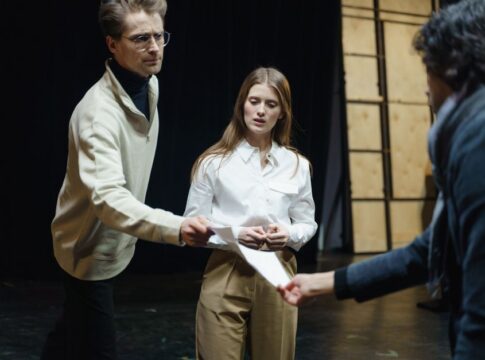
The rehearsal schedule reflects this challenge. Understudies typically receive “put-in” rehearsals—abbreviated sessions where they walk through blocking with the stage manager calling out positions and cues. These rehearsals happen on dark days or during off-hours, often without full orchestra, lighting, or the principal cast present. An understudy might run through an entire leading role in two hours, taking notes on a legal pad about where to stand during each number.
2. Many Understudies Never Perform Despite Months or Years in a Show
The paradox of understudy life is preparing intensively for a performance that may never happen. Some understudies complete entire Broadway contracts—sometimes lasting a year or more—without going on for a principal role even once. They attend every show, stay warmed up, and keep their tracks fresh in their minds, all while watching someone else perform the role night after night.
This creates a unique psychological challenge. Understudies must maintain performance-ready stamina and emotional investment without the regular reinforcement of audience response. The work is largely invisible. Theater companies have developed various strategies to address this, including understudy rehearsals every few weeks and occasional “understudy performances” where the alternate cast performs for an invited audience, though these practices vary widely by production.
3. Costume and Wig Departments Keep “Emergency Kits” for Every Understudy
When an understudy goes on with little notice, the costume department springs into action with remarkable efficiency. Most Broadway shows maintain altered costumes for each understudy, though these may not fit as perfectly as the principal’s custom-tailored garments. Wig departments keep styled pieces ready for different head sizes and face shapes.
The preparation extends to quick-change logistics. If an understudy covering a role has a different body type than the principal, the backstage choreography of costume changes may need adjustment. Dressers practice these scenarios regularly. Safety pins, body tape, and elastic adjustments can transform a costume to fit an understudy in minutes. The technical precision required behind the scenes matches the performance skill required on stage.
4. Understudies Receive Significantly Less Rehearsal Time Than Principals
While principal actors rehearse a new Broadway musical for six to eight weeks before opening, understudies typically learn their tracks in a fraction of that time. After the show opens, understudy rehearsals might happen once every two or three weeks, lasting only a few hours. These sessions rarely include the full company, orchestra, or technical elements like lighting and sound cues.
This limited preparation means understudies develop exceptional observational skills. They watch performances from the wings, take detailed notes, and mentally rehearse while standing backstage during every show. Many record voice memos of their blocking or create detailed maps of stage positions. The self-directed nature of understudy preparation requires discipline that goes far beyond typical actor training. Stage managers play a crucial role, serving as the understudy’s primary rehearsal partner and offering guidance on technical elements the understudy might miss.
5. Broadway Contracts Include Specific “Understudy Clauses” About Notice and Compensation
Actors’ Equity Association, the union representing Broadway performers, negotiates specific contract terms governing understudy work. These contracts stipulate minimum rehearsal time, additional compensation when an understudy performs a principal role, and notice requirements when possible. However, the reality of live theater means understudies sometimes learn they’re going on just hours—or even minutes—before curtain.
Compensation structures vary significantly. An ensemble member covering a principal track earns their base ensemble salary plus a small additional fee for the understudy assignment. If they actually perform the principal role, they receive a one-time payment for that performance, though it’s typically far less than the principal’s per-show rate. The financial disparity remains a source of ongoing discussion within the theater community, particularly when understudies deliver performances that earn standing ovations and critical praise.
6. Some Productions Cast “Standbys” Who Only Perform When Principals Are Out
In addition to understudies, some Broadway shows employ standbys—performers who don’t appear in the ensemble but remain ready to perform principal roles exclusively. Standbys are more common in star-driven productions where the lead performer’s name sells tickets. These specialized performers must attend every performance, staying in the theater in case they’re needed, but they never appear on stage unless the principal is unable to perform.
The standby role represents perhaps the most challenging position in professional theater. These performers maintain peak readiness without the regular performance experience that keeps skills sharp. They warm up before every show, apply makeup, and sometimes even get into costume, all while hoping they won’t be needed. The mental preparation required is extraordinary—they must be genuinely ready to perform while simultaneously hoping they won’t have to.
7. Many Broadway Stars Began Their Careers as Understudies
The understudy track has launched numerous successful Broadway careers. Performers who proved themselves reliable and talented in understudy roles have gone on to originate roles in new productions, headline national tours, and become household names. The understudy position offers invaluable on-the-job training, exposing performers to the demands of eight-show weeks, the technical complexity of Broadway production, and the professional standards expected at the highest level of theater.
This career path reflects a fundamental truth about Broadway: talent matters, but so do reliability, adaptability, and grace under pressure. Casting directors remember understudies who saved a performance with professionalism and skill. These relationships often lead to future opportunities. The understudy who impresses a director or choreographer might be first in line when that creative team mounts their next production.
Frequently Asked Questions
How much notice do Broadway understudies get before performing?
Notice varies from several days to just minutes before curtain. If a principal calls in sick before the performance, understudies might have a few hours to prepare mentally. However, if a performer becomes ill or injured during a show, the understudy may need to go on immediately with no advance warning.
Do understudies get to rehearse with the full cast and orchestra?
Rarely. Most understudy rehearsals involve only the stage manager, the understudy, and occasionally a rehearsal pianist. Full company put-in rehearsals happen infrequently due to scheduling and budget constraints. Understudies often perform with the full orchestra and cast for the first time when they go on for an actual performance.
Are audience members entitled to refunds if an understudy performs?
No. Broadway theaters clearly state that casting is subject to change, and tickets are sold for the production, not for specific performers. However, if a major star is replaced by an understudy, theaters typically post notices and may offer exchanges for future performances as a courtesy.
How many roles can one understudy cover in a single show?
The number varies by production, but understudies commonly cover three to five roles. In large ensemble musicals with complex casting, some performers might be prepared to step into even more tracks, though they would typically only perform one principal role per show.
The next time you see that slip of paper in your Playbill announcing a cast change, consider the remarkable preparation that made that seamless substitution possible. Somewhere backstage, an understudy transformed months of invisible work into a moment in the spotlight—a small miracle that happens on Broadway stages every single week.