
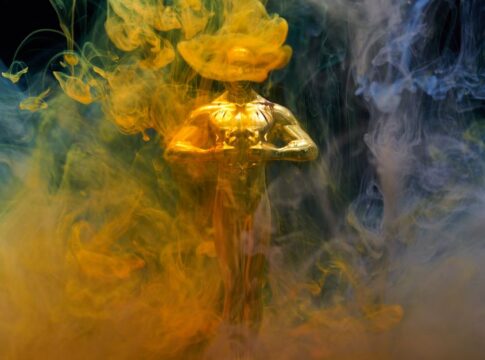
Why Do Oscar Statues Get Gold Plated Every Year
By Trivia Daily, Staff Writer — Published October 29, 2026
Table of Contents
- Key Takeaways
- The Real Story Behind Oscar Statues Gold Plating
- How Gold Electroplating Works on Award Statues
- The History and Evolution of Oscar Manufacturing
- Caring for an Oscar: What Winners Should Know
- Comparing Oscar to Other Major Awards
- Frequently Asked Questions
The gleaming golden figure handed to Hollywood’s finest each year at the Academy Awards looks like solid gold, but there’s a surprising secret behind those Oscar statues gold finishes. These iconic statuettes aren’t solid precious metal at all—they’re made of a much more practical base material that requires regular maintenance to keep that legendary shine. The answer to why they need annual gold plating reveals fascinating facts about both the statues’ construction and the Academy’s commitment to preserving one of entertainment’s most recognizable symbols.
Every Oscar statue that crosses the stage represents a carefully orchestrated process of craftsmanship and chemistry. The truth might surprise you: these awards need refreshing because the underlying materials and manufacturing process create a finish that can’t last forever without care.
Key Takeaways
- Oscar statues are made of britannium (a pewter-like alloy), not solid gold, and receive a 24-karat gold electroplating finish.
- The gold plating is extremely thin—only about 0.0001 inches thick—making it vulnerable to wear from handling and environmental exposure.
- The Academy doesn’t actually gold-plate every statue annually; the plating happens during initial manufacturing, but damaged or worn statues can be replated by the official manufacturer.
- Each Oscar statue weighs 8.5 pounds and stands 13.5 inches tall, featuring a knight holding a crusader’s sword standing on a film reel.
- R.S. Owens & Company in Chicago has been the exclusive manufacturer of Oscar statues since 1982, maintaining strict quality standards.
- Winners who want to restore their Oscar’s shine can send it back to the manufacturer for replating, though this isn’t required or done on an annual schedule.
The Real Story Behind Oscar Statues Gold Plating
The premise that Oscar statues get gold plated every year turns out to be one of Hollywood’s most persistent misconceptions. The actual facts about oscar statues gold maintenance tell a different story. When manufactured, each statue receives its gold coating through electroplating—a process that deposits a microscopically thin layer of 24-karat gold onto the britannium base. This initial plating happens at the factory before the statue ever reaches its winner.
The confusion likely stems from the Academy’s policy regarding statue restoration. Winners can request replating services if their Oscar becomes tarnished, scratched, or damaged over time. R.S. Owens & Company offers this restoration service to maintain the awards’ prestigious appearance. But there’s no mandatory annual replating schedule, and most statues keep their original finish for decades without intervention.
Why britannium instead of solid gold? Practicality and tradition. A solid gold Oscar at current precious metal prices would cost tens of thousands of dollars per statue. The Academy presents dozens of awards each year across various categories. Britannium provides the necessary weight, durability, and surface quality for electroplating while keeping costs reasonable. The alloy also allows for the fine detail work that makes each Oscar’s features so distinctive.
How Gold Electroplating Works on Award Statues
The electroplating process that gives Oscar statues their golden glow involves fascinating chemistry. The britannium statue first receives a copper coating, then nickel, and finally the 24-karat gold layer. Each metal layer serves a purpose: copper helps the subsequent layers adhere, nickel provides corrosion resistance and a smooth surface, and gold delivers that unmistakable luster.
During electroplating, the statue acts as the cathode in an electrolytic cell. When electrical current passes through a gold-containing solution, gold ions migrate to the statue’s surface and form a uniform coating. The thickness—measured in microns—determines how long the finish will last under normal conditions. Oscar statues receive a coating thin enough to be cost-effective yet thick enough to withstand careful handling and display.
This incredibly thin gold layer explains why the finish can eventually wear. Every time someone handles an Oscar, microscopic amounts of gold can transfer to skin or clothing. Exposure to air causes gradual oxidation of the underlying metals if the gold layer develops any imperfections. Humidity, temperature fluctuations, and even the oils from human skin accelerate this process.
The History and Evolution of Oscar Manufacturing
Oscar statues haven’t always been made the same way. During World War II, the Academy actually presented plaster statues painted gold because metal was needed for the war effort. Winners could exchange these temporary awards for proper metal versions after the war ended. This unusual period in Oscar history demonstrates how even iconic symbols adapt to extraordinary circumstances.
Before R.S. Owens took over production, other manufacturers created the statues using slightly different techniques and materials. The design itself—created by MGM art director Cedric Gibbons and sculpted by George Stanley—has remained essentially unchanged since 1929, though manufacturing methods have evolved with technology.
Each statue requires approximately 20 hours of labor to produce. Craftspeople cast the britannium in molds, hand-polish the surface to mirror smoothness, and carefully apply the metal coatings. The film reel base features five spokes representing the Academy’s original branches: actors, writers, directors, producers, and technicians. This attention to detail and symbolism makes every Oscar a genuine work of craftsmanship.
Caring for an Oscar: What Winners Should Know
Academy Award winners receive their statues with an implicit understanding about preservation. The Academy technically owns the statues and requires winners (or their heirs) to offer them back to the Academy for one dollar before selling to anyone else. This policy, implemented in 1950, prevents Oscar statues from becoming mere commodities.
For everyday care, Oscar owners should avoid excessive handling and keep their awards in stable environments. Extreme temperatures, high humidity, and direct sunlight can all accelerate deterioration of the gold finish. Display cases offer protection while allowing the statue to be seen and appreciated.
When replating becomes necessary, the process strips the old finish and applies fresh coatings. The statue emerges looking factory-new, ready for another few decades of display. Some winners choose to keep their original patina, viewing the natural aging as part of their Oscar’s unique history and character.
Comparing Oscar to Other Major Awards
| Award | Material | Weight | Special Features |
|---|---|---|---|
| Oscar (Academy Award) | Gold-plated britannium | 8.5 pounds | 24-karat gold electroplating |
| Emmy | Copper, nickel, silver, gold | 6 pounds | Winged woman holding atom |
| Grammy | Zinc alloy, gold-plated | 5 pounds | Gilded gramophone |
| Tony | Pewter and bronze | Varies | Medallion design on disc |
Frequently Asked Questions
How much gold is actually on an Oscar statue?
An Oscar statue contains approximately $400 worth of gold based on current precious metal prices. The 24-karat gold plating is extremely thin—only about 2.5 microns thick—covering the britannium base metal.
Can Oscar winners sell their statues?
Winners who received their Oscars after 1950 must first offer to sell the statue back to the Academy for one dollar before selling to anyone else. This rule protects the awards’ integrity and prevents commercial exploitation.
Why is the award called an “Oscar”?
The nickname’s origin remains disputed, but the most popular story credits Academy librarian Margaret Herrick, who remarked that the statue resembled her Uncle Oscar. The Academy officially adopted the nickname in 1939.
What happens to damaged or lost Oscar statues?
The Academy can provide replacement statues for those damaged, destroyed, or stolen, though documentation is required. R.S. Owens maintains the capability to produce replacement statues matching the exact specifications of originals from any era.
The next time you watch the Academy Awards and see winners clutching their golden statues, you’ll know that beneath that gleaming surface lies a story of practical engineering, careful craftsmanship, and a finish that—while not requiring annual replating—represents one of entertainment’s most carefully maintained traditions. That thin layer of gold carries the weight of Hollywood history, even if it needs a refresh every few decades.