
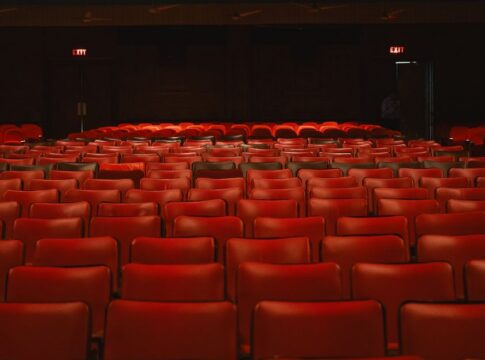
The Truth About Why Movie Theater Seats Are Red
By Trivia Daily, Staff Writer — Published October 25, 2026
Table of Contents
- Key Takeaways
- The Truth About Movie Theater Seats and Human Vision
- Light Reflection and Screen Quality
- The Psychology and History of Red Theater Seats
- Practical Maintenance Considerations
- Comparing Theater Seat Colors
- Modern Variations and Exceptions
- Frequently Asked Questions
Walk into almost any cinema around the world, and you’ll notice the same curious pattern: rows upon rows of deep red seats. This isn’t random. The truth about movie theater seats being red involves fascinating psychology, optical science, and a century of practical theater design. While some modern multiplexes experiment with black or purple upholstery, red remains the overwhelming favorite for reasons that go far beyond mere tradition or aesthetics.
The answer lies in how our eyes work in darkness and how color affects our movie-watching experience. Red seats create the perfect viewing environment while nearly disappearing once the lights go down.
Key Takeaways
- Red is the first color the human eye loses in low light conditions, making red seats effectively invisible during screenings
- Dark red upholstery doesn’t reflect light from the screen, preventing distracting glare that lighter colors would cause
- The color red psychologically signals luxury, comfort, and theatrical tradition dating back to opera houses
- Red hides stains and wear better than lighter colors, a practical consideration for high-traffic commercial spaces
- Theater designers specifically chose red to minimize visual distractions and keep audience focus on the screen
The Truth About Movie Theater Seats and Human Vision
The primary reason theaters favor red seats connects directly to how human eyes perceive color in darkness. When light levels drop, our vision shifts from cone cells (which detect color) to rod cells (which detect light and dark). Rod cells are essentially colorblind. They’re particularly insensitive to red wavelengths at the far end of the visible spectrum.
What does this mean for moviegoers? Once the lights dim and the film begins, red seats fade into near-invisibility. Your peripheral vision simply stops registering them. You might be surprised to learn that this creates an almost floating effect, where the screen appears to exist in a void rather than a room full of chairs and people.
Blue or green seats would remain partially visible even in darkness because our rod cells detect those wavelengths more readily. White or cream seats would be even worse, creating distracting shapes in your peripheral vision throughout the entire film. Red solves this problem elegantly.
Light Reflection and Screen Quality
Another critical factor involves light bouncing off surfaces. Movie projectors emit powerful beams of light, and some of that light inevitably scatters around the auditorium. Dark red absorbs this stray light rather than reflecting it back toward the screen or into viewers’ eyes.
Light-colored seats would act like miniature reflectors, bouncing light around the theater and degrading image quality. This reflected light reduces contrast ratios and washes out darker scenes. Professional theater designers understand that every surface in an auditorium affects picture quality. Dark red upholstery is essentially a functional tool for maintaining optimal viewing conditions.
The walls, carpets, and ceilings in quality theaters follow similar principles. Most are dark colors, often black or deep burgundy, for the same light-absorption reasons.
The Psychology and History of Red Theater Seats
Red carries powerful cultural associations with entertainment and luxury. European opera houses of the 18th and 19th centuries featured plush red velvet seating and curtains. When motion picture palaces emerged in the early 20th century, designers deliberately evoked that same sense of opulence and occasion.
These grand movie palaces wanted audiences to feel they were attending something special, not just watching moving pictures in a room. Red communicated prestige. The color became so synonymous with theatrical spaces that it formed a psychological expectation. Audiences associated red seats with quality entertainment experiences.
This tradition persisted even as theaters evolved from ornate palaces to suburban multiplexes. The color remained both because it worked practically and because it signaled “you are in a cinema” to patrons’ subconscious minds.
Practical Maintenance Considerations
Theater owners face constant maintenance challenges. Hundreds or thousands of people sit in these seats weekly, bringing spilled drinks, dropped popcorn, and general wear. Dark red fabric conceals minor stains and dirt far better than lighter alternatives would.
This practical benefit shouldn’t be underestimated. Theaters operate on relatively thin profit margins, and constantly replacing or deep-cleaning light-colored upholstery would be prohibitively expensive. Red strikes an ideal balance: dark enough to hide everyday grime, but warm enough to feel welcoming rather than stark like black might.
Comparing Theater Seat Colors
| Color | Visibility in Darkness | Light Reflection | Maintenance |
|---|---|---|---|
| Red | Nearly invisible to rod cells | Minimal reflection | Hides stains well |
| Black | Invisible | Minimal reflection | Shows dust and lint |
| Blue | Partially visible | Moderate reflection | Shows some stains |
| Beige/Cream | Highly visible | High reflection | Shows all stains |
Modern Variations and Exceptions
Some contemporary theaters experiment with other dark colors, particularly black and deep purple. Black seats offer similar optical benefits to red but lack the warmth and traditional associations. Purple splits the difference, maintaining some color while still fading in darkness.
Luxury theaters with reclining seats sometimes use dark brown or charcoal gray, particularly when trying to evoke a living room atmosphere rather than traditional cinema grandeur. These colors work reasonably well optically but sacrifice some of red’s psychological impact.
IMAX theaters and premium large-format screens often stick religiously to red or black because image quality is paramount in these venues. The higher ticket prices justify stricter attention to every detail that affects the viewing experience.
Frequently Asked Questions
Why are some theater seats black instead of red?
Black seats offer similar optical benefits to red, absorbing light and disappearing in darkness. Some modern theaters choose black for a more contemporary aesthetic, though it shows dust more readily than red and lacks the traditional theatrical warmth many patrons expect.
Do all countries use red movie theater seats?
Red is the dominant choice worldwide, but regional variations exist. The optical and psychological reasons for choosing red apply universally, making it the most common color across Europe, Asia, the Americas, and other regions, though individual theaters may select alternatives.
When did movie theaters start using red seats?
Early 20th-century movie palaces adopted red from opera houses and live theaters, where red velvet seating had been standard since the 1700s. As cinema grew into a major entertainment industry, red became the default choice both for practical reasons and cultural associations with theatrical spaces.
Can seat color actually affect how much you enjoy a movie?
Yes, indirectly. Seat color affects viewing conditions by controlling light reflection and peripheral distractions. Red seats create optimal conditions by disappearing in darkness and not bouncing stray light, allowing you to focus entirely on the screen without visual interference from your surroundings.
Next time you settle into a plush red theater seat, you’ll know it’s not just tradition at work. Every element of that seat’s color serves a purpose, from the physics of human vision to the practicalities of running a business. That shade of red represents over a century of design refinement, all to help you lose yourself completely in the story on screen.