
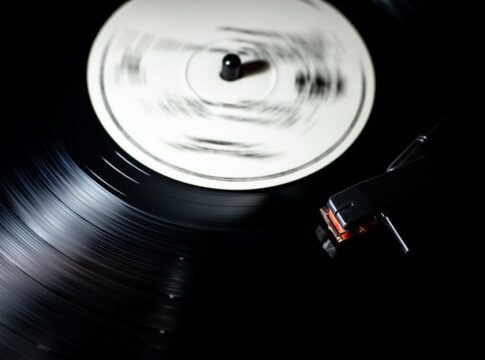
Why Does Vinyl Crackle When Playing Old Records
By Trivia Daily, Staff Writer — Published October 23, 2026
Table of Contents
- Key Takeaways
- The Physics of Vinyl Crackle Playing
- Common Sources of Record Noise
- The Chemistry of Aging Vinyl
- Manufacturing Imperfections and New Record Noise
- Why Some People Love the Crackle
- Frequently Asked Questions
That warm, nostalgic sound of vinyl crackle playing through speakers has become synonymous with the analog music experience. But what causes those pops, clicks, and hisses that pepper old records? The answer lies in a fascinating combination of physics, chemistry, and the unavoidable march of time. While some listeners embrace these imperfections as part of vinyl’s charm, understanding the science behind vinyl crackle playing reveals surprising facts about how sound is physically stored and retrieved from those grooves.
Every crackle tells a story of dust particles, wear patterns, and the delicate dance between stylus and vinyl. These aren’t just random noises—they’re the audible evidence of microscopic events happening thousands of times per second as your turntable spins.
Key Takeaways
- Vinyl records store sound as physical grooves that are typically only 0.04 to 0.08 millimeters wide, making them incredibly vulnerable to contamination and damage.
- Most crackle comes from dust, dirt, and debris sitting in the grooves, which the stylus physically strikes as it tracks the record’s spiral path.
- Static electricity naturally builds up on vinyl surfaces, attracting airborne particles and creating an ongoing cycle of contamination even in clean environments.
- Scratches and wear create permanent damage by altering the groove’s shape, causing the stylus to jump or mistrack, producing distinct popping sounds.
- Chemical degradation of vinyl compounds over decades can cause surface breakdown, releasing plasticizers and creating a rough texture that generates noise.
- Even brand-new records can crackle due to manufacturing imperfections, mold release compounds, or paper dust from inner sleeves.
The Physics of Vinyl Crackle Playing
To understand why records crackle, you need to appreciate the remarkable engineering behind vinyl playback. Sound waves are converted into physical undulations carved into a continuous spiral groove. The stylus—a tiny diamond or sapphire tip—rides along these microscopic peaks and valleys at speeds ranging from roughly 20 inches per second at the outer edge to about 8 inches per second near the center.
When the stylus encounters anything that shouldn’t be there, physics takes over. A dust particle sitting in the groove acts like a speed bump. The stylus must climb over it, suddenly displacing the cantilever (the arm holding the stylus) and generating an electrical signal that your speakers reproduce as a pop or click. The size and hardness of the obstruction determine the volume and character of the sound.
Static electricity makes everything worse. Vinyl is an excellent insulator, meaning it readily accumulates static charge through friction with the stylus, inner sleeves, and even air molecules. This charge attracts dust like a magnet. You might clean a record perfectly, but within minutes, airborne particles begin settling back into the grooves.
Common Sources of Record Noise
Not all crackle sounds the same, and identifying the source can help you address it. Different types of contamination and damage produce distinct sonic signatures that experienced listeners learn to recognize immediately.
| Noise Type | Cause | Sound Character |
|---|---|---|
| Surface Dust | Loose particles in grooves | Random light ticks and pops |
| Deep Scratches | Physical groove damage | Loud repeating pops each rotation |
| Fingerprints/Oils | Skin oils and residue | Persistent crackling in affected area |
| Mold/Mildew | Fungal growth from moisture | Continuous surface noise, sometimes audible as hiss |
| Static Discharge | Electrical buildup | Sharp snaps and crackles, especially at start |
The Chemistry of Aging Vinyl
Records don’t stay chemically stable forever. Vinyl is polyvinyl chloride (PVC) mixed with various additives including plasticizers, stabilizers, and lubricants. Over decades, these compounds can migrate to the surface or break down entirely. Heat accelerates this process dramatically.
Plasticizers—chemicals added to keep vinyl flexible—gradually evaporate or leach out, leaving the record brittle and prone to cracking. When plasticizers reach the surface, they create a tacky layer that attracts and holds contaminants. This explains why some old records feel slightly sticky or greasy even when they appear clean.
Oxidation is another enemy. Exposure to air slowly degrades the polymer chains in vinyl, roughening the surface at a molecular level. This microscopic texture generates continuous low-level noise that no amount of cleaning can eliminate. Records stored in hot attics or damp basements suffer accelerated degradation, developing persistent surface noise that becomes part of their permanent character.
Manufacturing Imperfections and New Record Noise
Discover a surprising truth: brand-new vinyl can crackle too. Manufacturing isn’t perfect, and several factors introduce noise before a record ever reaches your turntable. Pressing plants use mold release compounds to prevent vinyl from sticking to stampers, and residue from these chemicals can remain in the grooves.
Paper dust from inner sleeves is another common culprit. Traditional paper sleeves shed microscopic fibers that immediately embed themselves in fresh vinyl. Many audiophiles replace paper sleeves with anti-static polyethylene-lined alternatives to prevent this contamination.
Non-fill is a manufacturing defect where molten vinyl doesn’t completely fill the stamper’s grooves during pressing. This creates tiny voids in the finished record that produce clicks and pops. Quality control catches most severe cases, but minor non-fill often makes it to market, especially in budget pressings.
Why Some People Love the Crackle
Here’s an interesting twist: many listeners actively prefer records with some surface noise. The crackle has become psychologically associated with authenticity and warmth. Studies in music perception suggest that these imperfections can actually enhance the listening experience by providing textural richness that perfectly mastered digital files lack.
The Japanese concept of “wabi-sabi”—finding beauty in imperfection—applies perfectly to vinyl. Each record develops its unique sonic fingerprint through use and age. That specific pattern of pops on your childhood copy of an album becomes inseparable from the music itself, triggering powerful nostalgia and emotional connections that pristine digital versions can’t replicate.
Some recording engineers now deliberately add vinyl simulation effects to digital recordings, complete with artificial crackle and surface noise. This speaks to how deeply these sounds have become embedded in our cultural understanding of what “authentic” music should sound like.
Frequently Asked Questions
Can you completely eliminate vinyl crackle?
No, but you can minimize it dramatically through proper cleaning, storage, and playback equipment. Even perfectly maintained records will have some surface noise due to the inherent limitations of the analog format and microscopic imperfections that exist at the molecular level.
Does playing a record wear it out?
Yes, each play causes microscopic wear to the grooves, though a properly calibrated turntable with a good stylus causes minimal damage. Records can be played thousands of times before degradation becomes noticeable, but heavy tracking force or worn styli accelerate deterioration significantly.
Why do records crackle more at the beginning?
The outer grooves move faster under the stylus and contain more dynamic range in the recording. They also accumulate more handling damage from cueing and are more exposed to dust when the record sits partially out of its sleeve.
Can water damage cause permanent crackle?
Water itself won’t permanently damage vinyl, but minerals in the water can leave deposits in grooves, and moisture encourages mold growth. Thoroughly cleaned and dried records usually recover fully, though mold damage may be irreversible if caught too late.
The next time you drop the needle and hear that familiar crackle, you’re listening to physics, chemistry, and history all at once. Every pop is a tiny collision, every hiss a reminder that music once lived exclusively in the physical world. Perhaps that’s why vinyl endures—it makes sound tangible, imperfect, and wonderfully real.