
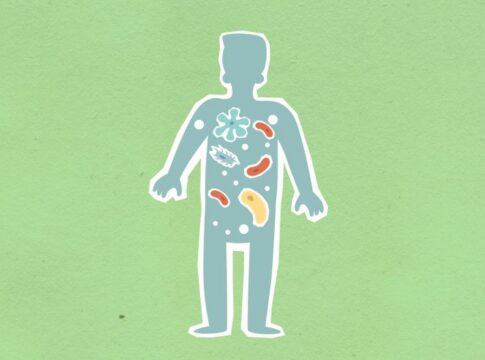
Did You Know Bacteria Outnumber Human Cells in Your Body
By Trivia Daily, Science Desk — Published November 2, 2026
Table of Contents
- Key Takeaways
- How Scientists First Discovered Bacteria Outnumber Human Cells
- Where These Bacteria Actually Live
- The Biology Behind Your Microbial Partners
- Comparing Human and Bacterial Cells
- Why This Discovery Matters for Medicine and Health
- Frequently Asked Questions
Your body is not entirely your own. For every human cell you call yours, roughly an equal number of bacterial cells are along for the ride. This startling biological reality challenges our understanding of what it means to be human. The discovery that bacteria outnumber human cells—or at least match them cell-for-cell—represents one of the most fascinating revelations in modern biology, reshaping scientific research into human health, immunity, and disease.
Scientists once believed the ratio was ten bacterial cells for every human cell, a figure repeated in textbooks for decades. Recent research has revised this estimate dramatically. Today’s consensus suggests a roughly one-to-one ratio, though the exact number fluctuates based on factors like recent bathroom visits, which can temporarily reduce bacterial populations. Either way, you’re walking around with trillions of microscopic passengers.
Key Takeaways
- The human body contains approximately 37 trillion human cells and a similar number of bacterial cells, creating a roughly one-to-one ratio rather than the previously believed 10:1 ratio.
- Most of these bacteria reside in the large intestine, where they perform essential functions like digesting fiber, producing vitamins, and training the immune system.
- The collective genetic material of your microbiome contains about 20 million genes, vastly outnumbering the approximately 20,000 genes in the human genome.
- Bacteria on and in your body weigh roughly 200 grams (about half a pound), making your microbiome a significant biological organ in its own right.
- These microorganisms are not parasites but symbiotic partners that evolved alongside humans over millions of years.
- Every person’s bacterial community is unique, like a microscopic fingerprint that reflects diet, environment, and health history.
How Scientists First Discovered Bacteria Outnumber Human Cells
The origins of this scientific discovery trace back to microbiologist Thomas Luckey, who in the 1970s made rough calculations suggesting bacteria vastly outnumbered human cells. His estimate of a 10:1 ratio became scientific gospel, repeated in research papers and educational materials for generations. The problem? Luckey’s calculations were educated guesses based on limited data about bacterial density and distribution.
Modern research has refined these numbers substantially. Scientists now use advanced microscopy, DNA sequencing, and computational biology to count cells more accurately. The breakthrough came from recognizing that human cells vary enormously in size. A single neuron or muscle cell dwarfs a bacterium. Red blood cells, which constitute the majority of human cells, are small but still larger than most bacteria. When researchers recalculated using better data about cell counts and bacterial populations, the dramatic 10:1 ratio collapsed to something closer to parity.
The chemistry of detection has improved too. Researchers can now identify bacterial species through genetic markers rather than relying on culturing techniques that miss organisms unable to grow in laboratory conditions. This molecular approach revealed a far more complex microbial ecosystem than scientists previously imagined.
Where These Bacteria Actually Live
Your bacterial passengers are not evenly distributed. The vast majority—roughly 70 percent—reside in your colon, where conditions favor microbial growth. The large intestine provides a warm, moist, nutrient-rich environment perfect for bacterial communities. Here, bacteria break down dietary fiber that human enzymes cannot process, producing short-chain fatty acids that nourish intestinal cells and influence metabolism.
Your skin hosts its own distinct bacterial ecosystem, with different species preferring oily areas, dry regions, or moist folds. Your mouth contains hundreds of bacterial species living in complex biofilms. Even your lungs, once thought sterile, harbor small bacterial populations. Each body site creates unique conditions—variations in pH, oxygen levels, temperature, and available nutrients—that select for specialized microbial communities.
Curiously, most of your internal organs remain bacteria-free under healthy conditions. Your bloodstream, brain, and bladder are typically sterile environments where bacterial presence signals infection. This selective colonization demonstrates how evolution has fine-tuned the human-bacteria relationship, allowing beneficial microbes access to certain areas while defending others vigorously.
The Biology Behind Your Microbial Partners
These bacteria are not idle passengers. They perform essential functions that human biology cannot accomplish alone. Gut bacteria synthesize vitamin K, crucial for blood clotting, and several B vitamins. They train developing immune systems to distinguish friend from foe, reducing risks of allergies and autoimmune conditions. They compete with harmful pathogens for resources and space, providing a living shield against infection.
The experiment of life without bacteria proves their importance. Germ-free mice, raised in sterile conditions from birth, develop abnormally. Their immune systems remain immature, their intestines are structurally underdeveloped, and they require significantly more calories to maintain body weight. These laboratory animals demonstrate that mammals evolved expecting bacterial partnership, not sterile isolation.
Recent research connects gut bacteria to seemingly distant aspects of health. The gut-brain axis—the biochemical communication between intestinal bacteria and the nervous system—influences mood, behavior, and even neurological conditions. Bacteria produce neurotransmitter precursors and anti-inflammatory compounds that affect brain chemistry. This discovery has opened new frontiers in understanding depression, anxiety, and neurodegenerative diseases.
Comparing Human and Bacterial Cells
| Characteristic | Human Cells | Bacterial Cells |
|---|---|---|
| Total Count in Body | Approximately 37 trillion | Approximately 38 trillion |
| Cell Size | 10-100 micrometers (varies widely) | 1-5 micrometers (typically) |
| Genetic Material | ~20,000 genes | ~20 million genes collectively |
| Total Mass | Majority of body weight | Approximately 200 grams |
| Nucleus Present | Yes (except red blood cells) | No (prokaryotic) |
Why This Discovery Matters for Medicine and Health
Understanding that bacteria outnumber human cells has transformed medical research and treatment approaches. The microbiome—the collective community of microorganisms living in and on the body—is now recognized as a critical factor in health and disease. Conditions from obesity to inflammatory bowel disease to certain cancers show links to disrupted bacterial communities.
Antibiotic use, while lifesaving against dangerous infections, can devastate beneficial bacterial populations. This collateral damage helps explain why antibiotics sometimes trigger digestive problems or leave patients vulnerable to opportunistic infections. Researchers are developing more targeted antimicrobial strategies that spare helpful bacteria while eliminating pathogens.
Fecal microbiota transplantation, once considered fringe medicine, is now standard treatment for certain infections. The procedure transplants healthy bacterial communities from donor to recipient, essentially rebooting the microbiome. Success rates for treating recurrent Clostridium difficile infections exceed 90 percent, demonstrating the therapeutic power of bacterial restoration.
Frequently Asked Questions
Do bacteria really outnumber human cells 10 to 1?
No, this widely repeated figure is outdated. Modern research indicates bacteria and human cells exist in roughly equal numbers—about 38 trillion bacterial cells to 37 trillion human cells. The 10:1 ratio was an early estimate that newer counting methods have revised.
Are the bacteria in our bodies harmful?
The vast majority are beneficial or neutral. These bacteria help digest food, produce vitamins, train the immune system, and protect against harmful pathogens. Only a small fraction of bacterial species cause disease, and many of those only become problematic when the microbial balance is disrupted.
Can you live without bacteria in your body?
While technically possible in sterile laboratory conditions, living without bacteria would severely compromise health. Germ-free animals require special diets, develop poorly, and have weakened immune systems. Humans evolved with bacteria and depend on them for optimal function.
How much do all the bacteria in the body weigh?
The entire bacterial population in a typical adult weighs approximately 200 grams, or about half a pound. Despite their enormous numbers, bacteria are so small that their total mass is relatively modest compared to human tissues.
The next time you look in the mirror, remember you’re seeing only part of the picture. Trillions of bacterial cells share your existence, working quietly to keep you healthy. We are not individuals but ecosystems, walking collaborations between human and microbial life that began millions of years ago and continues with every breath you take.