
7 Bizarre Facts About the Eiffel Tower Few People Know
By Trivia Daily, Staff Writer — Published November 11, 2026
Table of Contents
- Key Takeaways
- The Most Bizarre Eiffel Tower Facts That Sound Made Up
- Engineering Marvel Behind the Iron Lady
- Cultural Impact and Changing Perceptions
- Frequently Asked Questions
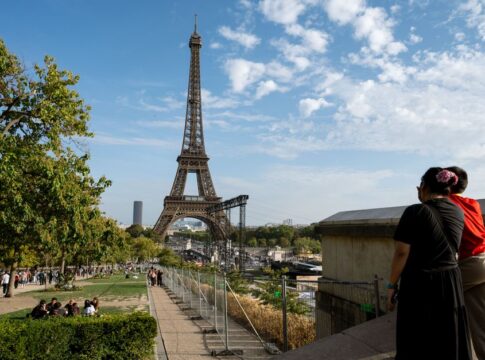
Standing tall in the heart of Paris, the Eiffel Tower is one of the world’s most recognizable landmarks. Yet beneath its familiar iron lattice lies a treasure trove of bizarre Eiffel tower trivia that most visitors never discover. From secret apartments to wartime sabotage plans, this iconic structure holds surprising secrets that reveal a fascinating history far stranger than you might imagine.
What began as a temporary exhibit for the 1889 World’s Fair nearly faced demolition just two decades later. Today, it’s impossible to picture Paris without it—but the tower’s journey from controversial eyesore to beloved symbol is filled with curious twists, scientific breakthroughs, and genuinely odd moments that continue to amaze researchers and tourists alike.
Key Takeaways
- Gustave Eiffel built a private apartment at the tower’s peak where he entertained famous scientists including Thomas Edison
- The tower’s height fluctuates by up to six inches depending on temperature as the iron expands and contracts
- Hitler ordered the tower’s destruction during World War II, but the command was never carried out
- The Eiffel Tower was nearly dismantled and shipped to Montreal after its initial 20-year permit expired
- Con artist Victor Lustig successfully “sold” the tower for scrap metal—twice
- The structure requires approximately 60 tons of paint every seven years to protect it from rust
The Most Bizarre Eiffel Tower Facts That Sound Made Up
These interesting details about Paris’s iron lady go far beyond the standard guidebook information. Each fact reveals a different facet of the tower’s remarkable story—from engineering marvels to human drama—that makes this 300-meter monument even more compelling than its impressive silhouette suggests.
1. Gustave Eiffel’s Secret Sky-High Apartment
At the very top of his namesake tower, Gustave Eiffel maintained a private apartment that was the envy of Parisian high society. While the tower was designed primarily as an observation platform and radio transmission point, Eiffel reserved a small space near the summit for personal use. The cozy quarters featured wooden furniture, oil paintings, and even a grand piano. Eiffel used this exclusive retreat to conduct meteorological observations and entertain distinguished guests, including the American inventor Thomas Edison. Wealthy Parisians reportedly offered Eiffel substantial sums for just one night in the apartment, but he consistently refused. Today, visitors can glimpse a recreation of this private space, complete with wax figures of Eiffel and Edison deep in conversation.
2. The Tower Grows and Shrinks With the Seasons
The Eiffel Tower isn’t a static structure—it’s constantly moving. On hot summer days, the iron framework can expand by up to six inches, causing the tower to lean slightly away from the sun as the metal on the sun-facing side heats up more than the shaded portions. This thermal expansion is a basic principle of physics, but it’s dramatic when applied to 10,000 tons of iron. During winter, the metal contracts and the tower shrinks back down. Wind also causes the structure to sway gently; at the top, movement can reach several inches during storms. Engineers accounted for these forces in the original design, incorporating flexibility that allows the tower to withstand environmental stresses that would crack a rigid structure.
3. A Con Artist Sold It for Scrap—Twice
In 1925, a smooth-talking criminal named Victor Lustig pulled off one of history’s most audacious scams. Reading that the tower needed expensive repairs, Lustig posed as a government official and invited scrap metal dealers to a confidential meeting at a luxury hotel. He explained that the city could no longer afford the tower’s upkeep and would secretly sell it for scrap to avoid public outcry. One dealer, eager for the lucrative contract, paid Lustig a substantial bribe to secure the deal. By the time the victim realized he’d been conned, Lustig had fled to Vienna. The embarrassed dealer never reported the crime. Emboldened by this success, Lustig returned to Paris a month later and successfully executed the exact same scam on a different scrap dealer. Only after the second victim went to the police did authorities begin hunting for the brazen swindler.
4. Hitler Ordered Its Destruction During World War II
When Allied forces approached Paris in August 1944, Adolf Hitler issued a direct order to the German military governor of Paris, General Dietrich von Choltitz: destroy the city’s most important landmarks, including the Eiffel Tower. Hitler wanted Paris reduced to “a field of ruins” rather than allowing it to fall intact into Allied hands. Explosives were prepared and placed at key points throughout the city. However, von Choltitz ultimately disobeyed the Führer’s command, later claiming he couldn’t bring himself to destroy such beauty. Whether motivated by conscience, pragmatism, or the realization that Germany had already lost the war, his refusal saved not just the tower but dozens of other irreplaceable monuments. The tower survived without a scratch, though French Resistance fighters had already sabotaged the elevator cables, forcing Hitler to climb the stairs during his brief visit to conquered Paris in 1940—a small act of defiance he likely never knew about.
5. It Was Almost Shipped to Montreal
The Eiffel Tower was never meant to be permanent. Built for the 1889 Exposition Universelle, it had a 20-year permit, after which it was scheduled for demolition. By 1909, the tower had become widely unpopular among Parisians, who considered it an industrial eyesore marring their beautiful city. The structure was saved by its usefulness for radio transmission experiments and military communications. However, during the 1960s, when the tower again faced questions about its future, the city of Montreal expressed serious interest in purchasing and relocating the entire structure to Canada. Engineers studied the feasibility of dismantling and shipping the iron pieces across the Atlantic. Ultimately, Paris decided the tower had become too integral to the city’s identity to part with, and Montreal built its own observation tower, the Montreal Tower, instead.
6. The Paint Job Requires 60 Tons of Paint
Protecting 10,000 tons of iron from rust is no small task. The Eiffel Tower undergoes a complete repainting approximately every seven years, a process that requires around 60 tons of specially formulated paint. A team of painters works for roughly 18 months to cover the tower’s 250,000 square meters of surface area, applying paint by hand with brushes—no spray guns or rollers. The tower has been repainted 19 times since its construction, and the color has changed several times over the decades. It started as red-brown, shifted to yellow, and has been various shades of brown. Currently, it wears three subtly different shades of brown paint, darker at the base and lighter at the top, creating an optical illusion of uniform color against the Parisian sky. Before each repainting, workers must strip away old layers and treat any rust, making this one of the most labor-intensive maintenance operations of any monument worldwide.
7. Scientists Conduct Experiments From Its Heights
From the beginning, the Eiffel Tower served as more than a tourist attraction—it was a scientific laboratory in the sky. Gustave Eiffel himself conducted pioneering aerodynamics experiments from the tower, dropping objects and measuring air resistance. He installed a meteorological station and studied atmospheric conditions at different altitudes. Later, physicists used the tower for experiments in gravity, measuring the acceleration of falling objects with unprecedented precision. The tower also played a crucial role in early radio development. In 1898, Eugène Ducretet conducted wireless telegraphy experiments from the tower, and by World War I, it housed a permanent military radio station that intercepted enemy communications, including the famous message that helped expose spy Mata Hari. Today, the tower still bristles with antennas for radio and television transmission, continuing its legacy as a platform for technological advancement more than a century after its construction.
Engineering Marvel Behind the Iron Lady
The tower’s construction represented a triumph of 19th-century engineering. Gustave Eiffel’s design used latticed wrought iron, a material strong enough to support the structure’s weight while remaining relatively light. The 18,038 individual iron pieces were prefabricated with extraordinary precision, then assembled on-site using 2.5 million rivets. Remarkably, construction took just over two years, with minimal accidents—extraordinary for such a massive project in the 1880s.
The tower’s foundation extends 49 feet below ground, with each of the four legs resting on massive concrete supports. The careful weight distribution means the pressure the tower exerts on the ground is roughly equivalent to a person sitting in a chair—an elegant solution that allows such an enormous structure to stand on relatively soft Parisian soil without sinking.
Cultural Impact and Changing Perceptions
When first erected, the tower faced fierce opposition from Paris’s artistic and literary elite. A group of 300 prominent figures, including authors Guy de Maupassant and Alexandre Dumas the Younger, signed a petition calling it a “metal monstrosity” that would overshadow beloved landmarks like Notre-Dame Cathedral. Maupassant supposedly ate lunch in the tower’s restaurant regularly—because it was the only place in Paris from which he couldn’t see the tower itself.
Public opinion shifted gradually. The tower’s role in scientific advancement, particularly radio communications, demonstrated its practical value. Its distinctive silhouette became synonymous with Paris in photographs and paintings. By the mid-20th century, the structure that intellectuals once despised had become the city’s most cherished symbol, appearing on everything from postcards to perfume bottles.
Frequently Asked Questions
How many people visit the Eiffel Tower each year?
Approximately seven million people visit the Eiffel Tower annually, making it one of the most-visited paid monuments in the world. On busy summer days, the tower can welcome more than 25,000 visitors.
Why is the Eiffel Tower lit up at night?
The tower’s golden lighting system, installed in 1985, uses 336 projectors to illuminate the structure from within. A separate sparkling light display, added in 1999 for millennium celebrations, features 20,000 bulbs that twinkle for five minutes every hour after dark.
Has anyone ever jumped off the Eiffel Tower with a parachute?
Yes, though it’s illegal, daredevils have parachuted from the tower multiple times throughout history. The first known attempt occurred in 1912 when a tailor named Franz Reichelt jumped wearing a parachute suit of his own design—tragically, it failed and he died on impact.
Is the Eiffel Tower the tallest structure in Paris?
No longer. While the Eiffel Tower held that distinction for decades, it was surpassed in 1973 by the Tour Montparnasse office building, which stands 689 feet tall compared to the Eiffel Tower’s 1,083 feet including its antenna. However, the Eiffel Tower remains Paris’s most iconic tall structure.
These bizarre and amazing stories reveal that even the world’s most photographed monument still holds surprises. The next time you see that familiar iron silhouette, remember: you’re looking at a structure that was almost demolished, nearly sold for scrap by a con artist, and saved from Nazi explosives—all while quietly advancing science from its lofty perch above the City of Light.