
Did You Know Sharks Existed Before Trees on Earth
By Trivia Daily, Staff Writer — Published November 10, 2026
Table of Contents
- Key Takeaways
- When Sharks Existed Before Trees: The Timeline
- How Ancient Sharks Differ From Modern Species
- Survival Through Mass Extinctions
- Comparing Ancient and Modern Timelines
- Why This Fact Matters Today
- Frequently Asked Questions
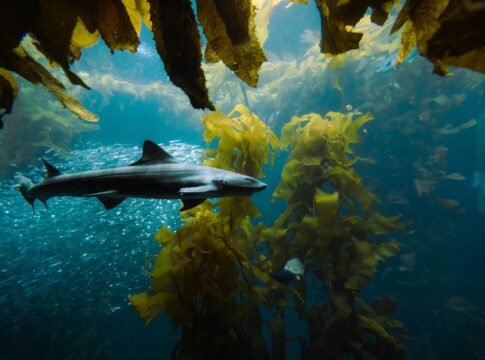
Imagine a world without forests. No towering oaks, no sprawling pines, not even a humble shrub. Yet in this barren landscape, sharks already prowled the ancient oceans. This surprising truth ranks among the most fascinating facts in natural history: sharks existed before trees appeared on our planet. While the first sharks emerged roughly 450 million years ago during the Ordovician period, the earliest tree-like plants didn’t take root until about 385 million years ago. That means sharks had already been swimming Earth’s waters for some 65 million years before anything resembling a modern tree grew on land.
This remarkable timeline challenges how we think about life’s history on Earth. Sharks represent one of evolution’s most enduring success stories, predating not just trees but also dinosaurs, mammals, and most other familiar life forms. Understanding this ancient heritage helps explain why sharks have survived multiple mass extinctions and continue thriving in oceans worldwide.
Key Takeaways
- Sharks first appeared approximately 450 million years ago, while trees emerged around 385 million years ago—a 65-million-year gap.
- Early sharks swam in oceans long before vertebrates colonized land and before the first forests transformed Earth’s atmosphere.
- Sharks have survived at least four major mass extinction events, including the one that killed the dinosaurs 66 million years ago.
- Modern shark species share fundamental characteristics with their ancient ancestors, though many early forms looked quite different from today’s sharks.
- The evolution of trees fundamentally changed Earth’s climate and oxygen levels, but sharks had already established their ecological role in marine ecosystems.
- Fossil evidence shows that early sharks had diverse body plans, including some with bizarre features like spiral tooth whorls.
When Sharks Existed Before Trees: The Timeline
The geological record paints a vivid picture of this ancient world. During the Ordovician period, when the first shark-like fish appeared, Earth’s continents were largely barren rock and primitive moss-like plants. The land looked more like Mars than the green planet we know today. These early sharks, though primitive compared to modern species, already possessed cartilaginous skeletons and predatory adaptations that would serve their descendants well.
The Silurian period followed, and sharks continued evolving while land remained relatively lifeless. Small vascular plants began appearing, but nothing approached the size or complexity of a tree. Only during the Devonian period—often called the “Age of Fishes”—did the first tree-like plants, such as Archaeopteris, finally emerge. By then, sharks had diversified into numerous forms, some quite bizarre by modern standards.
This timeline becomes even more interesting when you consider what it means for evolution. Sharks developed their basic body plan and hunting strategies in a world fundamentally different from ours. The atmosphere contained less oxygen, continents were arranged differently, and no creature had yet left the water to live permanently on land.
How Ancient Sharks Differ From Modern Species
Early sharks would look strange to anyone familiar with great whites or hammerheads. Fossil evidence reveals creatures with wildly different body shapes and features. Some possessed elaborate spines and armor plates. Others had tooth structures unlike anything alive today, including spiral arrangements that scientists are still working to understand fully.
One group, the stethacanthids, sported a distinctive anvil-shaped dorsal fin covered in tooth-like scales. Another early shark relative, Helicoprion, had a circular saw-like tooth whorl in its lower jaw that continues to puzzle paleontologists. These adaptations suggest early sharks experimented with many evolutionary strategies before settling into forms more recognizable to us.
Despite these differences, the fundamental shark blueprint—cartilaginous skeleton, multiple gill slits, and predatory lifestyle—proved remarkably durable. This basic design has allowed sharks to adapt to changing ocean conditions for nearly half a billion years. Few other animal groups can claim such longevity.
Survival Through Mass Extinctions
Sharks’ existence before trees is impressive, but their survival record is equally amazing. They’ve endured at least four major mass extinction events that wiped out countless other species. The Permian-Triassic extinction, which occurred about 252 million years ago, killed roughly 96% of marine species. Sharks survived. The Cretaceous-Paleogene extinction ended the dinosaurs’ reign 66 million years ago. Sharks survived that too.
What accounts for this resilience? Several factors likely contribute. Sharks occupy diverse ecological niches, from shallow coastal waters to the deep ocean. Their cartilaginous skeletons require less calcium than bone, making them less vulnerable to ocean acidification. Many species can adjust their metabolism and survive in varying conditions. Their relatively slow reproduction rate, often seen as a disadvantage today, may have helped during times when rapid environmental changes favored adaptable generalists over specialized species.
This survival prowess makes sharks living fossils in the truest sense—not unchanged, but representing a lineage that has continuously adapted while maintaining core characteristics for hundreds of millions of years.
Comparing Ancient and Modern Timelines
| Life Form | First Appearance | Millions of Years Ago |
|---|---|---|
| First Sharks | Ordovician Period | ~450 |
| First Trees | Devonian Period | ~385 |
| First Dinosaurs | Triassic Period | ~230 |
| First Mammals | Triassic Period | ~225 |
| First Flowering Plants | Cretaceous Period | ~130 |
| First Humans | Pleistocene Epoch | ~0.3 |
Why This Fact Matters Today
Understanding that sharks existed before trees does more than satisfy curiosity. It provides crucial context for modern conservation efforts. These animals have survived dramatic climate shifts, asteroid impacts, and ocean chemistry changes that eliminated most other species. Yet today, human activities threaten shark populations worldwide at an unprecedented rate.
Overfishing, habitat destruction, and climate change now endanger many shark species. Roughly one-quarter of all shark and ray species face extinction risk, according to conservation assessments. An animal that survived for 450 million years now struggles against challenges created in just a few human generations. This perspective underscores both sharks’ remarkable resilience and their current vulnerability.
Scientists study sharks not just for their evolutionary history but also for insights into marine ecosystem health. As apex predators, sharks play crucial roles in maintaining ocean balance. Their decline ripples through entire food webs, affecting species from large fish down to coral reefs.
Frequently Asked Questions
How long did sharks exist before trees appeared on Earth?
Sharks existed for approximately 65 million years before trees evolved. The first sharks appeared around 450 million years ago, while trees emerged roughly 385 million years ago during the Devonian period.
Are sharks older than dinosaurs?
Yes, sharks are much older than dinosaurs. Sharks appeared about 450 million years ago, while dinosaurs first emerged around 230 million years ago—making sharks roughly 220 million years older than dinosaurs.
What did early sharks look like compared to modern sharks?
Early sharks varied dramatically in appearance, with some featuring bizarre adaptations like spiral tooth whorls, anvil-shaped dorsal fins, and heavy armor plates. However, they shared the basic cartilaginous skeleton and predatory features that characterize modern sharks.
Why have sharks survived so long when other ancient animals went extinct?
Sharks’ survival likely results from their adaptability, diverse habitats, efficient body design, and ability to adjust to changing ocean conditions. Their cartilaginous skeletons and varied ecological roles helped them weather multiple mass extinction events.
The next time you see a shark—whether in an aquarium, documentary, or lucky ocean encounter—remember you’re looking at a design template older than forests themselves. These creatures swam in seas before roots anchored soil, before leaves rustled in wind, before any woody plant cast a shadow on land. That’s not just trivia. That’s a humbling reminder of life’s incredible persistence across deep time.