
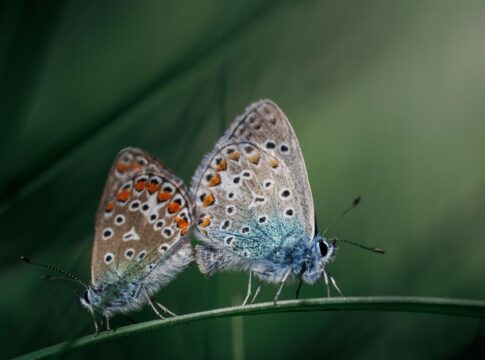
Did You Know Butterflies Taste with Their Feet Not Tongues
By Trivia Daily, Staff Writer — Published November 7, 2026
Table of Contents
- Key Takeaways
- How Butterflies Taste Feet Work: The Science Behind the Sensation
- Why Butterflies Evolved This Unusual Ability
- The Proboscis: A Drinking Straw, Not a Tongue
- Comparing Butterfly Senses to Other Insects
- What Butterflies Can Taste That We Cannot
- Frequently Asked Questions
Imagine stepping onto your dinner plate to decide whether the meal is worth eating. Sounds bizarre, right? Yet that’s exactly how butterflies experience the world. These delicate insects carry taste receptors on their feet, allowing them to identify food sources the moment they land. This surprising fact reveals just how different the sensory world of butterflies is from our own—and it’s one of nature’s most fascinating adaptations for survival.
The next time you watch a butterfly land on a flower, you’re witnessing a creature literally tasting its surroundings with every step. This remarkable ability helps butterflies make split-second decisions about where to feed and, crucially, where to lay their eggs. It’s a piece of trivia that transforms how we see these colorful garden visitors.
Key Takeaways
- Butterflies taste with their feet using specialized chemoreceptors located on their tarsi (the lower leg segments), allowing them to identify plants and food sources upon landing.
- Female butterflies use foot-tasting to determine whether a plant is suitable for laying eggs, ensuring their caterpillars will have the right food when they hatch.
- Butterflies do have a proboscis (a tube-like tongue) for feeding, but it functions only for drinking nectar, not for tasting.
- The taste receptors on butterfly feet are incredibly sensitive and can detect specific chemical compounds that indicate whether a plant is the correct species for their larvae.
- This adaptation is found across many butterfly species and represents an evolutionary solution to the challenge of finding appropriate host plants in diverse environments.
- Some butterflies can taste substances that would be undetectable to human taste buds, giving them a chemical sensitivity far beyond our own sensory capabilities.
How Butterflies Taste Feet Work: The Science Behind the Sensation
The secret lies in tiny structures called chemoreceptors scattered across the butterfly’s feet. These sensory organs function similarly to taste buds on a human tongue, detecting chemical compounds when they come into contact with surfaces. When a butterfly lands on a leaf or flower, these receptors immediately begin analyzing the chemical composition of the plant.
This process happens in milliseconds. The chemoreceptors send signals to the butterfly’s nervous system, providing instant information about whether the plant contains the right nutrients or chemical markers. For many species, this isn’t just about finding food—it’s about survival of the next generation. Female butterflies must identify specific host plants where their caterpillars can thrive after hatching.
The receptors are concentrated on the tarsi, the segmented lower portions of the butterfly’s legs. Each leg can independently sample different surfaces, giving the butterfly multiple data points about its environment. Think of it as having six separate tongues, each capable of tasting a different spot simultaneously.
Why Butterflies Evolved This Unusual Ability
Evolution favored this foot-tasting adaptation for several compelling reasons. Speed matters when you’re a small, vulnerable insect. Being able to taste instantly upon landing saves precious time and energy. A butterfly doesn’t need to extend its proboscis and sample the nectar to know whether it’s landed on the right flower—its feet already have the answer.
The egg-laying imperative drives this adaptation even further. Caterpillars are notoriously picky eaters. Many species can only digest specific plant species, sometimes just one or two types. A monarch butterfly caterpillar, for instance, feeds almost exclusively on milkweed. If a female monarch lays eggs on the wrong plant, her offspring will starve. Foot-tasting eliminates this deadly mistake.
This sensory system also protects butterflies from toxic plants. Many species have evolved to recognize chemical warning signs that indicate a plant is poisonous or unsuitable. The feet act as a first line of defense, preventing the butterfly from wasting time or risking harm on the wrong vegetation.
The Proboscis: A Drinking Straw, Not a Tongue
Butterflies do possess that characteristic coiled tube extending from their heads—the proboscis. But this structure serves a completely different purpose than tasting. The proboscis functions as a specialized drinking straw, designed to sip nectar from flowers.
When not in use, the proboscis stays coiled beneath the butterfly’s head like a tiny spring. When the butterfly feeds, muscles uncoil this tube and extend it deep into flowers to reach nectar reservoirs. The proboscis works through capillary action and muscular pumping to draw liquid up into the butterfly’s digestive system.
Some taste receptors do exist near the proboscis, but these are secondary to the primary tasting system in the feet. By the time a butterfly extends its proboscis to feed, it has already decided the food source is acceptable based on what its feet detected.
Comparing Butterfly Senses to Other Insects
| Insect | Primary Taste Location | Purpose |
|---|---|---|
| Butterflies | Feet (tarsi) | Identify host plants and food sources instantly upon landing |
| Honeybees | Mouthparts and antennae | Assess nectar quality and communicate food sources to hive |
| Flies | Feet and mouthparts | Detect food and suitable egg-laying sites |
| Ants | Antennae | Chemical communication and food identification |
What Butterflies Can Taste That We Cannot
The chemical sensitivity of butterfly feet surpasses human taste perception in remarkable ways. Butterflies can detect specific plant alkaloids, glycosides, and other compounds that are completely imperceptible to human tongues. These chemicals serve as botanical fingerprints, allowing butterflies to distinguish between closely related plant species that might look identical to us.
Research has shown that butterflies can identify plants even when they’re not flowering or when visual cues are absent. A butterfly landing on a green leaf in dim light can still determine the plant’s identity through taste alone. This ability proves especially valuable in varied habitats where butterflies must quickly assess numerous plants.
Different butterfly species have evolved to detect different chemical signatures, matching their specific dietary needs. What tastes perfect to a swallowtail might be completely unpalatable to a painted lady. This specialization reduces competition between species and allows diverse butterfly populations to coexist in the same environment.
Frequently Asked Questions
Do all butterflies taste with their feet?
Yes, chemoreceptors on the feet are a universal feature among butterfly species, though the sensitivity and specific chemicals detected vary depending on the species’ dietary needs and host plant preferences.
Can butterflies taste sweetness like humans do?
Butterflies can detect sugars and distinguish between different concentrations of sweetness in nectar, but they also taste many chemical compounds that humans cannot perceive, making their taste experience fundamentally different from ours.
How many taste receptors do butterflies have on their feet?
The exact number varies by species, but butterflies possess hundreds to thousands of chemoreceptor cells distributed across their tarsi, providing extensive chemical sampling capability.
Do caterpillars also taste with their feet?
Caterpillars have chemoreceptors on their mouthparts rather than their feet, which makes sense given that they spend their time eating rather than searching for the right plants—that’s their mother’s job.
The world beneath a butterfly’s feet is rich with chemical information we can barely imagine. Every landing is a taste test, every step a sensory exploration. It’s a reminder that nature’s solutions to survival challenges often look nothing like our own—and that’s what makes discovering these facts so endlessly fascinating.