
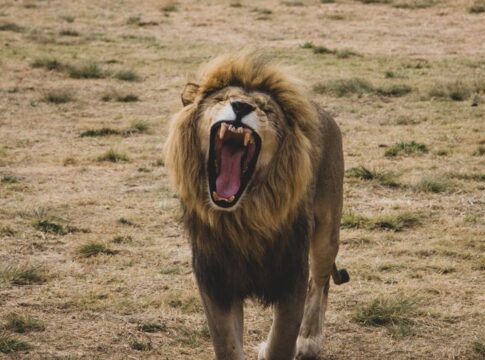
Did You Know MGM Lion Roar Was Recorded in 1928
By Trivia Daily, Staff Writer — Published November 7, 2026
Table of Contents
- Key Takeaways
- The Lion Roar Recorded During Hollywood’s Sound Revolution
- Seven Lions and Counting: The Legacy of Leo
- The Technical Marvel Behind the Recording
- Why This Recording Endures
- Frequently Asked Questions
The iconic roar that opens every MGM film is one of the most recognizable sounds in cinema history. That thunderous lion roar recorded for Metro-Goldwyn-Mayer has echoed through movie theaters for nearly a century, yet most viewers have no idea when or how this legendary audio was captured. The original lion roar that became synonymous with Hollywood glamour was indeed recorded in 1928, during the earliest days of synchronized sound in motion pictures.
What makes this fact even more interesting is that the roar wasn’t captured in a studio but required elaborate equipment and a live lion willing to cooperate. The timing coincided with the transition from silent films to “talkies,” making this recording a pivotal moment in entertainment history.
Key Takeaways
- The famous MGM lion roar was first recorded in 1928 as sound technology revolutionized cinema
- Multiple lions have portrayed Leo the Lion over the decades, with at least seven different animals used since 1916
- The 1928 recording was made using cutting-edge audio equipment that was revolutionary for its time
- Jackie the Lion, who roared for MGM during the late 1920s, survived a plane crash and became one of Hollywood’s most famous animal actors
- The roar has been re-recorded and updated several times throughout MGM’s history to match evolving audio technology
- Despite being nearly a century old, variations of this original recording still introduce MGM films today
The Lion Roar Recorded During Hollywood’s Sound Revolution
When the lion roar was recorded in 1928, the film industry was experiencing seismic change. “The Jazz Singer” had premiered just one year earlier, demonstrating that synchronized sound could captivate audiences in ways silent films never could. Studios scrambled to equip themselves with recording technology, and MGM recognized that their trademark lion mascot needed a voice to match the new era.
The recording process was far more complex than simply placing a microphone near a lion. Early sound recording equipment was bulky, sensitive, and required careful calibration. Engineers had to capture a roar powerful enough to convey strength and majesty while ensuring the audio quality would survive the primitive amplification systems of 1920s movie theaters. The lion had to roar on cue, a challenge that required patience from both animal trainers and recording technicians.
Jackie, one of the lions who performed during this period, became particularly famous. This remarkable animal survived a plane crash in 1927 and went on to appear in numerous films beyond the MGM logo itself. The dedication required to capture these roars reveals how seriously studios took their branding, even in cinema’s infancy.
Seven Lions and Counting: The Legacy of Leo
Contrary to popular belief, no single lion has represented MGM throughout its history. The studio has employed at least seven different lions since adopting the mascot in 1916. Each brought its own personality and roar to the role, though the name “Leo” has remained constant.
The original lion, used in the silent era, appeared in a static pose since sound wasn’t yet possible. Slats, as this first lion was known, never roared on screen at all. When sound arrived, different lions took over, each recorded with the best available technology of their era. This succession of lions means that audiences across different decades have actually heard different roars, though the overall effect remained consistent enough that few viewers noticed the changes.
| Lion Name | Period | Notable Feature |
|---|---|---|
| Slats | 1916-1928 | First MGM lion, silent era only |
| Jackie | 1928-1956 | First to roar on film, survived plane crash |
| Tanner | 1934-1956 | Used in Technicolor films |
| Leo (current) | 1957-present | Most frequently seen modern version |
The Technical Marvel Behind the Recording
Recording a lion’s roar in 1928 required technology that barely existed. The Western Electric sound-on-film system, which allowed audio to be synchronized with motion pictures, had only recently been perfected. Microphones of the era were far less sophisticated than modern equipment, capturing a narrower range of frequencies and requiring the sound source to be positioned precisely.
The roar itself presented unique challenges. A lion’s roar is incredibly loud, often reaching 114 decibels at close range—louder than a chainsaw or rock concert. Early microphones could easily distort when faced with such volume, creating an unpleasant crackling sound rather than the majestic roar MGM needed. Engineers had to experiment with microphone placement, recording multiple takes until they captured audio that conveyed power without distortion.
The recording also needed to be brief enough to fit the opening seconds of a film while long enough to feel substantial. This sweet spot of approximately ten seconds became the standard that MGM maintained for decades, even as they updated and re-recorded the roar with newer technology.
Why This Recording Endures
Few corporate logos have remained as unchanged and recognizable as MGM’s roaring lion. While the company has updated the visual presentation—moving from black and white to color, from flat compositions to computer-generated imagery—the essential concept remains identical to what audiences saw in 1928. That consistency has created one of the most powerful brand associations in entertainment history.
The roar signals more than just the studio’s name. It evokes an entire era of Hollywood glamour, epic storytelling, and cinematic spectacle. Films ranging from “The Wizard of Oz” to “Ben-Hur” to the James Bond series have all begun with that familiar roar, creating a psychological link between the sound and quality entertainment spanning generations.
Modern audiences hearing the roar are experiencing a direct connection to the earliest days of sound cinema. While the recording quality has been enhanced and the visuals updated, the fundamental audio—a lion roaring into primitive 1928 recording equipment—remains the foundation of what viewers hear today. That makes it one of the oldest continuously used sound recordings in commercial entertainment.
Frequently Asked Questions
Is the MGM lion roar the same recording used since 1928?
The roar has been re-recorded and enhanced multiple times throughout MGM’s history, but elements of the original 1928 recording have influenced all subsequent versions. Modern versions use digital technology but maintain the character of the original sound.
How many different lions have appeared in the MGM logo?
At least seven different lions have portrayed Leo over the decades, beginning with Slats in 1916 and continuing through various animals into the present day. Each brought their own roar to the role, though all were marketed under the name Leo.
Did any MGM lions become famous outside the logo?
Yes, several MGM lions appeared in films and had notable careers. Jackie, one of the most famous, survived a plane crash in 1927 and appeared in numerous movies beyond the opening logo sequence throughout the 1930s and 1940s.
Why did MGM choose a lion as their mascot?
MGM adopted the lion logo from Goldwyn Pictures, one of the companies that merged to form Metro-Goldwyn-Mayer in 1924. The lion symbolized strength, majesty, and dominance—qualities the studio wanted associated with its films.
That thunderous roar opening your favorite classic films carries nearly a century of cinema history in its sound waves. Every time you hear it, you’re experiencing a piece of audio engineering from an era when simply capturing a lion’s voice required remarkable technical innovation and courage.