
The Truth About Why Cliffhangers Were Named After Cliffs
By Trivia Daily, Staff Writer — Published November 6, 2026
Table of Contents
- Key Takeaways
- The Truth About Cliffhangers Named After an Actual Cliff Scene
- How Serial Entertainment Mastered Suspense
- Why Cliffhangers Work on Human Psychology
- Comparing Classic and Modern Cliffhanger Techniques
- When Cliffhangers Backfire
- Frequently Asked Questions
Every time a TV show ends with a shocking twist or a novel closes mid-action, you’re experiencing a cliffhanger. But this narrative device isn’t just metaphorically named—it has a surprisingly literal origin. The truth about why cliffhangers were named after cliffs reveals a fascinating piece of literary history that connects Victorian-era adventure serials to the edge-of-your-seat storytelling we know today. Discover how a character literally hanging from a cliff became shorthand for any suspenseful, unresolved ending.
The term emerged from serialized fiction, where writers needed to keep readers coming back for more. What began as a specific plot device evolved into one of the most powerful tools in entertainment.
Key Takeaways
- The term “cliffhanger” originated from Thomas Hardy’s 1873 serial novel “A Pair of Blue Eyes,” where a character literally hangs from a cliff face.
- Serialized fiction in the 19th century popularized suspenseful chapter endings to ensure readers purchased the next installment.
- Early film serials in the 1910s and 1920s adopted the cliffhanger technique, often ending episodes with characters in literal peril.
- The cliffhanger became a staple of radio dramas, comic books, and eventually television, transforming how stories were told across all media.
- Modern streaming services have both embraced and subverted the cliffhanger format by releasing entire seasons at once.
The Truth About Cliffhangers Named After an Actual Cliff Scene
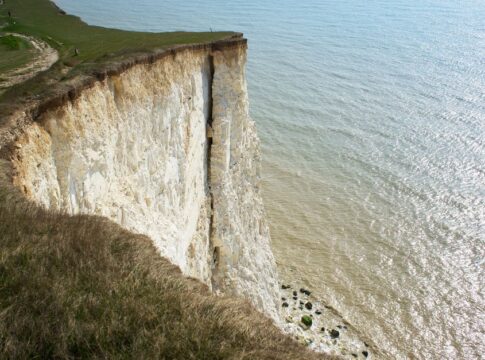
Thomas Hardy’s novel “A Pair of Blue Eyes” gave us the term, though Hardy himself never used the word. In a pivotal scene, the protagonist Henry Knight slips while climbing and finds himself dangling from a cliff edge, staring at an embedded fossil while contemplating his mortality. The chapter ended there. Readers had to wait for the next monthly installment to learn his fate—a month of wondering whether Knight would survive.
This wasn’t the first time a story ended with unresolved tension, but Hardy’s literal cliff-hanging scene proved so memorable that it eventually lent its name to the entire narrative technique. The image was visceral and immediate. A character suspended between life and death, between one chapter and the next, perfectly captured the emotional state writers wanted to create in their audiences.
Victorian publishers loved serialization because it guaranteed steady income. Charles Dickens had already mastered the art of the compelling chapter ending, though his work featured various types of suspense rather than literal precipices. Hardy’s cliff scene simply provided the perfect metaphor that stuck.
How Serial Entertainment Mastered Suspense
The late 19th and early 20th centuries saw serialization dominate popular entertainment. Magazine publishers discovered that readers would reliably buy the next issue if a story ended at a crucial moment. This wasn’t just about cliffs—characters faced fires, runaway trains, and villains’ traps, all frozen at the moment of maximum danger.
Early cinema quickly adopted these techniques. Film serials like “The Perils of Pauline” (1914) became famous for ending each episode with the heroine in mortal danger. She might be tied to railroad tracks, trapped in a burning building, or—yes—hanging from a cliff. Audiences returned to theaters week after week, and the cliffhanger became synonymous with serial storytelling.
Radio dramas perfected the audio cliffhanger. Shows like “The Lone Ranger” and “The Shadow” ended episodes with dramatic musical stings and unresolved action. Listeners had no visual cues, so writers relied on dialogue, sound effects, and narrator promises like “Tune in next week!” to maintain suspense.
The Golden Age of Television Cliffhangers
Television transformed the cliffhanger into an art form. Season finales became cultural events. The “Who shot J.R.?” episode of “Dallas” in 1980 left viewers waiting months for resolution, generating unprecedented speculation and water-cooler conversation. An estimated 83 million Americans watched the reveal—one of the highest-rated television episodes ever broadcast.
Soap operas elevated the daily cliffhanger to a science. Each episode ended with a revelation, confrontation, or crisis designed to bring viewers back tomorrow. Multiple storylines meant multiple cliffhangers per episode, ensuring something would hook every viewer.
Why Cliffhangers Work on Human Psychology
The power of a cliffhanger lies in the Zeigarnik effect, a psychological phenomenon where people remember uncompleted tasks better than completed ones. When a story stops mid-action, your brain treats it as unfinished business. The tension of not knowing creates a mental itch that demands scratching.
This explains why you might binge-watch an entire season in one sitting. Each episode’s cliffhanger triggers the desire for resolution, and when the next episode is immediately available, resistance crumbles. Streaming services understand this psychology intimately, though they’ve also experimented with releasing entire seasons at once, effectively eliminating traditional week-to-week cliffhangers.
The anticipation between installments can actually enhance enjoyment. Studies of delayed gratification suggest that waiting and speculating can make the eventual resolution more satisfying. Online fan communities thrive on dissecting cliffhangers, building theories, and sharing predictions.
Comparing Classic and Modern Cliffhanger Techniques
| Era | Medium | Typical Cliffhanger Style | Resolution Time |
|---|---|---|---|
| 1870s-1900s | Serial novels | Character in physical peril or moral dilemma | 1 month |
| 1910s-1940s | Film serials | Literal death traps and physical danger | 1 week |
| 1950s-1980s | Television | Mystery revelations, dramatic confrontations | 1 week to 3 months |
| 2000s-present | Streaming | Complex plot twists, character revelations | Instant to 1 year |
When Cliffhangers Backfire
Not every cliffhanger succeeds. Shows canceled after season-ending cliffhangers leave audiences permanently frustrated. “My So-Called Life,” “ALF,” and numerous other series ended on unresolved notes, their stories abandoned mid-crisis.
Overuse can also exhaust audiences. When every scene ends with manufactured suspense, viewers become numb to the technique. The constant manipulation becomes obvious and annoying rather than engaging. Some critics argue that modern television relies too heavily on cliffhangers, sacrificing satisfying episodic storytelling for perpetual forward momentum.
The most effective cliffhangers balance surprise with inevitability. They feel both shocking and, in retrospect, perfectly set up. Cheap cliffhangers—those that rely on misleading editing or information withheld from the audience—generate resentment rather than excitement.
Frequently Asked Questions
What was the first cliffhanger in entertainment history?
While Thomas Hardy’s “A Pair of Blue Eyes” (1873) gave us the term, serialized stories with suspenseful endings existed earlier. “The Arabian Nights” used the technique centuries ago, with Scheherazade stopping her stories at crucial moments to ensure she’d live another night.
Do all cultures use cliffhangers in storytelling?
Cliffhangers appear across cultures, though their intensity and frequency vary. Japanese manga and anime extensively use cliffhangers between chapters and episodes, while some European storytelling traditions favor more self-contained narratives with clear resolutions.
Why do streaming services still use cliffhangers if viewers can immediately watch the next episode?
Even with instant access, cliffhangers maintain narrative momentum and encourage binge-watching. They also generate social media buzz as viewers reach cliffhanger moments at different times, creating ongoing conversation and anticipation for new seasons.
Has any show deliberately avoided using cliffhangers?
Some anthology series and episodic shows minimize cliffhangers by design. “The Twilight Zone” and similar programs told complete stories within single episodes, though even these occasionally featured ongoing mysteries or character arcs that extended across multiple installments.
The next time a show leaves you hanging at a crucial moment, you’ll know you’re experiencing a technique refined over 150 years of storytelling. That frustrated desire to know what happens next? That’s exactly what Thomas Hardy’s readers felt, waiting to discover if Henry Knight survived his cliff face. Some narrative devices never lose their grip.