
7 Surprising Facts About the Oscar Statuette Design
By Trivia Daily, Staff Writer — Published November 8, 2026
Table of Contents
- Key Takeaways
- The Oscar Statuette Design Features a Symbolic Foundation
- Wartime Oscars Were Made of Plaster
- The Manufacturing Process Involves Old-World Craftsmanship
- Nobody Knows Where the Name “Oscar” Actually Came From
- Winners Don’t Truly Own Their Statuettes
- The Statuette’s Specifications Are Remarkably Precise
- The Black Base Holds a Personalized Secret
- Frequently Asked Questions
Every year, the world’s biggest stars clutch Hollywood’s most coveted prize: a 13.5-inch golden figure holding a crusader’s sword. But how much do you really know about the oscar statuette design itself? This iconic trophy has a fascinating history filled with surprising twists, wartime substitutions, and a nickname that no one can quite explain. Let’s discover the amazing stories behind one of entertainment’s most recognizable symbols.
The Academy Award statuette has remained remarkably consistent since its debut in 1929, yet its journey from concept to red carpet involves far more intrigue than most people realize. From its mysterious origins to the precious materials hidden beneath its golden surface, these facts reveal why this trophy has become synonymous with excellence in film.
Key Takeaways
- The Oscar statuette depicts a knight standing on a film reel with five spokes, each representing a branch of the Academy.
- During World War II, winners received plaster statuettes painted gold due to metal shortages, which could be exchanged for real ones after the war.
- Each statuette is made of solid bronze, then electroplated in 24-karat gold, and weighs 8.5 pounds.
- The origin of the nickname “Oscar” remains disputed, with multiple conflicting stories and no definitive answer.
- Winners do not actually own their statuettes outright—they sign an agreement that the Academy can buy them back for one dollar if they wish to sell.
- It takes approximately 20 hours of labor to produce each individual statuette.
The Oscar Statuette Design Features a Symbolic Foundation
The knight stands atop a film reel with exactly five spokes, and this detail carries significant meaning. Each spoke represents one of the original branches of the Academy of Motion Picture Arts and Sciences: actors, directors, producers, technicians, and writers. This thoughtful design element transforms the statuette from mere trophy into a symbol of collaborative artmaking.
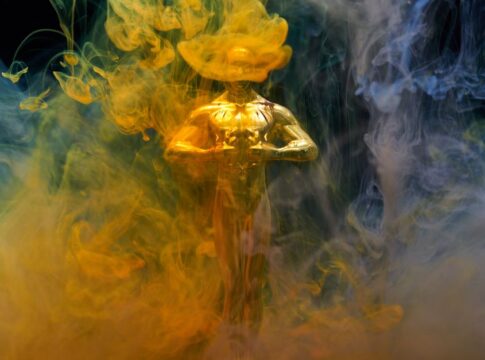
The figure itself depicts a stylized Art Deco knight holding a crusader’s sword, planted tip-down in front of him. His stance suggests both strength and guardianship. Sculptor George Stanley created the design based on sketches by MGM art director Cedric Gibbons, who served as the Academy’s founding member. The clean lines and geometric simplicity reflect the Art Deco movement that dominated design aesthetics in the late 1920s, giving the Oscar its timeless, elegant appearance that still feels modern nearly a century later.
Wartime Oscars Were Made of Plaster
Between 1942 and 1945, winners received statuettes made of painted plaster instead of metal. World War II created severe shortages of metals needed for the war effort, and the Academy patriotically adapted. These wartime substitutes looked nearly identical to the real thing but weighed significantly less and were far more fragile.
After the war ended, the Academy invited recipients to exchange their plaster versions for proper bronze-and-gold statuettes. Most winners took advantage of this offer, making authentic plaster Oscars from this period extremely rare. When they do appear at auction, these wartime statuettes command significant collector interest precisely because so few survived. The episode demonstrates how even Hollywood’s most glamorous traditions bent to the realities of global conflict.
The Manufacturing Process Involves Old-World Craftsmanship
Creating each Oscar requires genuine artisan skill, not mass production. The process begins with a wax mold, which is then used to create a ceramic shell. Molten bronze—an alloy of copper and tin—is poured into this shell. Once cooled and removed, each casting must be hand-finished to smooth imperfections and achieve the statuette’s mirror-like surface.
The bronze figure then receives electroplating in 24-karat gold, giving it that distinctive gleaming finish. Finally, each Oscar is hand-polished and mounted on its black metal base. The entire process takes roughly 20 hours of skilled labor per statuette. For decades, the same Chicago-based manufacturer produced every Oscar, maintaining consistency and quality control. This combination of traditional lost-wax casting and modern electroplating creates a trophy that balances old-world craftsmanship with contemporary durability.
Nobody Knows Where the Name “Oscar” Actually Came From
The Academy itself admits the nickname’s origin remains a mystery. Several competing stories circulate, each with passionate advocates but none with definitive proof. One popular tale claims Academy librarian Margaret Herrick remarked that the statuette resembled her Uncle Oscar, and the name stuck. Another attributes it to actress Bette Davis, who supposedly named it after her first husband, Harmon Oscar Nelson.
Columnist Sidney Skolsky also claimed credit for popularizing the nickname in his writing during the 1930s. The truth? We may never know. The Academy didn’t officially adopt “Oscar” as the statuette’s formal nickname until 1939, by which point multiple origin stories were already competing for authenticity. This ambiguity adds to the trophy’s mystique—even Hollywood’s most famous prize keeps some secrets.
Winners Don’t Truly Own Their Statuettes
Since 1950, the Academy has required winners to sign an agreement before receiving their trophy. This contract stipulates that neither winners nor their heirs may sell the statuette without first offering it back to the Academy for one dollar. This policy aims to prevent Oscars from becoming mere commodities traded at auction houses.
The rule doesn’t apply retroactively to statuettes awarded before 1950, which occasionally appear at high-profile auctions and fetch millions of dollars. Steven Spielberg, for example, has purchased several pre-1950 Oscars at auction specifically to donate them back to the Academy, believing they belong with the organization rather than private collectors. This policy reflects the Academy’s view that an Oscar represents achievement and honor rather than personal property, though enforcement has proven challenging when estates and collectors clash over older statuettes.
The Statuette’s Specifications Are Remarkably Precise
Every Oscar measures exactly 13.5 inches tall and weighs 8.5 pounds. This consistency matters—winners expect a specific heft and size when they lift their trophy on stage. The base alone stands 5.5 inches tall, while the knight figure comprises the remaining 8 inches. The film reel base measures 5.5 inches in diameter.
| Component | Measurement | Material |
|---|---|---|
| Total Height | 13.5 inches | Bronze core with 24k gold plating |
| Weight | 8.5 pounds | Solid bronze (copper-tin alloy) |
| Base Diameter | 5.5 inches | Black metal |
| Gold Plating | 0.0001 inches thick | 24-karat gold electroplate |
These exact specifications ensure that whether you win in 1950 or 2020, you’re holding essentially the same trophy. The gold plating itself measures just 0.0001 inches thick—incredibly thin, yet durable enough to maintain its luster for decades with proper care. This precision manufacturing guarantees that the Oscar remains instantly recognizable across generations.
The Black Base Holds a Personalized Secret
Each winner’s name, category, and year are engraved on the black metal base beneath the golden figure. But here’s the interesting part: these engravings happen after the ceremony. The Academy prepares nameplates for all nominees in advance, but only the winners’ statuettes receive their permanent engravings post-show.
This practical detail explains why acceptance speeches sometimes feature unmarked bases—the personalization occurs later. The engraving adds a final touch of individuality to what is otherwise an identical object, transforming a generic trophy into a specific commemoration of achievement. For actors, directors, and craftspeople, seeing their name permanently etched on that base represents the culmination of years, sometimes decades, of work in their field.
Frequently Asked Questions
How much gold is actually on an Oscar statuette?
The Oscar is electroplated with 24-karat gold, but the layer is extremely thin—only about 0.0001 inches. The statuette’s core is solid bronze, making the actual gold content relatively minimal despite the impressive golden appearance.
Can Oscar winners legally sell their statuettes?
Winners who received their statuettes after 1950 must first offer them back to the Academy for one dollar before selling. Statuettes awarded before 1950 are not subject to this rule and occasionally appear at auctions, sometimes selling for millions of dollars.
Has the Oscar design ever changed?
The basic design has remained remarkably consistent since 1929. The most significant change occurred during World War II when plaster replaced metal due to wartime shortages, but the visual appearance stayed the same and proper metal statuettes were offered as replacements after the war.
Why does the film reel have exactly five spokes?
Each spoke represents one of the five original branches of the Academy of Motion Picture Arts and Sciences: actors, directors, producers, technicians, and writers. This symbolic detail reinforces the collaborative nature of filmmaking.
The next time you watch the Academy Awards and see a tearful winner clutching that golden knight, you’ll understand the surprising craftsmanship, wartime adaptations, and contractual fine print behind those 8.5 pounds of bronze and gold. Sometimes the most iconic objects carry the most unexpected stories.