
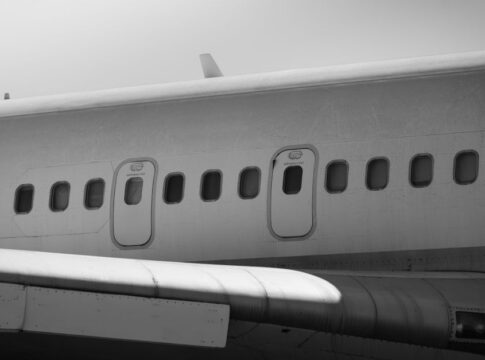
The Truth About Why Airplane Windows Are Always Round
By Trivia Daily, Staff Writer — Published November 3, 2026
Table of Contents
- Key Takeaways
- The Truth About Airplane Windows and Early Aviation Disasters
- How Pressure and Physics Make Window Shape Critical
- Interesting Facts About Modern Airplane Window Design
- Common Myths About Airplane Windows
- Comparing Window Designs Across Aircraft Types
- Frequently Asked Questions
Next time you settle into your seat and gaze out at the clouds, take a closer look at that window. Notice something? It’s round—or more precisely, rounded at the corners. This isn’t an aesthetic choice or a quirky design preference. The truth about airplane windows is rooted in a hard-learned lesson from aviation history, one that cost lives before engineers discovered the surprising physics at play. What seems like a simple design detail is actually one of the most critical safety features keeping passengers safe at 35,000 feet.
The shift from square to rounded windows didn’t happen gradually through trial and error in wind tunnels. It came suddenly, tragically, and changed aircraft design forever. This fascinating piece of aviation trivia reveals how something as seemingly minor as window shape can mean the difference between a safe flight and catastrophic failure.
Key Takeaways
- Modern airplane windows have rounded corners to prevent stress concentration and structural failure at high altitudes.
- Square windows on early jet aircraft caused several fatal crashes in the 1950s before engineers understood the problem.
- Pressure differences between cabin and outside air create enormous forces on the fuselage, with corners acting as weak points.
- The de Havilland Comet disasters directly led to the universal adoption of rounded window designs across all commercial aircraft.
- Window corners act like tiny cracks that can propagate through metal, similar to how you tear paper by starting with a small notch.
- Aviation regulations now mandate rounded windows, making this one of the most important safety standards in flight.
The Truth About Airplane Windows and Early Aviation Disasters
In the early 1950s, the de Havilland Comet became the world’s first commercial jet airliner—a marvel of engineering that promised to revolutionize air travel. Sleek and fast, it featured large square windows that gave passengers spectacular views. But within two years of service, several Comets disintegrated mid-flight without warning, killing everyone aboard.
Investigators were baffled. The crashes seemed to occur without any obvious cause—no engine failure, no pilot error, no severe weather. The mystery deepened with each incident until engineers at the Royal Aircraft Establishment began a painstaking investigation. They placed a complete Comet fuselage in a massive water tank and repeatedly pressurized and depressurized it, simulating the stress of thousands of flights. What they discovered changed aviation forever.
The square windows were the culprit. At the corners, stress concentrated to dangerous levels every time the cabin pressurized. Think of trying to tear a piece of paper—it’s nearly impossible to rip it cleanly without starting from an edge or making a small cut first. Those corners acted exactly like that initial cut, creating weak points where microscopic cracks could form and rapidly spread through the metal fuselage. At cruising altitude, where cabin pressure is significantly higher than outside air pressure, those cracks became catastrophic.
How Pressure and Physics Make Window Shape Critical
Commercial aircraft fly at altitudes where the outside air is too thin to breathe—typically around 35,000 to 40,000 feet. To keep passengers comfortable, the cabin is pressurized to simulate conditions at about 6,000 to 8,000 feet elevation. This creates a substantial pressure difference between inside and outside the aircraft.
The fuselage essentially becomes a pressurized tube, and every opening—including windows—becomes a potential weak point. Engineers must carefully design these openings to distribute stress evenly across the structure. Sharp corners create what’s called “stress concentration,” where forces multiply many times over compared to the surrounding material. A rounded corner, by contrast, allows stress to flow smoothly around the opening.
The physics is straightforward but unforgiving. Metal fatigue develops over thousands of pressurization cycles, and any point of stress concentration accelerates this process dramatically. The rounded window design doesn’t eliminate stress—it simply spreads it more evenly, preventing the kind of crack propagation that doomed the early Comets.
Interesting Facts About Modern Airplane Window Design
Today’s airplane windows incorporate multiple layers of acrylic or polycarbonate, typically three panes thick. The outer pane bears the pressure load and maintains the structural integrity of the fuselage. The middle pane serves as a fail-safe backup. The inner pane—the one you actually touch—is mainly there to protect the others and includes a tiny “breather hole” that helps regulate pressure between the layers.
Those small holes you might notice in airplane windows serve an amazing purpose. They prevent moisture from condensing between the panes and ensure that if pressure builds up between layers, it can equalize safely. They also mean that the structural panes don’t have to work as hard, since pressure can equalize gradually.
Window size itself is also carefully calculated. Larger windows mean more stress on the fuselage structure, requiring heavier reinforcement. The Boeing 787 Dreamliner features notably larger windows than most aircraft—about 30 percent bigger—but this was only possible through advances in composite materials and structural design that could handle the additional stress safely.
Common Myths About Airplane Windows
One persistent myth suggests that airplane windows are round to prevent shattering. While the rounded shape does help distribute stress that could lead to cracks, modern window materials are designed not to shatter catastrophically regardless of shape. The real concern is structural failure of the fuselage itself, not the window material breaking.
Another misconception is that windows are small to save weight. While weight is always a consideration in aircraft design, windows are sized primarily for structural integrity. Every window requires significant reinforcement around its frame, and the rounded shape allows for optimal strength with minimal additional weight.
Some travelers worry that airplane windows are fragile, but they’re remarkably strong. The outer pane is typically about half an inch thick and can withstand the pressure differential and temperature extremes of high-altitude flight through thousands of cycles. They’re tested extensively to ensure they can handle far more stress than they’ll ever encounter in normal operation.
Comparing Window Designs Across Aircraft Types
| Aircraft Type | Typical Window Shape | Primary Design Consideration |
|---|---|---|
| Commercial Jets | Rounded rectangles | Pressurization stress distribution |
| Small Private Aircraft | Varies, often more angular | Lower altitude, less pressure differential |
| Military Fighters | Complex curves | Aerodynamics and visibility |
| Cargo Aircraft | Minimal or none | Maximizing cargo space |
Frequently Asked Questions
Why don’t airplane windows have corners at all?
They do have corners, but they’re carefully rounded rather than sharp 90-degree angles. Complete circles would be structurally ideal but impractical for manufacturing, installation, and passenger viewing angles. The rounded rectangle represents the optimal balance between structural integrity, functionality, and manufacturing efficiency.
Can airplane windows pop out during flight?
No. Windows are installed from the inside and held in place by cabin pressure pushing outward against the frame—the same pressure that could cause problems at corners actually helps secure the window itself. They’re also mechanically fastened and sealed, making accidental detachment virtually impossible.
Why do airplane windows dim electronically on some newer planes?
Electronic dimming windows use electrochromic technology that changes tint with an electrical current, replacing traditional pull-down shades. This has nothing to do with the rounded shape—it’s a separate innovation for passenger comfort and cabin crew control of light levels during flight.
Are airplane windows getting bigger?
Some newer aircraft models feature larger windows thanks to advances in composite materials and structural engineering. The Boeing 787 Dreamliner’s windows are notably larger than previous generations, but they maintain the essential rounded corners that make high-altitude pressurization safe.
The next time you peer through that rounded window at the world below, you’re looking through a design born from tragedy and perfected through decades of engineering refinement. Those curves aren’t just elegant—they’re the silent guardians of every pressurized flight, a testament to how even the smallest details can carry the weight of countless lives.