
Why Mickey Mouse Wears Gloves: The Animation Secret
By Trivia Daily, Staff Writer — Published July 27, 2026
Table of Contents
- Key Takeaways
- Why Mickey Mouse Wears Gloves: The Visibility Problem
- The Four-Finger Economics of Animation
- The Psychology Behind Cartoon Hands
- How Gloves Became an Animation Industry Standard
- The Cultural Legacy of Cartoon Gloves
- Frequently Asked Questions
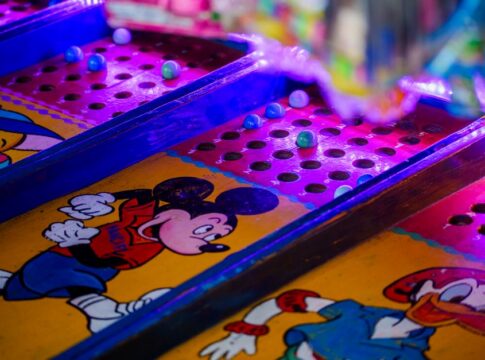
Every time Mickey Mouse waves hello or conducts an orchestra, his bright white gloves catch your eye. But have you ever wondered why Mickey Mouse wears those iconic four-fingered gloves? The answer reveals a fascinating piece of animation history that combines practical artistry, cost-saving ingenuity, and a touch of theatrical tradition. This seemingly simple wardrobe choice helped shape the entire cartoon industry and became one of the most recognizable design elements in entertainment history.
The gloves weren’t just a fashion statement. They were a clever solution to one of early animation’s toughest challenges: making characters’ hands visible and expressive against their bodies while keeping production costs manageable.
Key Takeaways
- White gloves created contrast that made Mickey Mouse’s hands instantly visible against his black body, solving a major visual problem in early black-and-white animation.
- Four-fingered gloves instead of five saved animators countless hours and thousands of dollars in production costs, as each finger required separate drawing and movement tracking.
- The glove design drew inspiration from vaudeville and minstrel show performers who wore white gloves to make their hand gestures visible from theater balconies.
- Walt Disney Studios formalized the glove design in 1929, and it quickly became an industry standard adopted by nearly every major animation studio.
- The missing fifth finger creates a more appealing, less human appearance that animation experts call the “uncanny valley avoidance” principle.
Why Mickey Mouse Wears Gloves: The Visibility Problem
Early animators faced a deceptively simple challenge. When Mickey Mouse first appeared in black-and-white cartoons in 1928, his entire body was black except for his face. Without gloves, his hands completely disappeared against his body whenever he crossed his arms or gestured near his torso. Audiences couldn’t follow the action.
The solution came from an unexpected source: live theater. Vaudeville performers and minstrel show entertainers wore white gloves so audiences in the back rows could see their hand movements and gestures. Animation pioneers borrowed this theatrical trick and applied it to their cartoon characters. The contrast worked brilliantly.
By 1929, Mickey’s gloves had become a permanent fixture. The white gloves popped against any background, whether light or dark, making every hand gesture crystal clear. This simple design choice meant audiences could instantly understand what Mickey was doing, even in the chaotic action sequences that defined early cartoons.
The Four-Finger Economics of Animation
Look closely at Mickey’s gloves and you’ll notice something curious: he only has four fingers. This wasn’t an oversight. It was a calculated business decision that saved animation studios enormous amounts of time and money.
Early animation required artists to draw each frame by hand. A typical seven-minute cartoon needed approximately 10,000 individual drawings. Every additional line, curve, or detail multiplied the workload. Removing one finger from each hand eliminated thousands of drawings per cartoon.
The math was compelling. Consider a simple wave: if Mickey’s hand appeared in 100 frames of that gesture, removing the fifth finger meant 200 fewer fingers to draw, ink, and paint (one per hand). Across an entire cartoon with multiple characters, the savings added up to weeks of labor and substantial cost reductions.
Walt Disney himself recognized the practical wisdom. Four fingers looked perfectly natural on cartoon characters, and audiences never complained about the missing digit. The simplified design became an animation industry standard that persists today, even in modern computer-generated films where the technical limitations no longer exist.
The Psychology Behind Cartoon Hands
The four-fingered design accomplishes something beyond mere cost savings: it makes characters more appealing. Animation experts have long understood that cartoon characters shouldn’t look exactly like humans. Too much realism creates an unsettling effect where characters appear almost human but not quite right—a phenomenon researchers call the “uncanny valley.”
Four fingers maintain the necessary distance from human anatomy. The simplified hands read as clearly cartoon, allowing audiences to accept the character’s exaggerated expressions and impossible physics. Five fingers would inch Mickey closer to human proportions, potentially making his anthropomorphic mouse features seem strange rather than charming.
The rounded, simplified hand shapes also animate more smoothly. With fewer fingers to track, animators could focus on broader, more expressive gestures. Mickey could point, grab, wave, and gesticulate with clarity and personality. The limitations actually enhanced the artistry.
How Gloves Became an Animation Industry Standard
| Character | Studio | Glove Color | Year Introduced |
|---|---|---|---|
| Mickey Mouse | Disney | White | 1929 |
| Bugs Bunny | Warner Bros. | White | 1940 |
| Woody Woodpecker | Universal | White | 1940 |
| Mario | Nintendo | White | 1981 |
Once Disney established the gloved look, competing studios quickly adopted the same approach. The practical advantages were too significant to ignore. Warner Bros., MGM, Universal, and other animation houses outfitted their cartoon stars with similar white gloves.
The design choice transcended animation mediums. When video game characters emerged in the 1980s, developers faced similar visibility challenges on low-resolution screens. Nintendo’s Mario received white gloves for the same reason Mickey did fifty years earlier: contrast and clarity. The gloves made his hand movements readable even on primitive television displays.
The Cultural Legacy of Cartoon Gloves
Today, white cartoon gloves carry immediate cultural recognition. They signal classic animation heritage and evoke nostalgia for entertainment’s golden age. Modern animators working with high-definition computer graphics could easily render realistic five-fingered hands, yet many choose to maintain the four-fingered glove tradition as an homage to animation history.
The gloves have become so iconic that they appear in fine art, fashion, and popular culture references far beyond their original cartoon context. Museums including the Smithsonian have featured exhibitions exploring the design evolution of Mickey Mouse, with the gloves prominently highlighted as a defining characteristic.
Some contemporary animated series deliberately avoid gloves, creating characters with bare hands to signal a different aesthetic approach. This conscious choice demonstrates how deeply the gloved look remains associated with traditional cartoon style. The presence or absence of gloves now communicates specific artistic intentions.
Frequently Asked Questions
Why does Mickey Mouse have four fingers instead of five?
Four fingers reduced animation costs significantly by eliminating thousands of drawings per cartoon. The simplified design also made characters appear more distinctly cartoonish and less eerily human-like, improving their visual appeal.
When did Mickey Mouse first start wearing gloves?
Mickey Mouse began wearing gloves in 1929, roughly one year after his debut. The gloves became a permanent part of his design in the cartoon “The Opry House” where he played piano and needed visible, expressive hands.
Do all cartoon characters wear white gloves?
Not all cartoon characters wear gloves, but the design became standard for anthropomorphic animal characters in classic animation. Human characters and more modern cartoon styles often feature bare hands or different design approaches.
Are Mickey Mouse’s gloves always white?
Mickey’s gloves remain consistently white across nearly all official Disney productions. The white color provides maximum contrast against his black body and most backgrounds, maintaining the original visibility purpose.
The next time you see Mickey Mouse wave those white gloves, you’re witnessing a design decision that revolutionized an entire industry. What began as a practical solution to a technical problem became one of the most enduring symbols in entertainment history—a reminder that sometimes the simplest innovations leave the most lasting impressions.