
What bodily function do astronauts lose in space after a few weeks?
Question 1: What bodily function do astronauts lose in space after a few weeks?

Explanation: Astronauts cannot burp normally in space due to the lack of gravity. On Earth, burping works because gravity separates gas from liquid in your stomach – the gas rises to the top and you can release it without bringing up food. In zero gravity, gas and liquid mix together in a floating blob inside your stomach. When you try to burp, you can’t release just the gas – the liquid comes up too, resulting in what astronauts call a ‘wet burp’ or ‘vurp’ (vomit-burp). This is extremely unpleasant inside a space suit or station. As a result, astronauts learn to avoid carbonated beverages in space, since the gas has nowhere to go and causes painful bloating. NASA experimented with carbonated drinks aboard the Space Shuttle in 1985 with Coca-Cola and Pepsi, but the results were mixed – literally. The companies designed special cans, but the drinks were deemed unsuitable for regular space consumption. Interestingly, the lack of gravity also affects other digestion: food doesn’t ‘drop’ into your stomach, it’s pushed down by muscle contractions, which still works fine. But the gas problem remains unsolved – it’s one of those unglamorous realities of space travel nobody tells you about.
Question 2: What happens to sound when you yell underwater?

Explanation: Sound travels about 4.3 times faster underwater than in air – roughly 3,300 miles per hour compared to 767 mph in air at sea level. This happens because water molecules are packed much closer together than air molecules, allowing sound vibrations to transfer more efficiently from one molecule to the next. The denser the medium, the faster sound moves through it. This creates some wild effects for divers. When someone yells underwater, you hear it almost instantly even from far away, but it sounds muffled and high-pitched because water absorbs high-frequency sounds while letting low frequencies through. More bizarrely, you can’t tell which direction underwater sounds come from – your brain uses tiny timing differences between your ears to locate sound sources, but underwater sound arrives at both ears essentially simultaneously, destroying your directional hearing. This is why whales and dolphins evolved echolocation – they use the speed of sound underwater to their advantage, sending out clicks and listening for echoes to ‘see’ their environment. Navy submarines exploit these same physics, using sonar that can detect objects hundreds of miles away by listening to how sound bounces off them in the ocean.
Question 3: How many grooves does a standard vinyl LP record have on each side?

Explanation: A vinyl record has exactly one continuous spiral groove per side, not thousands of separate grooves as it appears. This single groove starts at the outer edge and spirals inward toward the center, containing all the music in its microscopic wiggles. The illusion of multiple grooves comes from the closely-spaced spiral turns—a typical 12-inch LP has about 500-600 turns of the spiral, but they’re all connected as one unbroken line. If you could somehow straighten out that spiral groove, it would stretch about half a mile long. The groove’s wiggles encode sound through variations in two dimensions: side-to-side movement represents one stereo channel, while up-and-down movement represents the other. A diamond stylus rides these microscopic variations (measured in micrometers), and its vibrations are converted into electrical signals and amplified. The innermost part of the record has lower sound quality because the groove is moving slower under the needle while containing the same amount of information, which is why artists traditionally put their weaker songs at the end of each side.
Question 4: What defensive feature did medieval castles include that made attacking upward with a sword nearly impossible for right-handed soldiers?
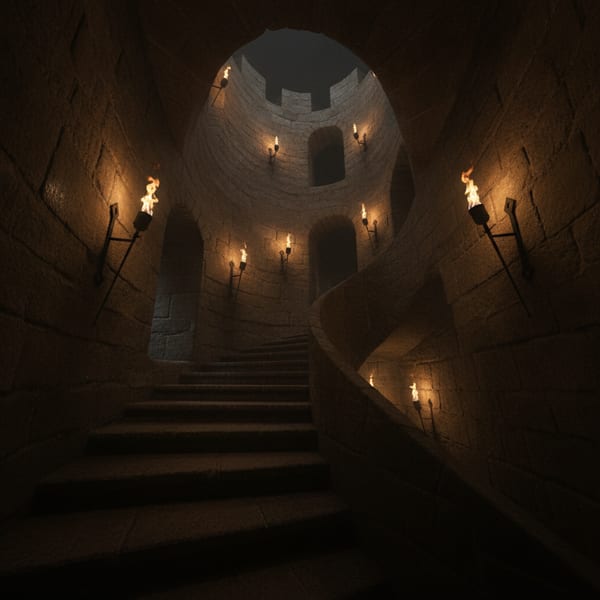
Explanation: Medieval castle staircases were deliberately built to spiral clockwise when ascending, giving a huge advantage to defenders fighting downward. Since roughly 90% of people are right-handed, an attacker climbing upward would have the central stone column blocking their sword arm, while the defender above had full freedom to swing. This asymmetry could mean life or death in close combat on narrow spiral stairs. The design was so effective that left-handed defenders were considered especially valuable—and a few castles (like Ferniehirst Castle in Scotland) were built with counter-clockwise spirals to maximize their left-handed lord’s advantage. The staircases served multiple defensive purposes: they funneled invaders into single-file, prevented battering rams from reaching upper floors, and could be blocked with a single defender holding the high ground. Many also featured irregular step heights intentionally—defenders who used them daily knew the rhythm, while attackers would stumble in the dark. Some staircases even included ‘trip steps’ that were deliberately taller to catch unfamiliar feet, buying precious seconds in combat.
Question 5: What law did the city of Chico, California pass in 1986 making it illegal to detonate within city limits?
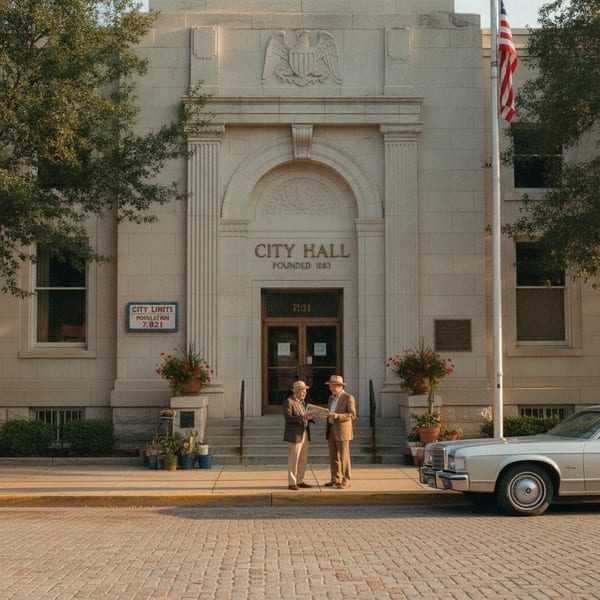
Explanation: In 1986, the city council of Chico, California passed Municipal Code 9.60.030 making it illegal to manufacture, store, assemble, develop, or detonate nuclear weapons within city limits, with fines up to $500. The law was part of the Nuclear Free Zone movement during the Cold War, when dozens of US cities declared themselves nuclear-free in symbolic protest against the arms race. Berkeley, Oakland, and Cambridge passed similar ordinances. Chico’s version is particularly memorable because it specified actual penalties for nuclear detonation – as if someone would worry about a $500 fine after vaporizing the city. The law technically remains on the books today, though it’s never been enforced (thankfully). The movement was largely symbolic but reflected genuine public anxiety during the Reagan era, when nuclear war felt like a real possibility. Critics mocked these laws as pointless – the federal government has sole authority over nuclear weapons – but supporters argued they made important political statements. Today these ordinances are mostly forgotten curiosities, though some cities’ nuclear-free zone signs still stand. Chico’s law is occasionally cited as an example of quirky legislation, alongside bans on sleeping donkeys in bathtubs and other strange municipal codes.
Question 6: Which US coin was briefly worth more melted down than its face value in 2011?
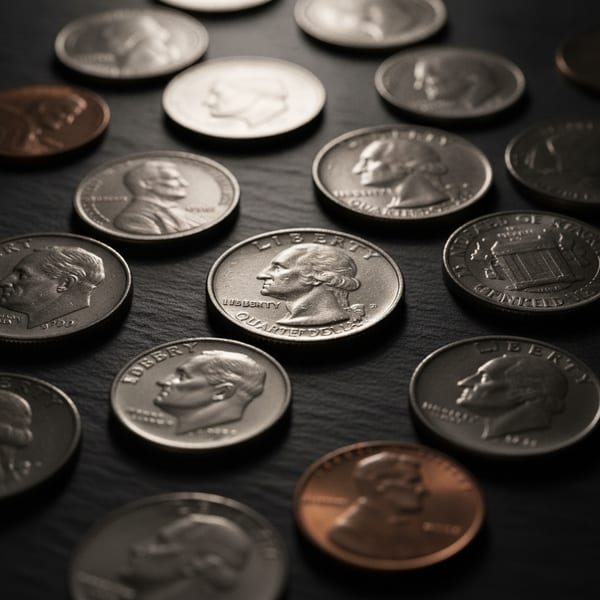
Explanation: In 2011, the US nickel became worth more as scrap metal than as currency when nickel and copper prices spiked. Each nickel contains 75% copper and 25% nickel – about 5 grams total – and at peak metal prices, that composition was worth about 6.8 cents, more than the coin’s 5-cent face value. This created a bizarre situation where melting down nickels for profit would be lucrative, except for one problem: it’s a federal crime. Title 18 USC Section 331 makes it illegal to melt or export US coins for profit, with penalties up to $10,000 and five years in prison. The US Mint was seriously concerned about nickel hoarding and illegal melting operations. Pennies face the same issue – a penny costs about 2.1 cents to produce, mostly due to the zinc and copper content. The crisis has led to proposals for changing coin compositions to cheaper metals, but tradition and vending machine lobbies have blocked changes. Meanwhile, Canadians eliminated their penny entirely in 2012 for being too expensive to produce.
Question 7: Which US state is home to more than half of all active geysers in the world?
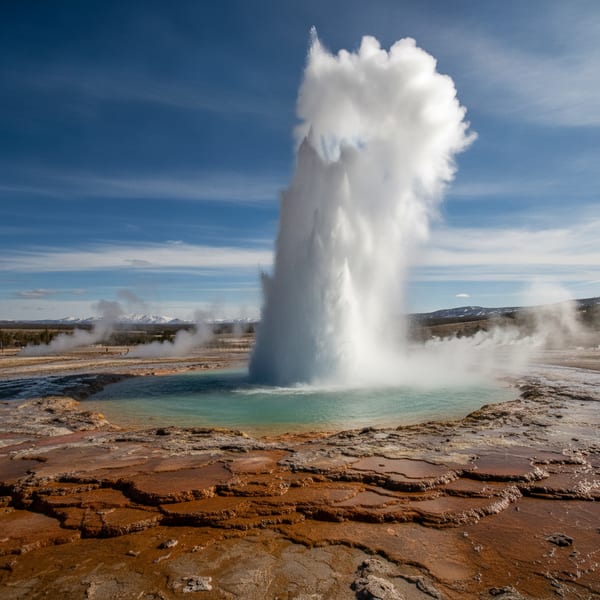
Explanation: Wyoming’s Yellowstone National Park contains approximately 500 of the world’s roughly 1,000 active geysers, making it the undisputed geyser capital of Earth. The park sits atop a massive volcanic hotspot – a supervolcano with a magma chamber so large it could fill the Grand Canyon 11 times over. This underground furnace heats water trapped in porous rock, creating the perfect conditions for geysers. Old Faithful is the most famous, erupting roughly every 90 minutes and shooting 14,000-32,000 gallons of boiling water up to 185 feet high. But Yellowstone’s Steamboat Geyser holds the height record, occasionally blasting water over 300 feet – taller than the Statue of Liberty. The geothermal activity creates a surreal landscape of rainbow-colored hot springs (the colors come from heat-loving bacteria) and bubbling mud pots. Iceland has the second-most geysers with about 30, which is where we get the word ‘geyser’ from Icelandic ‘geysir’ meaning ‘to gush.’ Scientists closely monitor Yellowstone’s geothermal activity because it also signals the volcano’s status – though a super-eruption isn’t expected for another 100,000+ years.
Question 8: What percentage of your body heat do you actually lose through your head?
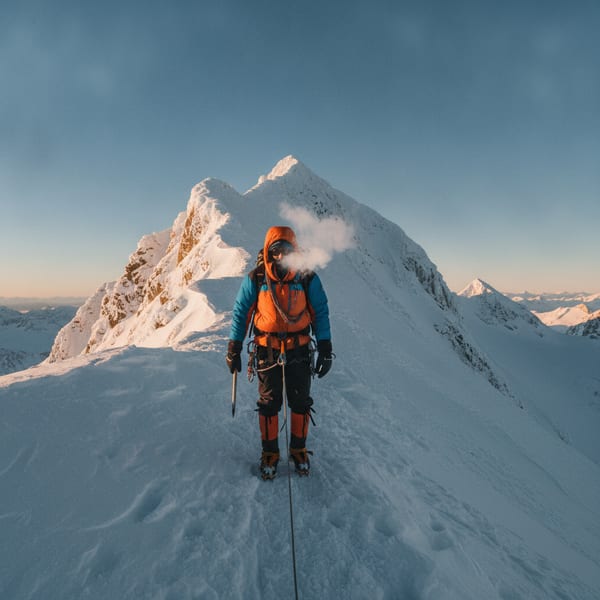
Explanation: You lose only about 7-10% of body heat through your head – not the 40-50% claimed by the persistent myth. This misconception originated from a flawed 1950s US Army field manual that misinterpreted a study where subjects wore Arctic survival suits but no hats. Of course they lost most heat through their heads – it was the only exposed part! The truth is you lose heat proportionally to exposed surface area. Your head represents about 10% of your body’s surface area, so it accounts for roughly 10% of heat loss. If you’re fully clothed except for a bare head, yes, you’ll lose significant heat there – but only because everything else is insulated. The myth persists because parents use it to make kids wear hats, and it sounds sciencey enough to believe. In reality, you’d lose just as much heat through bare hands, or bare feet, or any other 10% of exposed skin. That said, wearing a hat in cold weather IS smart – not because your head is special, but because head skin is thin, highly vascularized, and usually exposed. You’re not losing disproportionate heat, you just notice it more because your head has lots of nerve endings and stays sensitive to cold.
Question 9: What popular sport was originally played with a peach basket and a soccer ball?

Explanation: Basketball was invented in December 1891 by Canadian physical education instructor James Naismith at a YMCA in Springfield, Massachusetts. He was tasked with creating an indoor game to keep students active during harsh New England winters. Naismith nailed two peach baskets to the gymnasium balcony railing 10 feet high (the same height used today) and used a soccer ball. The first game had 18 players and ended 1-0 – the only goal scored after 30 minutes. The problem? Every time someone scored, someone had to climb a ladder to retrieve the ball from the peach basket. This went on for years until someone finally thought to cut holes in the bottom of the baskets in 1906. Even then, the ball had to be poked out with a long stick after each basket. It wasn’t until 1912-1913 that open-bottom nets were introduced, allowing the ball to fall through. Naismith’s original 13 rules are surprisingly similar to today’s game, though dribbling wasn’t initially part of the sport – players could only pass. The first official game was played with nine players per side because that’s how many students showed up to Naismith’s gym class that day.
Question 10: Which US state produces more than half of all US maple syrup?
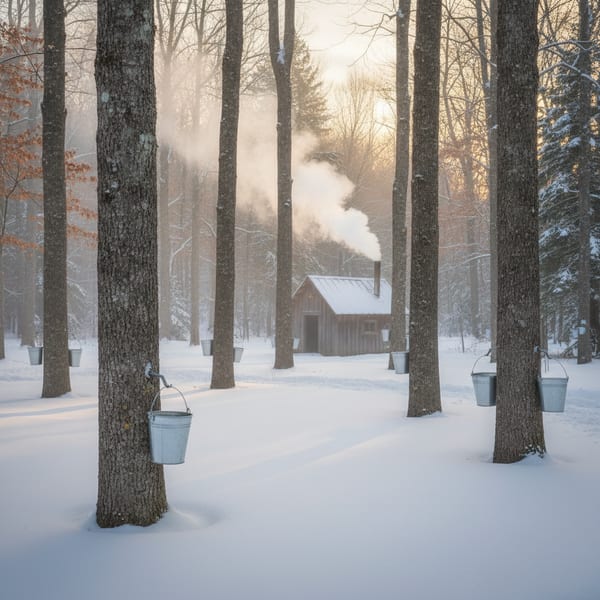
Explanation: Vermont produces approximately 50-54% of all maple syrup in the United States (the percentage varies by year), tapping into a tradition that dates back thousands of years to Indigenous peoples of the Northeast. The state’s 1,500+ sugarhouses produce around 2.2-2.5 million gallons annually depending on weather conditions, making maple syrup Vermont’s signature agricultural product and a $200+ million industry. What makes Vermont ideal? The state has over 5 million sugar maple trees and the perfect climate: cold nights (below freezing) and warm days (above 40°F) in late winter create the pressure differential that makes sap flow. Each tap produces about 10 gallons of sap per season, which boils down to just one quart of finished syrup—a 40:1 ratio that explains the premium price. Interestingly, Quebec produces about 70% of the world’s maple syrup, dwarfing even Vermont’s output. Canada maintains a strategic maple syrup reserve in Quebec (yes, really) storing millions of pounds, and in 2012, thieves pulled off the ‘Great Canadian Maple Syrup Heist,’ stealing $18 million worth from the reserve.
Recent Quizzes
The World's Most Famous Bridges
Prehistoric Creatures of the Ice Age