
9 Strange Facts About Octopus Intelligence and Biology
By Trivia Daily, Science Desk — Published November 14, 2026
Table of Contents
- Key Takeaways
- The Distributed Intelligence Network
- Physical Marvels and Biological Oddities
- Cognitive Abilities That Baffle Scientists
- Frequently Asked Questions
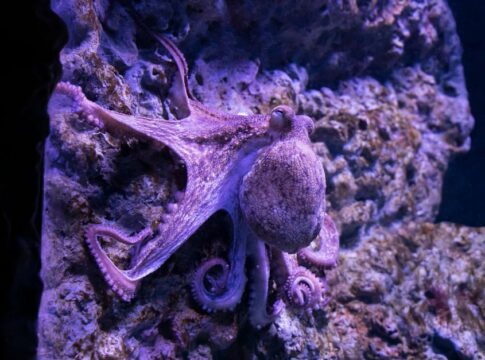
Octopuses are among the most peculiar creatures on Earth, exhibiting behaviors and biology that challenge our understanding of intelligence itself. These soft-bodied cephalopods possess capabilities that seem almost alien, from changing color in milliseconds to solving complex puzzles with ease. Research into strange octopus intelligence continues to reveal astonishing discoveries about how these remarkable animals perceive and interact with their underwater world.
Scientists studying octopus biology have documented abilities that seem to defy the conventional rules of neuroscience and evolution. Unlike mammals, whose intelligence is centralized in a large brain, octopuses distribute their cognitive power throughout their bodies in ways that remain deeply mysterious.
Key Takeaways
- Octopuses have nine brains and three hearts, distributing intelligence throughout their bodies rather than centralizing it in one location.
- Each octopus arm can taste, touch, and make independent decisions without consulting the central brain.
- These cephalopods can edit their own RNA on the fly, a genetic ability almost unheard of in the animal kingdom.
- Octopuses have no bones whatsoever, allowing them to squeeze through openings as small as their beak.
- Scientific experiments have shown octopuses can recognize individual human faces and remember them for months.
- Their blood is blue due to copper-based hemocyanin rather than iron-based hemoglobin.
The Distributed Intelligence Network
1. Nine Brains Control a Single Body
An octopus doesn’t rely on a single brain to coordinate its movements. Instead, it possesses one central brain located in its head and eight additional mini-brains, one at the base of each arm. This distributed nervous system contains roughly 500 million neurons total, with about 60 percent of them located in the arms rather than the central brain. Each arm operates with significant autonomy, capable of exploring crevices, manipulating objects, and even hunting prey while the central brain focuses on other tasks. This biological architecture represents a fundamentally different approach to intelligence than what vertebrates use.
2. Arms That Taste What They Touch
The suckers covering an octopus’s arms serve dual purposes that blur the line between senses. Each sucker contains thousands of chemoreceptors that allow the octopus to taste everything it touches. This means an octopus arm searching through a rocky crevice is simultaneously feeling for texture, tasting for chemical signatures of prey, and making decisions about whether to investigate further. Research has shown that octopus arms will reflexively recoil from things that taste unpleasant, even when severed from the body. The chemistry of taste and touch merge into a single sensory experience completely foreign to human perception.
3. RNA Editing Superpowers
While most animals are stuck with the genetic instructions encoded in their DNA, octopuses have evolved an extraordinary workaround. They can edit their RNA, the messenger molecules that translate DNA instructions into proteins, allowing them to fine-tune their biology in response to environmental conditions. This discovery revolutionized scientific understanding of how cephalopods adapt to their surroundings. Scientists have found that octopuses use this RNA editing extensively in their nervous systems, potentially allowing them to adjust neural function based on temperature changes in their ocean environment. The trade-off appears to be slower DNA evolution, suggesting octopuses sacrifice long-term genetic adaptation for short-term biological flexibility.
Physical Marvels and Biological Oddities
4. The Only Hard Part Is the Beak
An octopus has no skeleton, no bones, and no protective shell. The only rigid structure in its entire body is its beak, a sharp, parrot-like structure made of chitin that it uses to break into shellfish and other prey. This means an octopus can compress and contort its body to fit through any opening larger than its beak. Researchers have documented octopuses squeezing through gaps smaller than a quarter, escaping from supposedly secure aquarium tanks by finding tiny drainage holes. The physics of how they accomplish this involves both muscular control and the unique properties of their boneless anatomy.
5. Blue Blood for Cold Waters
Unlike vertebrates whose blood turns red from iron-based hemoglobin, octopuses have blue blood powered by copper-based hemocyanin. This isn’t just a cosmetic difference. Hemocyanin is more efficient than hemoglobin at transporting oxygen in cold, low-oxygen environments, making it ideal for deep ocean habitats. The chemistry of copper binding to oxygen produces the characteristic blue color. However, this system also makes octopuses particularly sensitive to changes in ocean acidity and temperature, as the efficiency of hemocyanin decreases in warmer waters. This biological adaptation perfectly suits their cold-water lifestyle but limits their range.
6. Color-Changing Without Seeing Color
Octopuses are masters of camouflage, capable of matching complex backgrounds in less than a second. They accomplish this using specialized skin cells called chromatophores, iridophores, and leucophores that can change color and texture. Here’s the strange part: scientific research suggests octopuses are likely colorblind, possessing only one type of light-sensitive protein in their eyes. How does a colorblind animal perfectly match multicolored environments? Scientists theorize their skin itself may be able to sense light, allowing distributed color detection across their entire body surface. The experiment of evolution has produced a solution that seems almost paradoxical.
Cognitive Abilities That Baffle Scientists
7. Tool Use and Problem-Solving
Octopuses have been observed using tools in ways that demonstrate planning and foresight. They collect coconut shells and carry them across the ocean floor, later assembling them into protective shelters. They’ve learned to unscrew jar lids from the inside to escape enclosures. In laboratory experiments, octopuses quickly learn to navigate mazes, open childproof containers, and even predict patterns. What makes this remarkable is that octopuses are largely solitary creatures with short lifespans, typically living only one to two years. They don’t learn these skills from parents or peers. Each octopus essentially reinvents problem-solving from scratch.
8. Personality and Individual Recognition
Research has demonstrated that octopuses possess distinct personalities and can recognize individual humans. In scientific studies, octopuses have shown preferences for certain people over others, responding differently to researchers based on past interactions. Some octopuses are bold and curious, while others are shy and cautious. They can remember whether a particular person fed them or annoyed them with a stick, maintaining these memories for months. This individual recognition and personality expression was once thought to require a mammalian-style brain structure, yet octopuses achieve it with a completely different neural architecture.
9. The Mystery of Octopus Dreams
Scientists have observed sleeping octopuses changing colors and textures in patterns that suggest they might be dreaming. During these episodes, an octopus might rapidly shift from brown to white to red, cycle through camouflage patterns, or move its arms as if hunting. While researchers cannot definitively prove octopuses dream in the way mammals do, the behavior suggests some form of sleep-related neural activity that replays experiences. If octopuses do dream, it would represent a remarkable case of convergent evolution, where completely different nervous systems arrived at similar solutions for memory consolidation and neural maintenance.
Frequently Asked Questions
How intelligent are octopuses compared to other animals?
Octopuses are considered the most intelligent invertebrates, with problem-solving abilities comparable to some mammals. However, their intelligence is so different from vertebrate intelligence that direct comparisons are challenging. They excel at spatial reasoning, tool use, and learning through observation.
Why do octopuses die after reproducing?
Octopuses are semelparous, meaning they reproduce once and then die. Females stop eating after laying eggs and guard them until hatching, essentially starving themselves to death. Males typically die within months of mating. This appears to be controlled by optic glands that trigger self-destruction after reproduction.
Can octopuses recognize themselves in mirrors?
Current research has not conclusively demonstrated that octopuses pass the mirror self-recognition test, a common measure of self-awareness. However, they do show behavioral responses to mirrors that suggest some level of awareness, though interpreting these responses remains scientifically debated.
How long can an octopus survive out of water?
Octopuses can survive out of water for approximately 30 minutes to an hour, depending on the species and conditions. Some species have been documented leaving tide pools to hunt on land for brief periods, though they must keep their gills moist to breathe.
The more scientists study octopuses, the more questions arise about the nature of intelligence itself. These creatures remind us that evolution can produce minds utterly unlike our own, yet equally capable of navigating complex challenges. Perhaps the ocean depths still hold secrets about consciousness we’ve barely begun to understand.