
7 Hidden Facts About the Mona Lisa Painting Few Know
By Trivia Daily, Staff Writer — Published November 14, 2026
Table of Contents
- Key Takeaways
- The Hidden Mona Lisa History Behind Her Missing Eyebrows
- Why Leonardo Never Delivered the Commissioned Portrait
- The Great Heist That Made Her Famous
- The Painting’s Surprisingly Small Physical Size
- Three Hidden Portraits Beneath the Surface
- Her Secret Wartime Journey Across France
- The Scientific Mystery of Her Unchanging Smile
- Frequently Asked Questions
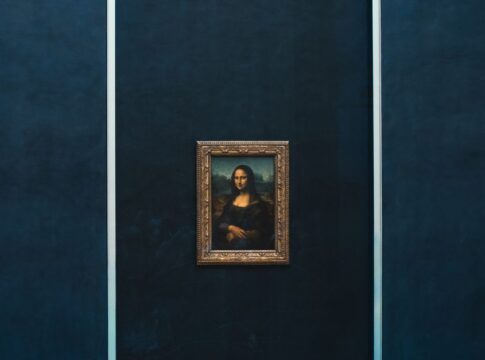
The Mona Lisa hangs behind bulletproof glass at the Louvre Museum in Paris, drawing nearly ten million visitors each year. Most people recognize her enigmatic smile, but the hidden Mona Lisa details reveal surprising truths that even art enthusiasts rarely discover. Leonardo da Vinci’s masterpiece holds secrets that challenge everything you thought you knew about this iconic portrait.
From stolen identities to wartime adventures, the painting’s history reads like a thriller novel. These fascinating facts transform a familiar image into something far more intriguing than the postcard version suggests.
Key Takeaways
- The Mona Lisa was stolen in 1911 and remained missing for over two years, making it an international sensation
- Leonardo da Vinci never actually finished the painting and carried it with him for years
- The subject’s lack of eyebrows and eyelashes was likely intentional, not the result of aging or restoration
- The painting’s small size surprises most first-time viewers—it measures only 30 by 21 inches
- X-ray analysis reveals Leonardo painted three different versions underneath the visible portrait
- The artwork survived both World Wars hidden in various French châteaux and castles
The Hidden Mona Lisa History Behind Her Missing Eyebrows
Look closely at the Mona Lisa’s face and you’ll notice something peculiar: she has no eyebrows or visible eyelashes. For decades, experts debated whether these features had faded over time or been accidentally removed during early restoration attempts. High-resolution scans finally settled the mystery.
Leonardo da Vinci deliberately painted the portrait without these features. Renaissance beauty standards often favored a smooth, elongated forehead, and wealthy women of the era sometimes plucked their eyebrows entirely. The sfumato technique—Leonardo’s signature method of blending colors without hard lines—also contributes to the barely-there quality of facial features. This wasn’t artistic neglect. It was intentional design that modern viewers often misinterpret as damage or deterioration.
Why Leonardo Never Delivered the Commissioned Portrait
Francesco del Giocondo commissioned Leonardo da Vinci to paint his wife, Lisa Gherardini, around 1503. The artist never delivered the finished work. Instead, Leonardo kept the painting with him for the rest of his life, continuing to refine it across multiple countries and decades.
When Leonardo moved to France in 1516 at the invitation of King Francis I, the Mona Lisa traveled with him. The artist died in 1519, still in possession of the portrait. Most art historians believe Leonardo considered the work perpetually unfinished—a perfectionist’s project that could always be improved. This obsessive refinement, rather than any dispute with the patron, explains why the painting never reached its intended owner. The French royal collection eventually acquired it, which is why the masterpiece resides in Paris rather than Florence.
The Great Heist That Made Her Famous
Before 1911, the Mona Lisa was admired by art connoisseurs but relatively unknown to the general public. An Italian handyman named Vincenzo Peruggia changed that forever when he walked out of the Louvre with the painting hidden under his coat on August 21, 1911.
The theft sparked an international media frenzy. Newspapers worldwide published the story, and the empty space on the museum wall became a tourist attraction in its own right. Peruggia kept the painting in his Paris apartment for two years before attempting to sell it to an art dealer in Florence. He claimed he wanted to return the masterpiece to Italy, where he believed it belonged. The dealer contacted authorities, and Peruggia was arrested. Ironically, the theft transformed the Mona Lisa from a respected artwork into a global cultural icon—the most recognized painting on Earth.
The Painting’s Surprisingly Small Physical Size
First-time visitors to the Louvre often express shock at how small the Mona Lisa actually is. The painting measures just 30 inches tall by 21 inches wide (77 cm by 53 cm)—roughly the size of a standard poster. Its massive cultural presence creates expectations of a monumental canvas.
Renaissance portraits of this type were typically modest in scale, designed for private viewing in domestic settings rather than public galleries. The intimate dimensions actually enhance Leonardo’s technique. Viewers must step closer to appreciate the subtle gradations of tone and the masterful layering of translucent glazes. Standing at the proper viewing distance, you can understand why Leonardo worked on such a scale—the detail would be impossible to maintain across a larger surface using his meticulous methods.
Three Hidden Portraits Beneath the Surface
Modern imaging technology, including infrared reflectography and X-ray analysis, reveals that Leonardo painted at least three different versions of the portrait underneath the one we see today. These hidden layers show significant changes to the position of the hands, the angle of the head, and even the landscape background.
This discovery confirms that Leonardo continuously revised his composition, painting over previous attempts rather than starting fresh canvases. The technique demonstrates his experimental approach to art—treating each work as an evolving project rather than a fixed creation. Scientists can now trace his decision-making process through the layers, watching him adjust proportions and refine the mysterious smile that has captivated viewers for five centuries. The visible painting represents Leonardo’s final choices, but the abandoned versions beneath tell equally compelling stories about his creative process.
Her Secret Wartime Journey Across France
When World War II began, French authorities knew the Mona Lisa was too valuable to remain in Paris. The painting embarked on a clandestine journey across France, moving between châteaux and castles to stay ahead of advancing German forces.
The masterpiece traveled in a specially designed, climate-controlled case, always accompanied by a curator. It stayed briefly at the Château d’Amboise, then moved to the Abbey of Loc-Dieu, and eventually to the Ingres Museum in Montauban. Each location was chosen for its remote position and structural security. The painting survived the entire war without damage, returning to the Louvre in 1945. This wartime odyssey remains one of the most successful art preservation operations in history, protecting not just the Mona Lisa but thousands of other artworks from potential destruction or theft by Nazi forces.
The Scientific Mystery of Her Unchanging Smile
The Mona Lisa’s smile appears to change depending on where you look—a phenomenon that has puzzled viewers for centuries. When you focus directly on her mouth, the smile seems to fade. Look at her eyes or the background, and the smile becomes more pronounced. This isn’t your imagination playing tricks.
The effect results from how human vision processes information. Our peripheral vision is better at detecting shadows and less precise details, while our central vision focuses on fine features and edges. Leonardo exploited this biological quirk by using sfumato to create soft, shadowy corners around the mouth. When viewed peripherally, these shadows suggest a smile. When viewed directly, they become ambiguous. Neuroscientists at Harvard Medical School have confirmed that the smile’s perceived intensity varies based on which part of the retina processes the image—a masterful manipulation of human visual perception that Leonardo achieved through paint alone.
Frequently Asked Questions
How much is the Mona Lisa worth today?
The Mona Lisa is considered priceless and cannot be sold. For insurance purposes during a 1962 tour to the United States, it was valued at $100 million—equivalent to roughly $870 million today when adjusted for inflation. Most experts agree the actual value would far exceed any estimate if it ever came to market.
Why is the Mona Lisa so famous compared to other Renaissance paintings?
The 1911 theft created unprecedented media coverage that transformed the painting into a cultural phenomenon. Leonardo’s innovative techniques, the subject’s enigmatic expression, and its acquisition by French royalty all contributed, but the theft turned it into a household name worldwide.
Who was the real woman in the Mona Lisa painting?
Most scholars agree the subject is Lisa Gherardini, wife of Florentine merchant Francesco del Giocondo. Historical documents from the period support this identification, though alternative theories occasionally surface suggesting other potential subjects.
Can you take photos of the Mona Lisa at the Louvre?
Yes, photography is permitted in the Louvre, including of the Mona Lisa, though flash photography is prohibited to protect the artwork. The painting sits behind bulletproof glass in a climate-controlled case to preserve it for future generations.
The next time you see a reproduction of the Mona Lisa—on a coffee mug, a t-shirt, or a museum poster—remember that the real painting holds layers of history and technique that no copy can capture. Leonardo’s masterpiece continues to reveal new secrets as technology advances, reminding us that even the most familiar images can surprise us when we look closer.